
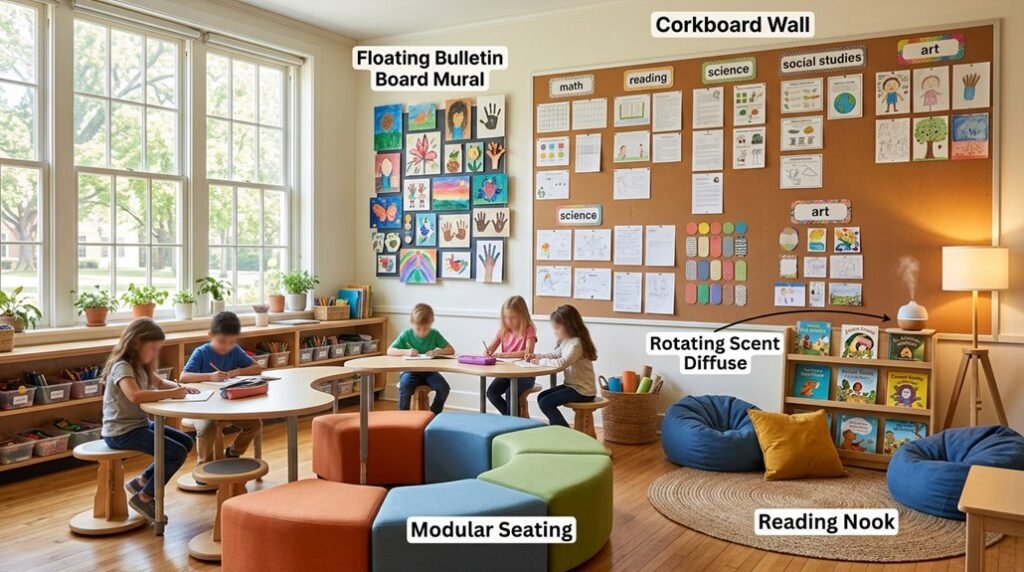
Like the blank slate Da Vinci faced before the first stroke, you stand before a classroom that demands structure, not sentiment. You need systems that reduce cognitive load, not decorations that add it. The five methods ahead, grounded in environmental psychology and spatial efficiency, will give you measurable outcomes: improved focus, reduced visual clutter, and zones that function without your constant intervention.
You will not find inspiration here; you will find specifications, ratios, and implementation timelines that solve the problem of disorganized space. The first technique begins with color, and you will see why 75% of your walls must stay empty.
Choose a Calming Color Palette to Cut Visual Clutter
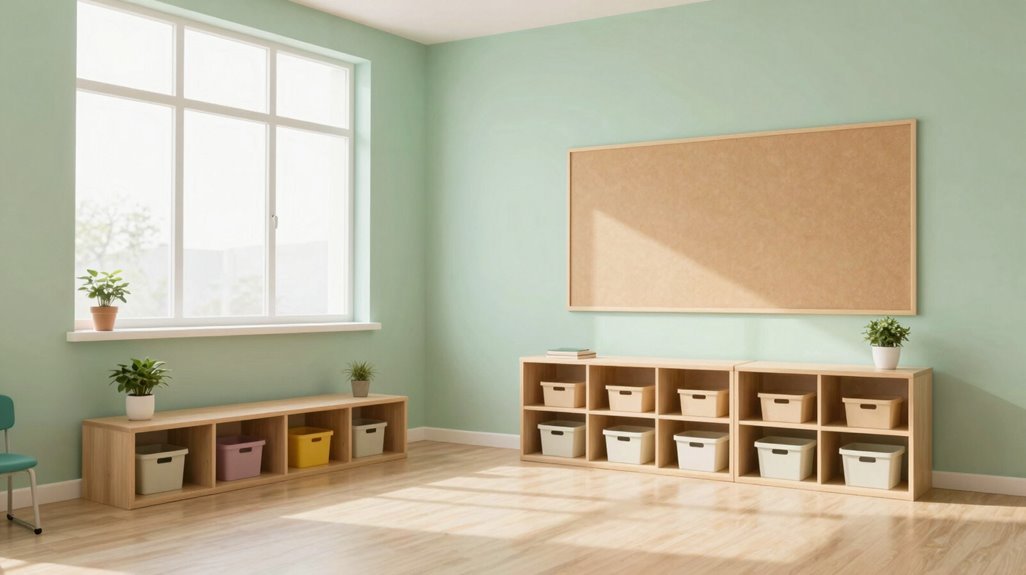
Why does your classroom feel chaotic even when you’ve organized every supply cabinet? You’re likely battling visual clutter, not disorganization. A deliberate classroom color scheme changes your space through strategic contrast and cohesion.
1. Select Your Calming Color Palette
Build your foundation with neutral bases: grays, creams, and soft whites. Layer in blues and greens, which research links to reduced heart rates and improved focus. Avoid red and orange entirely; these hues trigger overstimulation.
2. Apply Systematic Color-Coding
Establish color-coded zones: blue for independent work, green for collaboration, earth tones for transition spaces. Repeat these cues across labels, storage bins, and reference materials to reinforce spatial recognition without cognitive strain.
3. Control Visual Density
Reserve 75% of wall space for intentional white space. Limit unified decor to 25% coverage maximum, preventing sensory overload while maintaining environmental warmth.
Implement this framework, and you’ll cultivate a calm learning environment where students feel secure, oriented, and ready to engage.
Swap Bulletin Board Decor for Clothesline Displays
How much time do you spend wrestling with staplers, faded paper, and crooked borders each semester? You’re not alone in this struggle, and there’s a better path forward.
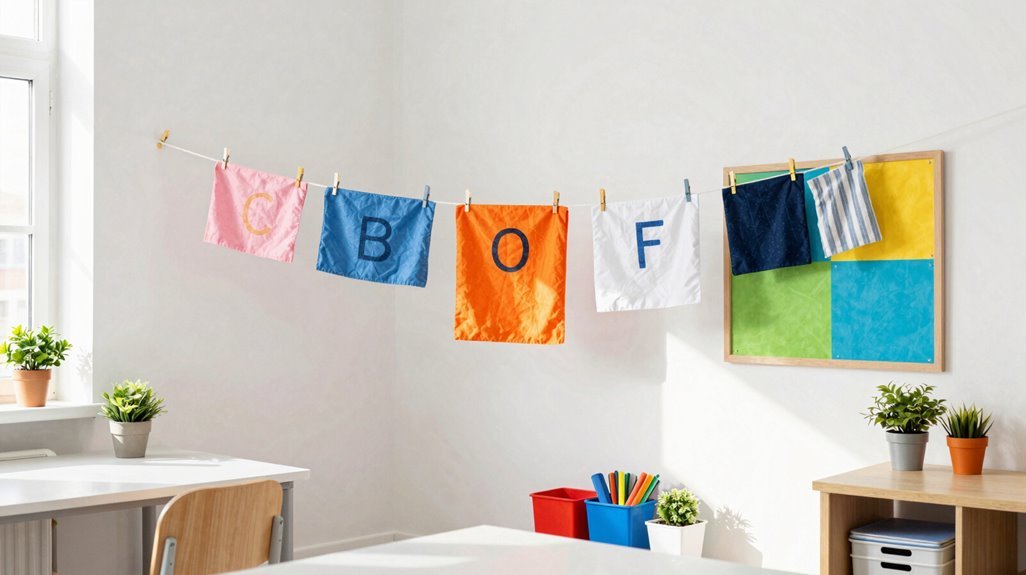
Update your learning space with a clothesline display, a bulletin board alternative that redefines classroom organization. Install ceiling hooks or wall anchors, string a line across your room, and clip student work with clothespins. You’ve built a student work gallery in under 30 minutes.
This approach delivers flexible displays that support updates/rotation throughout the year. Swap anchor charts and projects in seconds, not hours. Visual accessibility improves dramatically, students view work from multiple angles without crowding walls. Your classroom decor stays cohesive when you pair pieces with clear labels and borders. Join educators who’ve reclaimed their time while maintaining dynamic, intentional spaces.
Add Plants and Natural Textures Without the Maintenance
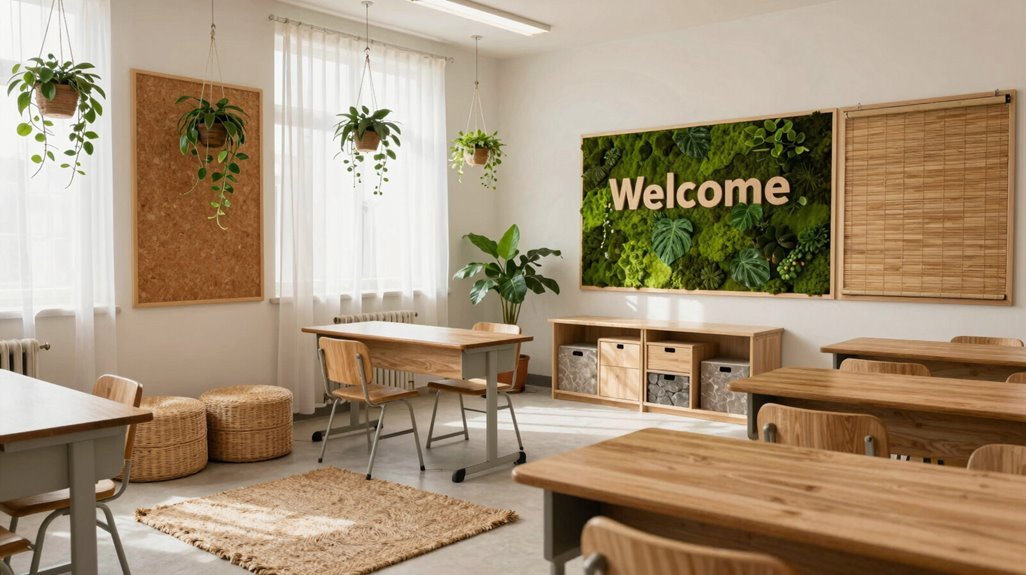
Where could your classroom benefit from deliberate visual softening without burdening your weekly schedule with intensive upkeep demands? You improve classroom decor through strategic greenery placement, selecting low-maintenance plants like snake plants or pothos, or deploying faux greenery for zero plant care requirements.
- Create designated green zones: Install greenery walls measuring 4-6 feet wide, or establish a reading nook using artificial vines, woven jute baskets, and wood shelving to layer natural textures.
- Establish your student work display within green corners, mounting clipboards on faux backing to merge productivity with calm classroom aesthetics.
- Implement weekly 10-minute routines: water live specimens every Tuesday, dust faux leaves each Friday.
- Confirm all selections appear on non-toxic plant registries, prioritizing classroom safety alongside visual outcomes.
You achieve sustained classroom ambiance through these measured, repeatable systems.
Replace Harsh Overheads With Soft Light and Mirrors
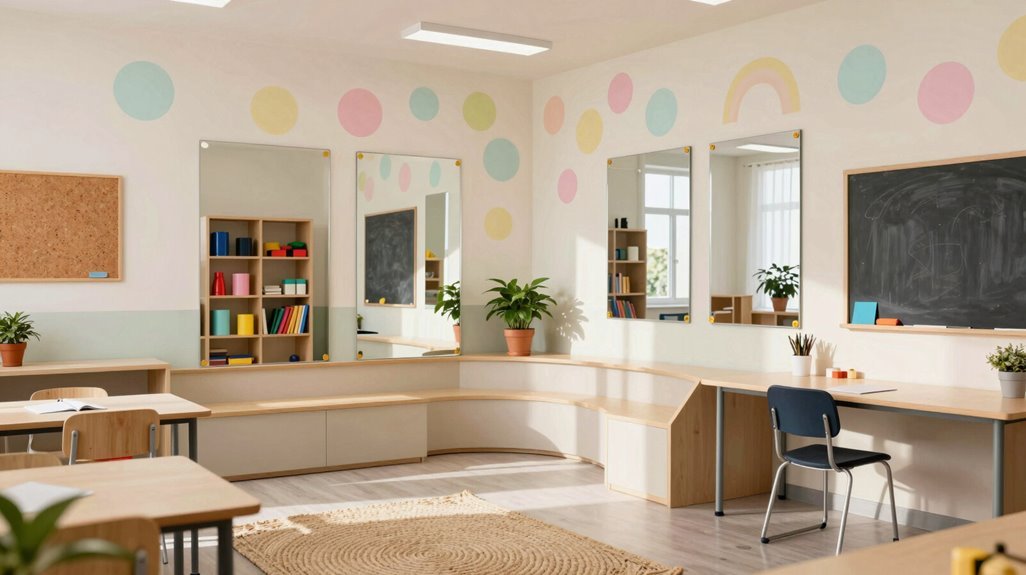
When you enter a classroom bathed in harsh fluorescent glare, your eyes strain within minutes, your focus fragments, and your students’ nervous systems activate rather than settle. Replace that chaos with soft lighting designed for sensory-friendly environments. Turn off overhead fluorescents immediately when alternative sources exist.
Build layered illumination using desk lamps positioned at 45-degree angles, clip lights mounted under shelves, and string lights along bulletin borders. Install cloud covers or diffusers to change harsh beams into diffuse light that eliminates sharp shadows. Add warm lighting through carefully measured strings of LED fairy lights, with 12-inch clearance from all materials.
Position mirrors opposite windows to amplify natural daylight and expand calming colors throughout the space. Your classroom ambiance shifts from sterile to sustaining. Check that every lighting modification meets fire codes, accessibility standards, and district lighting safety protocols before implementation.
Create Zones for Student Work, Calm-Down, and Pride
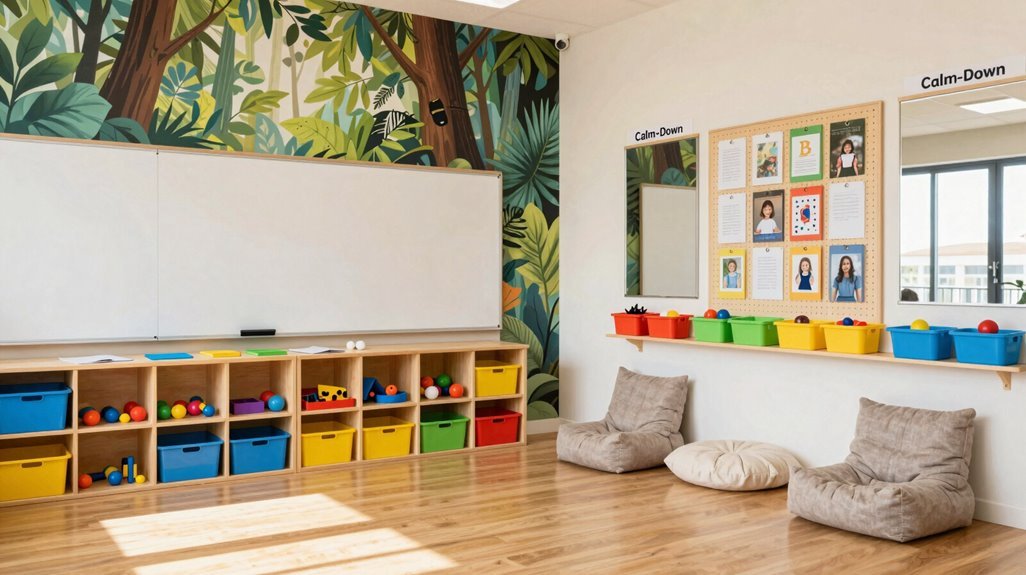
Once you’ve stabilized your lighting environment, you’re ready to address spatial organization. You’ll create zones using modular furniture and clear visual cues, separating focus areas from calm-down spaces.
Establish a reading nook or classroom library within your calm zone, positioning soft seating away from high-traffic pathways. Use flexible seating—wobble stools, floor cushions, and stackable chairs—to reconfigure layouts within 90 seconds for varied center activities.
Designate collaborative areas with whiteboards, accessible materials, and surfaces supporting 3-4 students. Install student work display boards at 48-inch heights for visibility. Update materials every two weeks to keep them aligned with learning goals.
| Zone Type | Essential Components |
|---|---|
| Focus Zone | Modular furniture, individual task lighting, storage cubbies |
| Collaborative Zone | Whiteboards, shared tables, material caddies |
| Calm-Down Zone | Reading nook, acoustic panels, bean bags |
| Pride Zone | Student work display, labeled title strips, clip systems |
| Transition Zone | Flexible seating, rotation schedule, clear visual cues |