
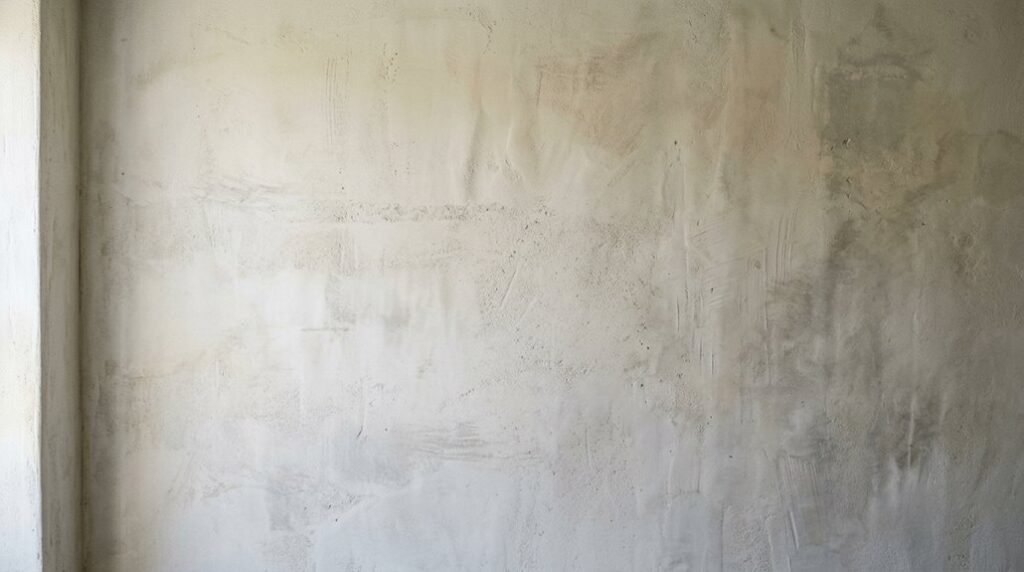
Like Roman builders who coated their villas with crushed marble and lime, you face a surface that demands more than standard paint can deliver. Limewash waits as your solution, but only if you understand its mineral chemistry, application sequence, and structural limitations.
You will need to evaluate your substrate, calculate coverage at 15–20 square feet per gallon, and commit to a 48-hour drying window between coats. The finish you achieve depends entirely on decisions you make before opening the container.
What Is Limewash? (And Why It Looks Unlike Any Paint)
How exactly does limewash differ from the paint you’ve used before?
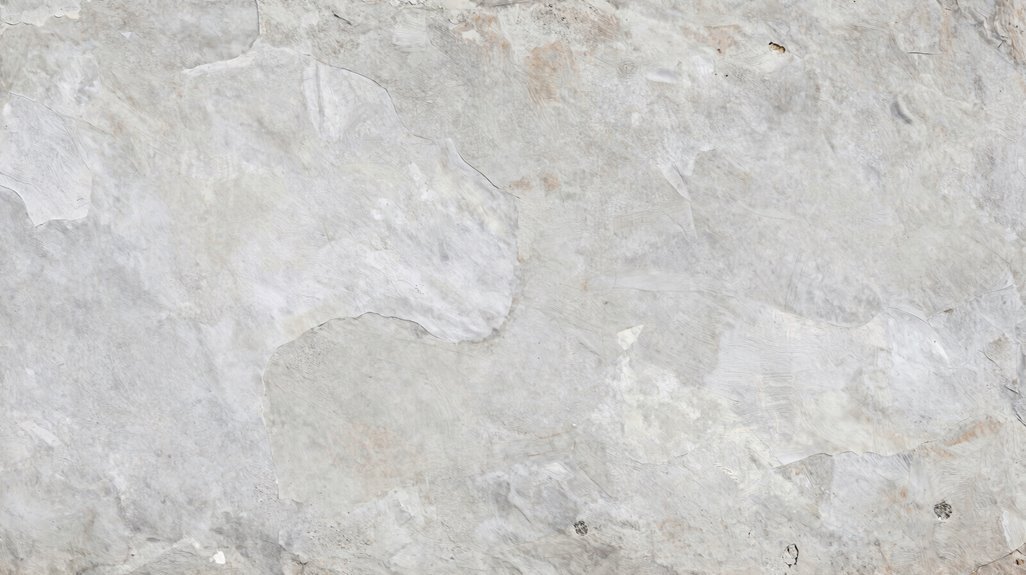
Limewash isn’t paint. You’re working with slaked mineral lime, calcium hydroxide, mixed with water. This combination creates a breathable, matte finish that ages naturally on your walls.
Limewash isn’t paint—it’s slaked mineral lime and water, creating a breathable, matte finish that ages naturally on your walls.
When you apply limewash, you use translucent, layered strokes with a brush. You’ll achieve a soft, suede-like texture and subtle color shifts you cannot replicate with standard coatings. The material penetrates your substrate rather than sitting on top. You’ll allow moisture to escape, reducing trapped moisture risk considerably.
Your finish develops patina over time. Light interacts with mineral pigments, enhancing character and depth continuously. You select from earthy neutrals to deeper tones when you tint with mineral pigments.
The result maintains a natural, non-glossy aesthetic that belongs in spaces where authenticity matters.
How Limewash Gets Its Soft, Cloud-Like Look
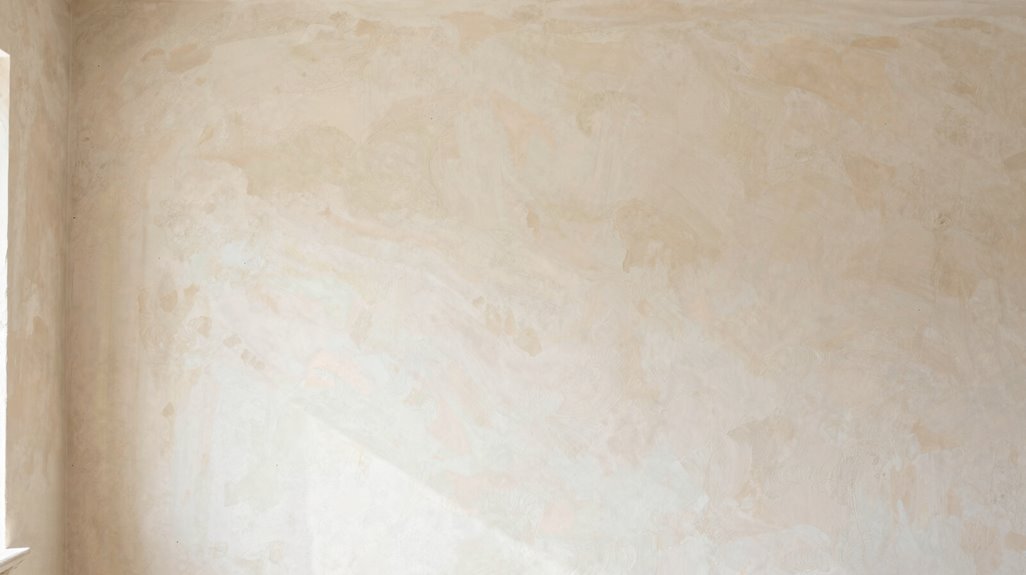
The texture you achieve with limewash depends entirely on your application method. You create this cloud-like effect through a two-step process: apply one translucent coat, allow partial drying, then brush a second layer while the first remains slightly damp. This interaction between wet and setting layers produces soft, diffused movement across the surface.
You must use a block brush, not a roller, to generate the brushed plaster texture. The bristles leave subtle striations that catch light differently than troweled finishes would. Apply in crossing strokes, working in 2-by-2-foot sections to maintain wet edges.
Your limewash contains natural mineral pigments that shift with daylight, creating tonal depth without gloss. The finish remains breathable, allowing moisture vapor to escape. Expect the texture to evolve: patination develops over 6-12 months as carbonation continues.
Where Limewash Works: and Where It Doesn’t
Where exactly should you apply limewash, and where must you avoid it?
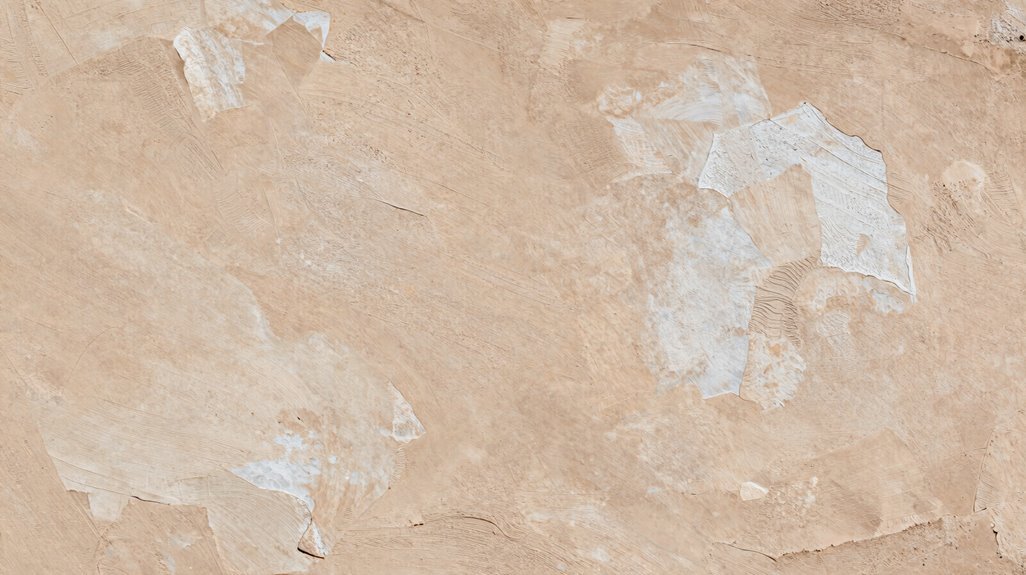
You’ll find limewash performs exceptionally in breathable environments. Apply it to interior brick, plaster, or unpainted drywall where moisture management matters. The mineral-based formulation allows vapor to escape, preventing mold in bathrooms, kitchens, and basements with adequate airflow.
You gain the most benefit in spaces aged 50+ years, where modern sealants have failed.
Avoid applying limewash to previously painted surfaces, non-porous materials like tile or glass, and exterior facades in freeze-thaw zones without proper protection. You cannot use standard primers beneath authentic limewash; they block the breathability you need.
For new construction, verify your substrate absorbs water before application. Test a 12-inch square, wait 24 hours, and proceed only when you observe penetration without beading.
Velatura Mineralwash or Venetian Glaze: Picking Your Finish
You must decide between Velatura’s soft, translucent layers and Venetian Glaze’s dimensional, burnished depth before purchasing materials.
Velatura Mineralwash creates velvety, tonal shifts across large surfaces using two coats, with the second coat diluted 50% and no primer required. Venetian Glaze demands Romabio MicroGrip Primer beneath its plaster-like, light-catching finish, offering old-world luminosity without full plaster installation.
Velatura Soft Layers
How do you choose between two mineral finishes that both deliver soft, layered dimension? You start with Velatura when you need large-scale elegance.
Velatura Mineralwash creates a soft, translucent, velvety finish that mimics the gentle tonal shifts of traditional limewash. You’ll apply it across expansive walls or feature areas where natural lighting and architectural details deserve subtle enhancement. The finish breathes, allows moisture escape, and carries zero-VOC certification, protecting your indoor air quality while delivering timeless texture.
Unlike heavier alternatives, Velatura maintains a lighter visual weight. You can request custom color formulations through Romabio and authorized retailers, selecting from soft, earthy tones that complement your existing palette. The mineral base ensures compatibility with period homes and contemporary spaces alike.
Choose Velatura when you want limewash-inspired depth without plaster-like mass. Your walls gain movement, your room retains airiness.
Venetian Dimensional Depth
The decision between Velatura Mineralwash and Venetian Glaze hinges on your desired surface interaction with light. You choose velatura when you want soft, translucent layers with a velvety texture across large walls or feature areas. You apply two coats, diluting the second coat, achieving gentle tonal shifts without primer.
You select venetian glaze for plaster-like dimensional depth and varied light interaction. You must first apply Romabio MicroGrip Primer, then build the finish to create movement you can burnish for dramatic luminosity.
Both finishes deliver breathable, mineral-based, zero-VOC composition for healthier indoor air and an earthy matte appearance. You customize either option through Romabio retailers, selecting soft neutrals or deeper hues within each finish family to address your specific spatial requirements.
How Limewash Lets Your Walls Breathe (and Why That Matters)
You need walls that manage moisture actively, not seal it in. Limewash lets vapor pass through porous substrates, brick, plaster, stone, cutting humidity by 10-15% compared to acrylic barriers, while its mineral-based, zero-VOC composition eliminates off-gassing entirely. Choose this finish when you prioritize respiratory health and structural longevity over scrubbability.
Moisture Control Benefits
Why do moisture problems persist in sealed, modern finishes? You’re trapping humidity inside your walls, where it accumulates, condenses, and damages substrates. Limewash solves this through inherent breathability, allowing moisture to escape rather than pool.
Your walls need to exhale. Limewash creates a porous, mineral-based coating that regulates humidity across stone, brick, plaster, or stucco surfaces. You stop deterioration by enabling continuous moisture exchange, preserving structural integrity for decades.
| Wall Type | Moisture Risk Without Breathability | Limewash Solution |
|---|---|---|
| Stone | 15-20% moisture retention | Vapor permeability |
| Brick | Freeze-thaw damage | Capillary release |
| Plaster | Efflorescence, crumbling | pH regulation |
| Stucco | Delamination, staining | Substrate preservation |
| Mixed materials | Uneven drying, mold | Uniform breathability |
You choose limewash, and you protect your investment. The matte, porous finish maintains ongoing moisture control without synthetic barriers. Your building breathes naturally, reducing repair cycles and extending wall lifespan through simple, proven mineral chemistry.
Healthier Indoor Air
Moisture control protects your walls, but your indoor environment demands equal attention. You need breathable surfaces that actively support your health, and limewash delivers exactly that.
- Humidity Regulation: You allow moisture to escape through your walls, reducing mold risk in basements, kitchens, and bathrooms where humidity concentrates.
- Zero-VOC Composition: You apply natural crushed limestone and water, eliminating harmful chemicals that conventional paints release into your air.
- Substrate Penetration: You achieve superior moisture exchange because limewash penetrates rather than films, preventing the trapped condensation that breeds respiratory irritants.
- Self-Renewing Patina: You gain long-term air quality benefits as aged limewash stabilizes and slowly renews through environmental exposure.
- Strategic Protection: You preserve these benefits by skirting moisture-prone areas, making certain your breathable walls maintain performance for decades.
Why Limewash Has Zero VOCs and Zero Guesswork
When you’re selecting a wall finish, you’re not just choosing color. You’re determining air quality, application complexity, and long-term maintenance requirements. Limewash delivers zero-VOC performance through its mineral composition: crushed limestone and water, nothing else. You breathe easier knowing no synthetic chemicals off-gas into your space.
You eliminate guesswork because this finish behaves predictably. The breathable, matte surface releases moisture, reducing mold risk in properly ventilated rooms. You choose between two interior systems: Velatura Mineralwash for soft, translucent layering without primer, or Venetian Glaze for plaster-like dimensional depth. Both require two thin coats, applied with careful brushing.
Natural mineral pigments shift with light, delivering antique-inspired ambiance through measurable, repeatable results. You gain controlled variation without toxic complexity.
How to Apply Limewash: Tools, Steps, and Drying Times
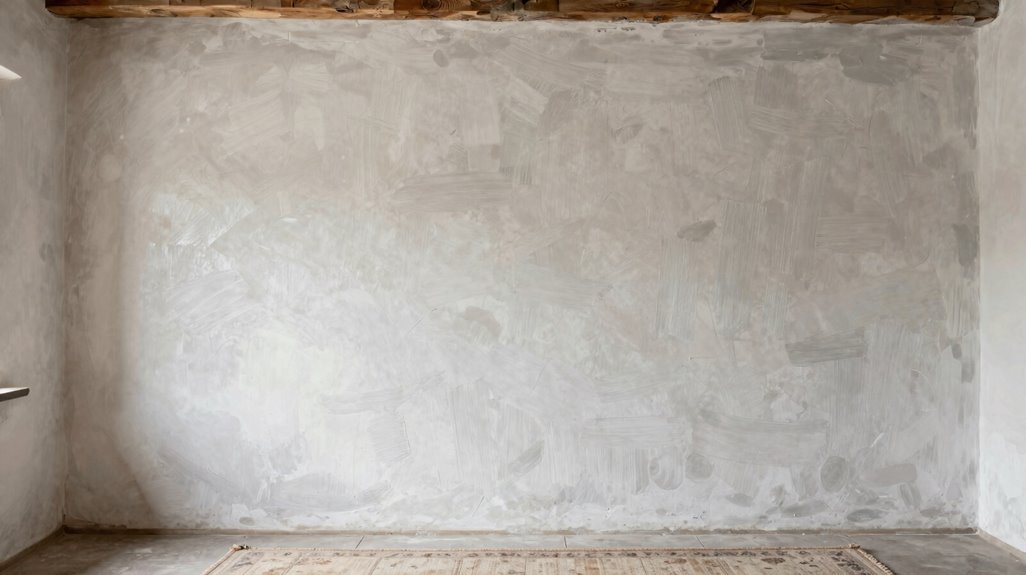
You already know limewash offers clean air and predictable performance. Now you’ll master the application process for your textured wall.
Tools Required:
- Natural bristle brush (4-6 inches)
- Mixing bucket
- Stir stick
- Measuring cup
Application Steps:
- Mix your limewash with water (follow manufacturer ratios).
- Apply first coat with cross-hatch strokes, creating light and dark variations.
- Wait 24 hours for complete drying.
- Dilute second coat by 20%.
- Apply using the same cross-hatch technique for cloud-like color shifts.
Product Selection:
| Product | Finish | Best For |
|---|---|---|
| Velatura Mineralwash | Translucent, layered | Large walls |
| Venetian Glaze | Plaster-like, dimensional | Accent surfaces |
No primer needed. Two coats yield the suede-like, breathable finish that reduces moisture on brick, plaster, or stone. Your textured wall develops its patina through deliberate, measured brushwork.
Limewash Maintenance: Cleaning, Touch-Ups, and When to Reapply
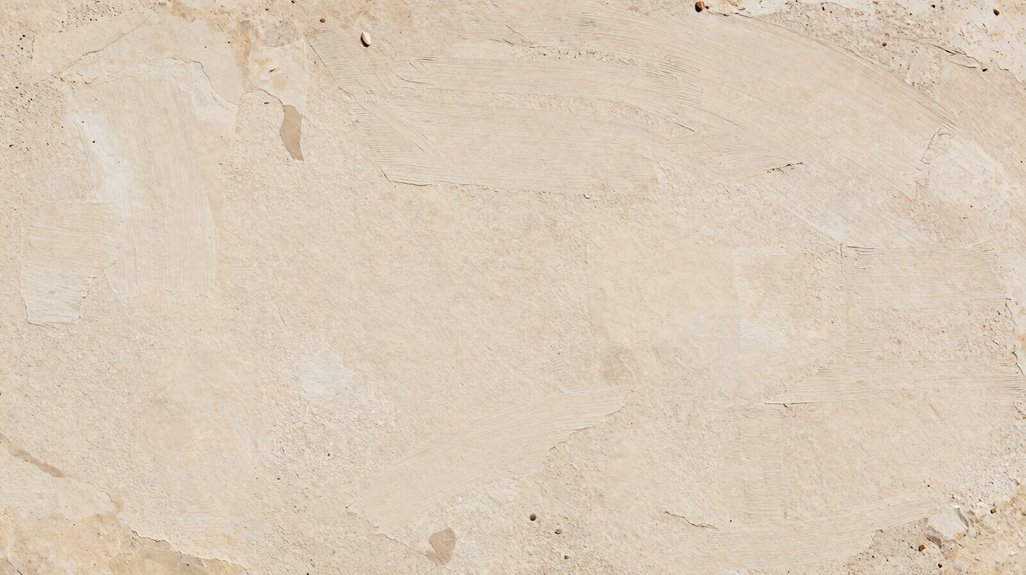
How often should you plan for limewash upkeep after that second coat dries? Limewash maintenance demands attention every 3-5 years, depending on traffic levels. You’ll need to monitor high-contact zones, such as hallways, door frames, and children’s rooms, where scuffing accelerates.
Plan limewash upkeep every 3-5 years, watching high-traffic zones like hallways and children’s rooms for early wear.
Here’s your limewash maintenance protocol:
- Cleaning: Dust monthly with soft, dry microfiber cloths. Spot-clean stains using pH-neutral soap and distilled water; avoid vinegar or harsh chemicals that degrade mineral bonds.
- Touch-ups: Dilute leftover limewash 1:1 with water. Apply with consistent, crosshatched strokes matching original technique. Feather edges 4-6 inches beyond damaged areas.
- Full reapplication: Plan when patina develops unevenly, typically 5-7 years. Your walls signal readiness through chalking, darkening, or visible wear patterns.
Reapplication requires two fresh coats, mirroring initial application. Embrace evolving patina; it deepens character while demanding periodic renewal for a unified appearance.
Limewash in Real Homes: Kitchens, Bedrooms, and Living Rooms
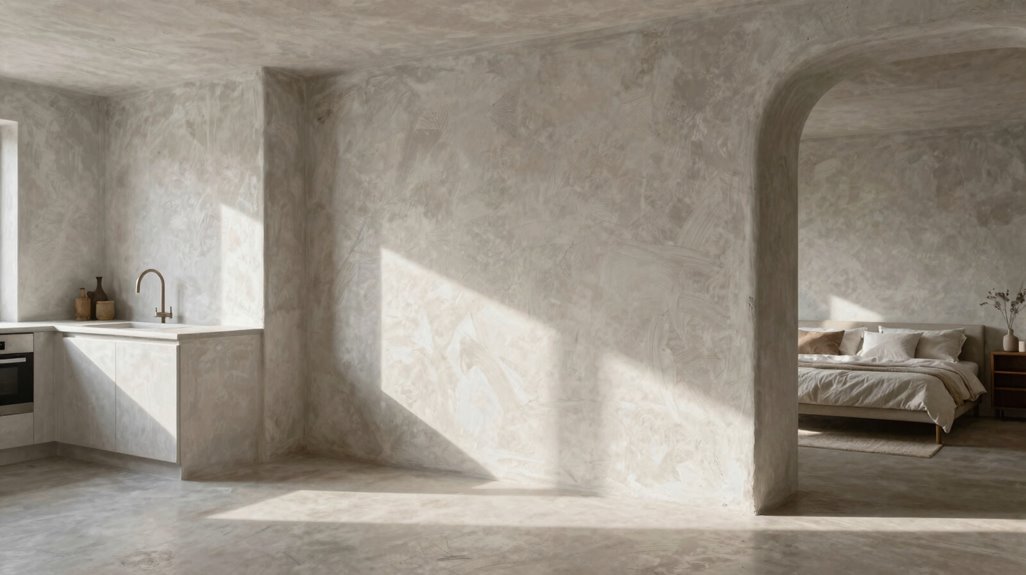
Where exactly should you apply limewash for maximum impact? You’ll find kitchens, bedrooms, and living rooms change with this breathable, mineral-based finish.
In kitchens, you gain moisture control. The mineral composition lets vapor escape, reducing mold risk near cooking zones. Apply two coats; dilute the second, and skip primer when using Velatura Mineralwash.
For bedrooms, choose between two texture paths. Velatura delivers soft, translucent layering. Venetian Glaze builds plaster-like dimension through cross-hatch brushing. Both age gracefully, shifting with natural and artificial light.
Living rooms showcase color variation best. Earthy tones to deep mineral pigments respond to your wall texture and lighting conditions. The velvety, matte surface creates belonging through timeless, tactile presence.
You’ll apply carefully, brush evenly, and watch the finish evolve.
Where to Buy Limewash and How to Hire an Applicator
Romabio distributes Velatura Mineralwash and Venetian Glaze through three primary channels: direct online ordering, authorized regional retailers, and professional contractor supply networks. You access custom color options through any channel, selecting from natural earthy tones or requesting deeper pigment tinting.
You purchase limewash directly when you understand your square footage, typically 350-400 square feet per gallon for two coats. You calculate needs by measuring wall height times width, then dividing by coverage rates.
You locate a certified applicator through Romabio’s professional network, verifying credentials, project portfolio, and burnishing technique experience. You request three references, comparing timelines of 2-3 days for Velatura Mineralwash versus 3-4 days for Venetian Glaze with primer and burnishing.
You confirm your applicator carries appropriate insurance, specifies material quantities in writing, and warranties workmanship for 24 months minimum.