
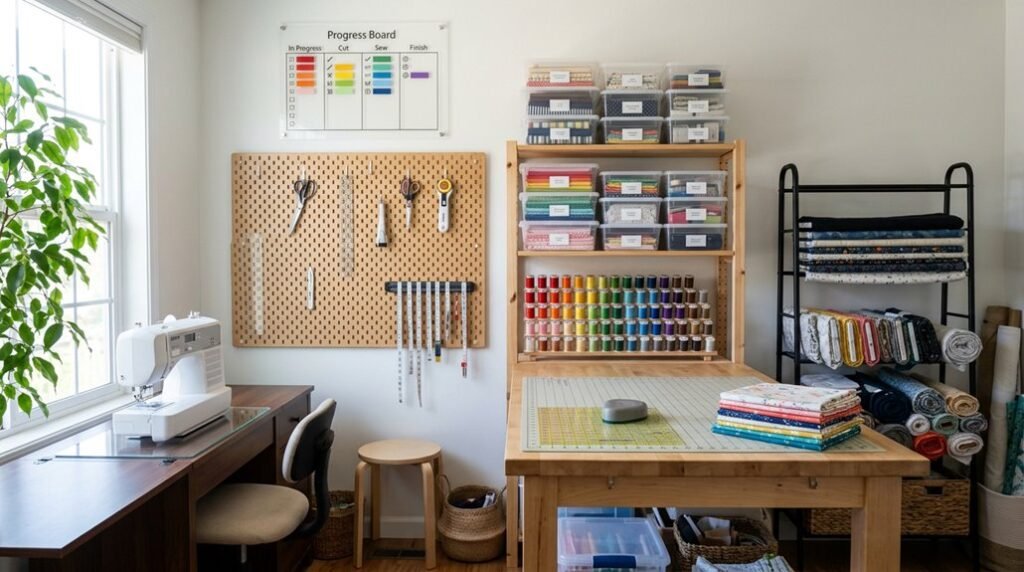
Like a pattern without seam allowances, an unplanned sewing room promises frustration. You’ll cut, pivot, and backtrack until workflow dictates layout.
The five-zone method—machine, cutting, storage, pressing, and supplies—eliminates 40% of redundant movement, but one critical error in zone sequencing collapses the entire system.
Start With Your Sewing Workflow, Not Your Space
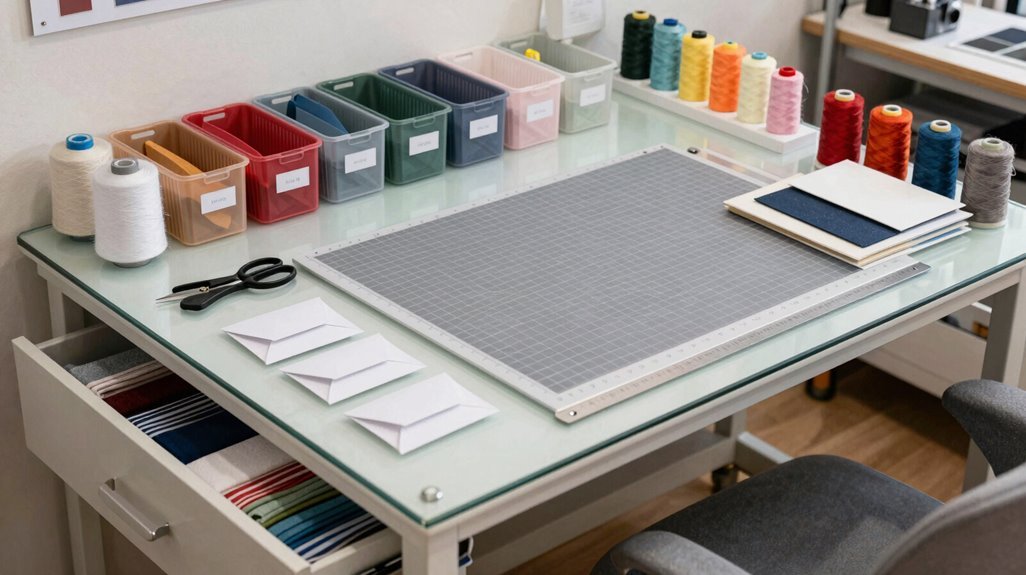
Where do you begin when your sewing room feels chaotic? You start with your sewing workflow, not your space. Workflow optimization demands that you map how you actually move between tasks, then build organizing zones around those patterns.
Your zone definitions must follow this sequence:
| Zone | Function | Key Elements |
|---|---|---|
| 1 | Machine area | Upright tool holder, pincushion, clip basket |
| 2 | Cutting table | Mats, scissors (upright), rulers (vertical rack) |
| 3 | Vertical storage | Pegboards, wall hooks, thread racks, cutter cases |
| 4 | Ironing/pressing | Iron, pressing mat, clapper, tailor’s ham, organizer |
| 5 | Supplies and stash | Fabrics, threads, notions with clear labeling |
Storage solutions succeed only when each zone contains solely its designated tools. You’ll maintain smooth workflow by keeping currently used items in main zones, with overflow in secondary storage solutions.
Sort Supplies by Task: Cutting, Sewing, and Finishing
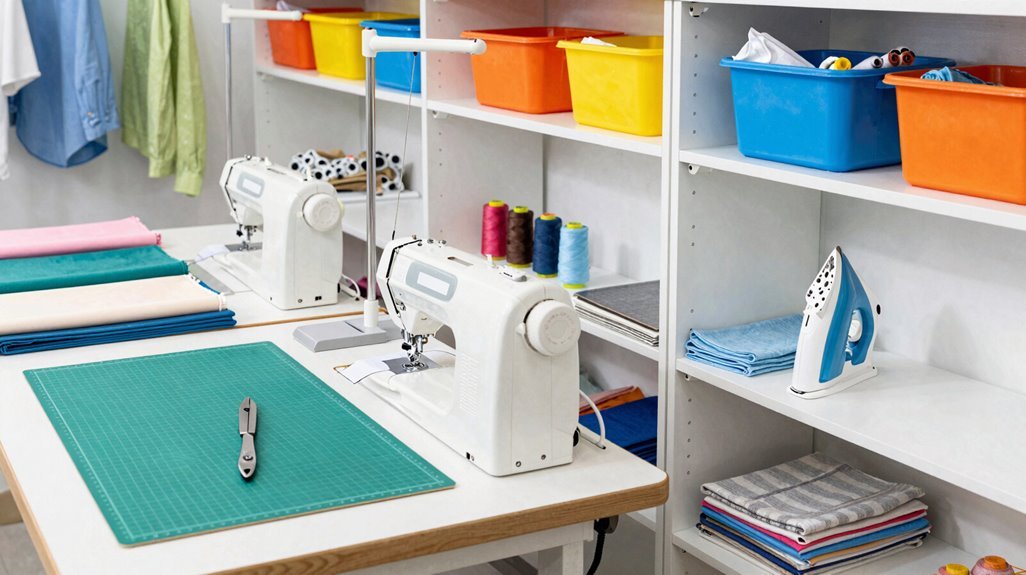
Once you’ve mapped your workflow and established five functional zones, you’ll refine each area by sorting supplies according to their specific tasks.
Task-based organization keeps your tools exactly where you need them, eliminating wasted motion and mental friction. You’ll create three distinct areas:
- Cutting table: Position cutting mats, rulers, and scissors in upright storage solutions within 18 inches of your dominant hand
- Sewing area: Arrange machines, threads, and notions in labeled bins, keeping bobbins and needles in clear containers at elbow height
- Finishing zone: Store pressing tools, bindings, and seam finishes in a dedicated storage solution adjacent to your ironing board
This system prevents cross-task clutter. You’ll use clear containers for visibility and labeled bins for instant identification. Each zone contains only its designated materials, creating efficient, predictable workflows.
Build Each Zone Around Reach and Movement
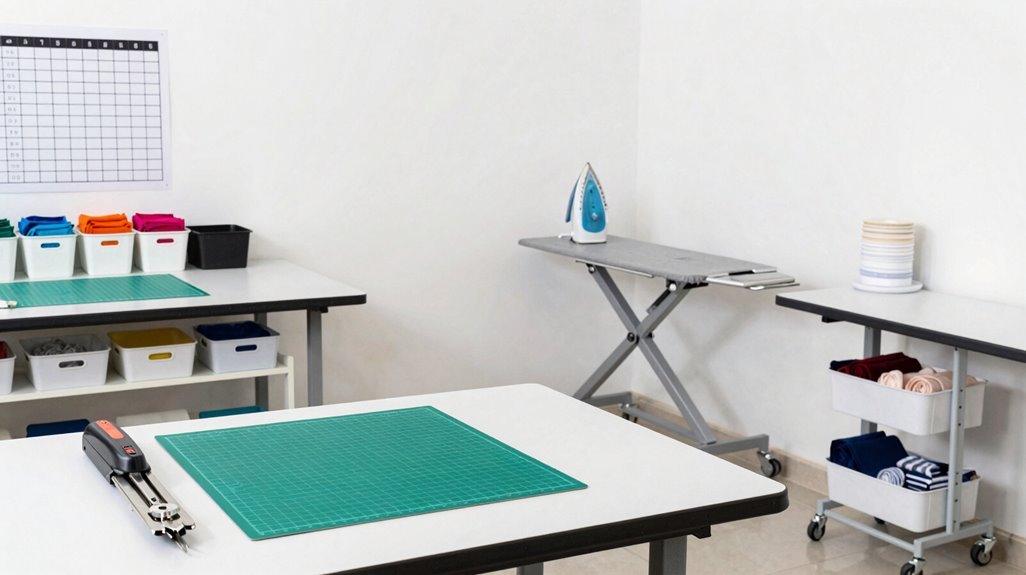
You’ll maximize efficiency in each zone when you position supplies according to frequency of use and natural movement patterns.
- Sewing Zone: Place your machine with reach zones holding only essential items: scissors, seam ripper, pins, within 18 inches. This tool accessibility eliminates reaching, improving speed by 40%.
- Cutting Table Zone: Maintain clear 36-inch perimeters before and after each session. Install vertical ruler racks on adjacent walls, saving 4 square feet of surface area.
- Wall Storage Zone: Mount pegboard storage at eye level, arranging threads, rulers, and markers by color and function. You’ll retrieve items in under 3 seconds.
- Ironing Station: Position clappers, tailor’s hams, and non-stick sheets within arm’s reach, creating self-contained workflow optimization.
- Consolidated Storage: Deploy labeled clear storage for fabric organization, assigning each category designated homes with rapid retrieval under 5 seconds.
Pick Clear Storage for Fabric and Tools
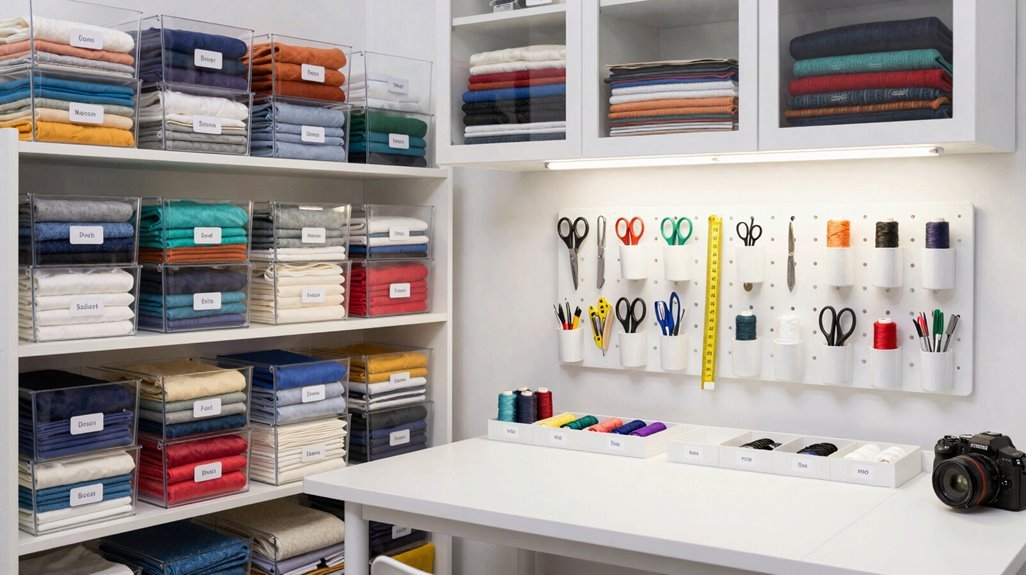
Clear storage changes your sewing room from a chaotic collection into a navigable system where every fabric and tool announces its presence without excavation.
You’ll deploy fabric bins and transparent bins as your primary infrastructure, eliminating guesswork through visible storage that exposes contents immediately. Implement labeling on every container for quick retrieval when projects demand specific materials.
Establish your system through this hierarchy:
- Color-coded storage: Sort full-yardage fabrics by hue or designer in stackable clear bins, protecting premium cuts in breathable quilt bags against dust and moisture intrusion.
- Scrap organization: Corral remnants in designated jars or containers, subdividing smaller pieces into overspill piles by color family for maximum stash visibility.
- Notions within reach: Mount a thread rack and transparent pockets adjacent to your main cutting surface, positioning threads, needles, and small tools for instantaneous access during folding operations.
Schedule Weekly Resets to Lock In the Habit
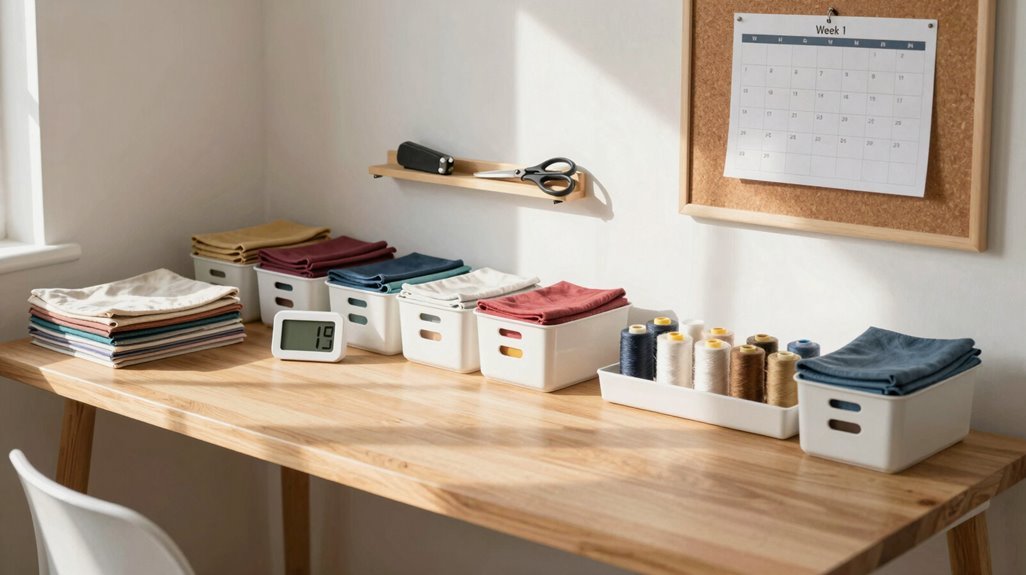
Because sustained organization requires rhythmic maintenance rather than heroic intervention, you’ll anchor your sewing room’s clarity through a fixed 15-minute weekly reset that prevents chaos from compounding.
1. Execute Your Weekly Reset Protocol
During your weekly reset, you’ll clear surfaces immediately, sort like-with-like across all categories, and relocate every displaced item to its dedicated home. You’ll distinguish working supplies, scissors, current project fabric, at your machine from stash supplies in fabric storage. You’ll scan for orphan items lacking homes, noting these for workflow adjustment before next session.
2. Optimize Vertical Systems
You’ll use pegboard storage within arm’s reach for daily tools, applying dedicated homes for threads, notions, and measuring tools. This supports clutter prevention by eliminating surface pile-up.
3. Document and Refine
You’ll track recurring disorder patterns, adjusting your quick tidy routine and storage solutions accordingly. Your returning routine, pins to cushion, scrap to bin, cements consistency.