
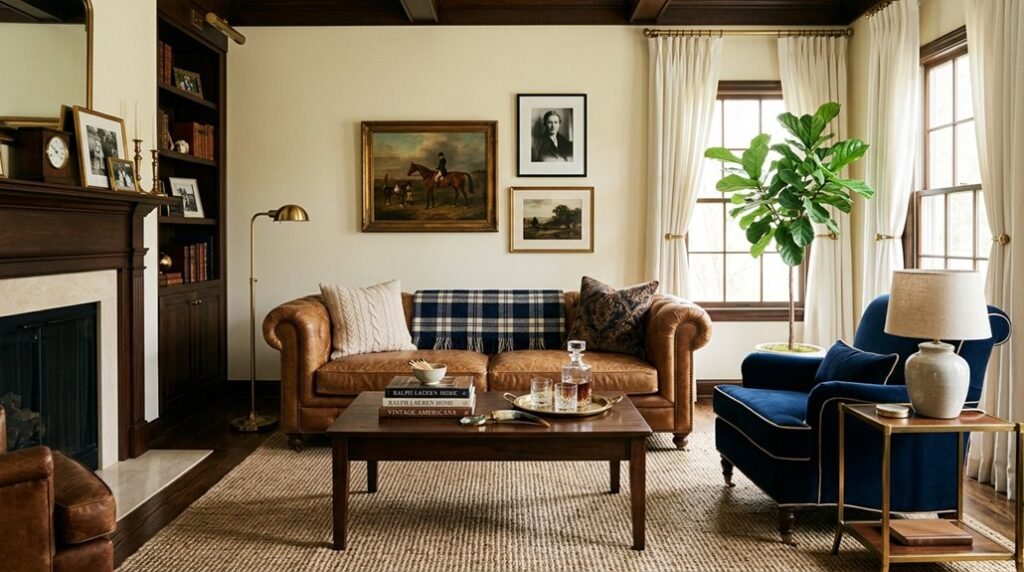
You’ll design a Ralph Lauren living room through three systematic stages, each building measurable layers of color, texture, and curated objects. Start by establishing navy walls, specifically Ralph Lauren’s “Old Navy” or equivalent deep blue at 60% saturation, with furniture silhouettes like a 96-inch Chesterfield sofa in chocolate leather.
You’ll layer plaids, cashmere throws, and heritage woods next, then finish with equestrian art and leather-bound accessories. The precise sequence matters more than you’d expect, and skipping steps creates visual chaos rather than cohesion.
Start With Ralph Lauren’s Signature Colors and Shapes
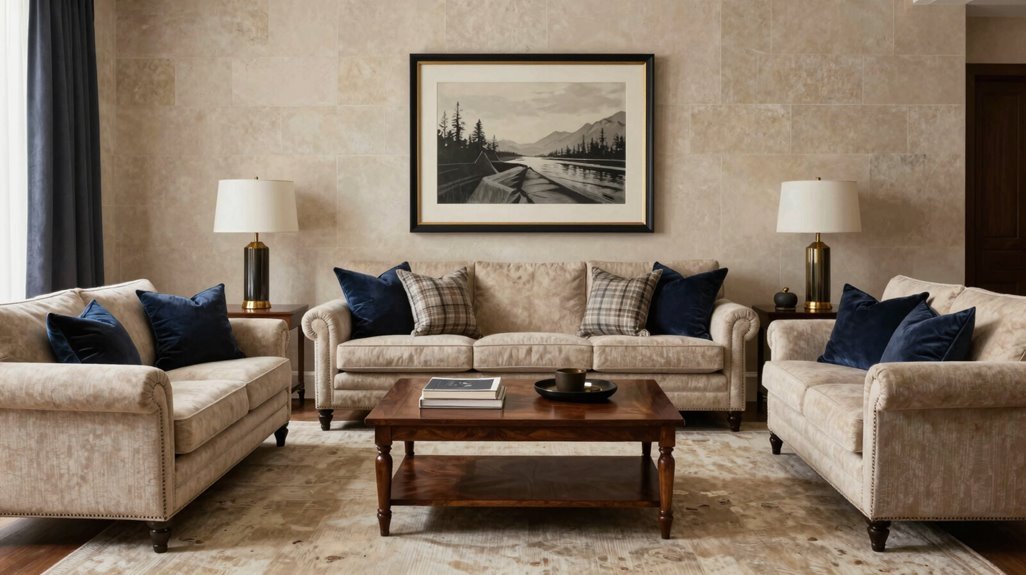
Where do you begin when building a Ralph Lauren living room? You start with Ralph Lauren colors and foundational shapes that signal immediate belonging.
Your color scheme creates the membership card; your shapes provide the handshake.
- Establish your base with a navy palette. Paint walls in deep navy, espresso, or charcoal, or install dark wood paneling for instant gravitas.
- Ground the room with classic American design silhouettes. Select a Chesterfield silhouette sofa in distressed leather, or choose a leather armchair and wingback chair combination.
- Add brass accents for warmth against dark surfaces, or select polished chrome for contrast.
- Build dimension through layered textiles: cashmere throws, velvet pillows, wool rugs, balanced with crisp whites and natural tones.
Your color scheme creates the membership card; your shapes provide the handshake.
Layer Plaids, Leather, and Heritage Textures for Depth
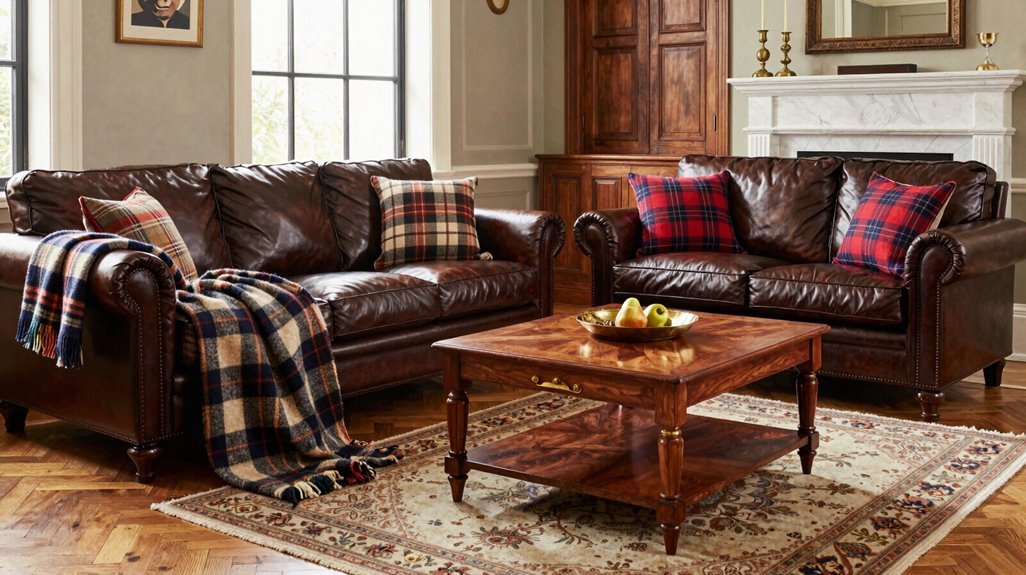
How do you turn a dark, polished foundation into a space that breathes with history? You layer heritage textures, the classic American way.
1. Establish Your Textural Foundation
Start with rich woods: walnut, mahogany, oak; then add plaid fabrics across throws, cushions, and drapery. These patterns anchor your Ralph Lauren-inspired palette.
2. Introduce Leather Elements
Pair distressed leather with tobacco leather on overstuffed chairs. Mix a vintage Chesterfield against a tailored settee for balance.
3. Build Floor Layers
Begin layering rugs: lay a 9×12 vintage wool rug, then top with a 4×6 leather or fur throw rug.
4. Curate Heritage Accessories
Stack leather-bound books, silver trays, and equestrian pieces. These reinforce story without clutter.
| Texture | Application | Quantity |
|---|---|---|
| Plaid fabrics | Throws, cushions, drapery | 3-5 pieces |
| Distressed leather | Seating, ottomans | 2-3 items |
Finish With Curated Art and Accessories That Tell a Story
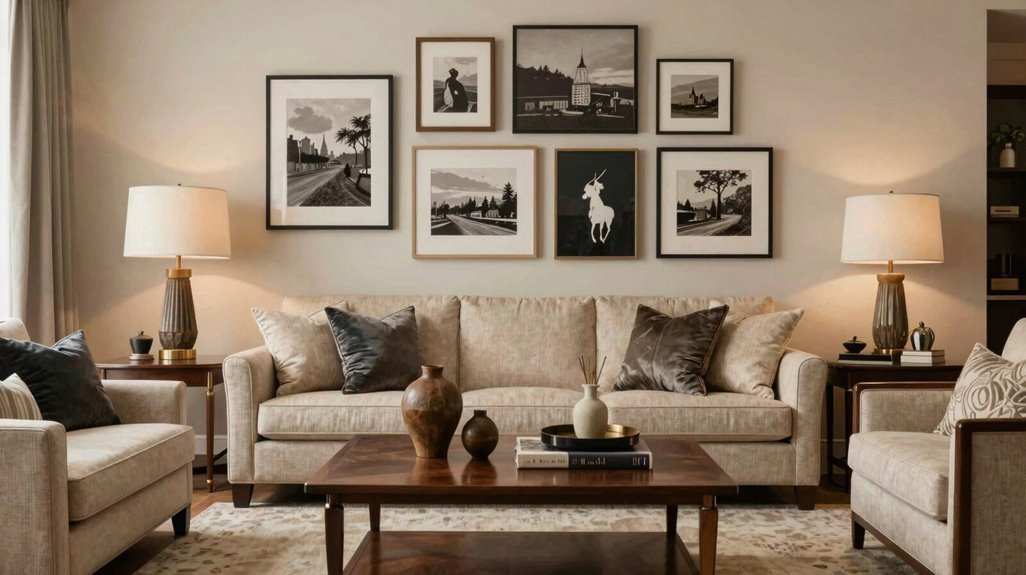
You’ve built your foundation of plaid, leather, and heritage textures, and now your room requires the final layer that separates a decorated space from a collected one. You will deploy curated art through three strategic applications.
First, construct gallery walls mixing brass-trimmed frames with vintage photography, equestrian motifs, and global and archival maps in a unified palette. Second, distribute heirloom pieces: leather-bound books, antique textiles, and narrative accents at staggered heights of 24, 36, and 48 inches for dimensional rhythm. Third, balance statement works against softer elements.
| Element | Placement | Quantity |
|---|---|---|
| Equestrian sculptures | Mantel/coffee table | 1-2 pieces |
| Vintage sporting equipment | Corner vignettes | 2-3 items |
| Domain objects (globes, compasses) | Shelving at eye level | 3-5 pieces |
You achieve belonging through intentional accumulation, not random purchase.