
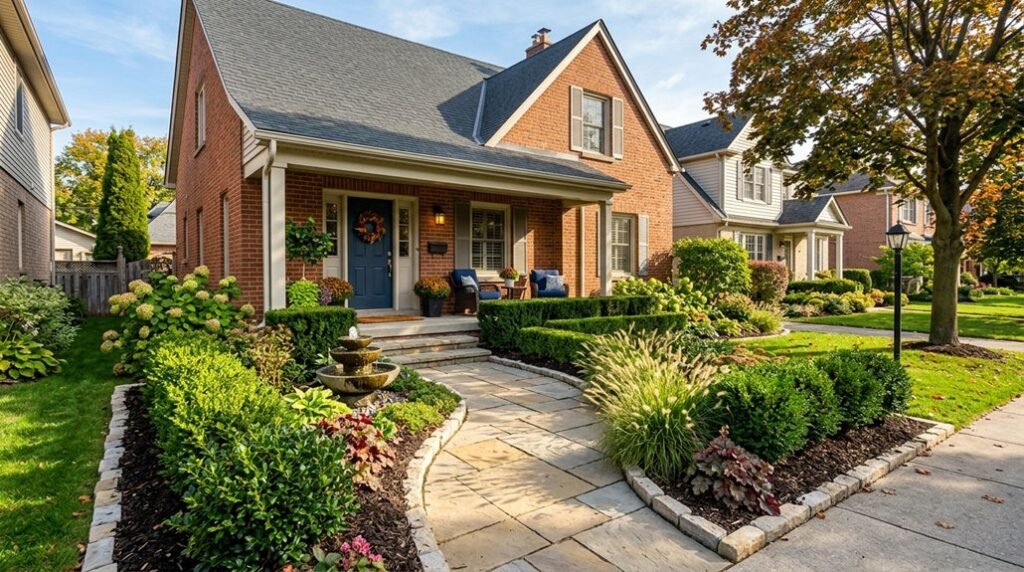
You need curb appeal that works, not inspiration that drifts.
Your front yard is a system of measurable elements: walkways at 36–48 inches wide, lighting at six-foot intervals, plantings in three distinct layers.
Each component demands precise coordination with climate, soil, and structure.
The following seven strategies translate architectural principles into executable plans, with specifications for materials, spacing, and timing you can implement immediately.
Design a Curved Walkway That Welcomes Visitors Home
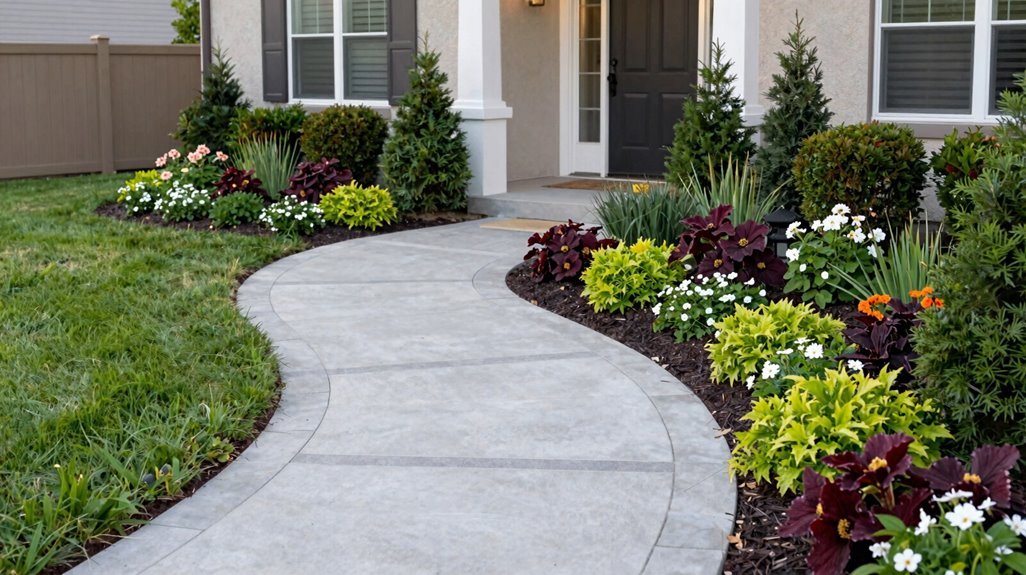
Why settle for a rigid, predictable path when a curved walkway can turn your front yard into an intentional, welcoming sequence? You create a welcoming entry by bending your path 15-30 degrees at two points between curb and door, softening the transition and guiding visitors naturally. Your front yard design gains immediate curb appeal when you align this geometry with planting beds on both sides, maintaining 3-4 feet of clear walking width throughout.
You enhance energy flow using Feng Shui principles, curving lines to direct chi toward your door rather than rushing past it. Coordinate your curved walkway with landscape lighting placed every 6-8 feet along the inner curve, illuminating steps and edges for safety. You integrate planters at curve apexes, spacing them 5-7 feet apart to ground the design. Your result: accessible, unified curb appeal that signals you belong here.
Choose Walkway Materials for Your Climate and Budget
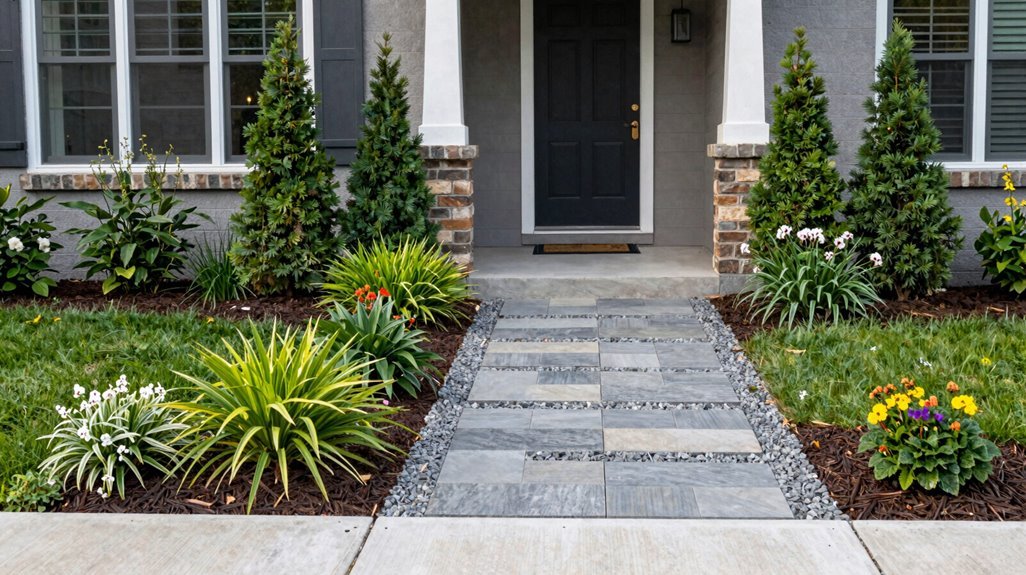
You’ll need to balance climate demands against your available funds when selecting walkway materials, since porous pavers or gravel offer superior drainage in wet regions while requiring less upkeep than solid concrete.
Consider that stepping stones present your most economical choice at roughly $1-2 per square foot, though you’ll sacrifice some durability compared to poured surfaces lasting 25-30 years. Match your material selection to your region’s freeze-thaw cycles, rainfall patterns, and your willingness to perform annual maintenance such as refilling joints or sealing surfaces.
Climate-Smart Material Selection
How do you select walkway materials that perform reliably across decades of freeze-thaw cycles, intense UV exposure, and seasonal precipitation shifts? You prioritize permeable walkway solutions that manage water strategically.
Select permeable walkway materials. Pavers or gravel allow drainage, reduce runoff, and protect your foundation during heavy precipitation events.
Apply climate-smart design principles. Match materials to your specific regional stressors: freeze-thaw durability in northern zones, UV resistance in southern exposures.
Specify light-colored surfaces in hot climates. Heat reflection keeps adjacent planting beds 10-15°F cooler, improving plant survival and reducing irrigation demand.
Maintain edging and cohesion. Install 36-48 inch widths with steel, brick, or concrete edging to define routes, prevent material migration, and create visual continuity with existing hardscape. Your walkway becomes integrated infrastructure, not isolated decoration.
Budget-Friendly Walkway Options
Where should you invest limited resources when hardscape demands exceed your budget? Start with front yard walkways that deliver maximum impact for minimal cost.
1. Choose economical materials. A stepping stone path costs less than poured concrete while guiding visitors to your door. Space stones 24–36 inches apart, filling gaps with gravel or groundcover.
2. Select permeable materials. Gravel, crushed stone, or permeable pavers improve drainage, reduce runoff, and lower long-term costs. These options suit varied climates without complex installation.
3. Follow dimensional standards. Build walkways 36–48 inches wide. Use gentle curves or direct lines that connect your entry to the street safely.
4. Unify your design. Match edging materials to adjacent driveways, and coordinate geometry with planting beds. This cohesion amplifies curb appeal, making your property feel purposeful and welcoming.
Durability and Maintenance
Because your walkway faces constant exposure to weather, foot traffic, and seasonal temperature swings, selecting materials engineered for your specific climate isn’t optional; it’s essential for long-term performance.
You’ll want permeable walkways like pavers, gravel, or stepping stones that drain efficiently and cut your lawn care demands. Install durable materials rated for freeze-thaw cycles in cold regions, or heat-resistant composites where temperatures soar.
Edging keeps soil and mulch contained, preventing surface degradation and extending your walkway’s lifespan. For weed suppression, layer river rock or gravel beds between plantings and hardscape; these low-maintenance groundcovers need minimal attention after installation.
Inspect your walkway each spring. Reset shifted stones, replenish gravel, and tighten edging before minor issues escalate. With proper material selection and routine care, you’ll maintain crisp, welcoming pathways that anchor your home’s curb appeal for decades.
Layer Front Yard Plants Low-to-High for Entry Depth
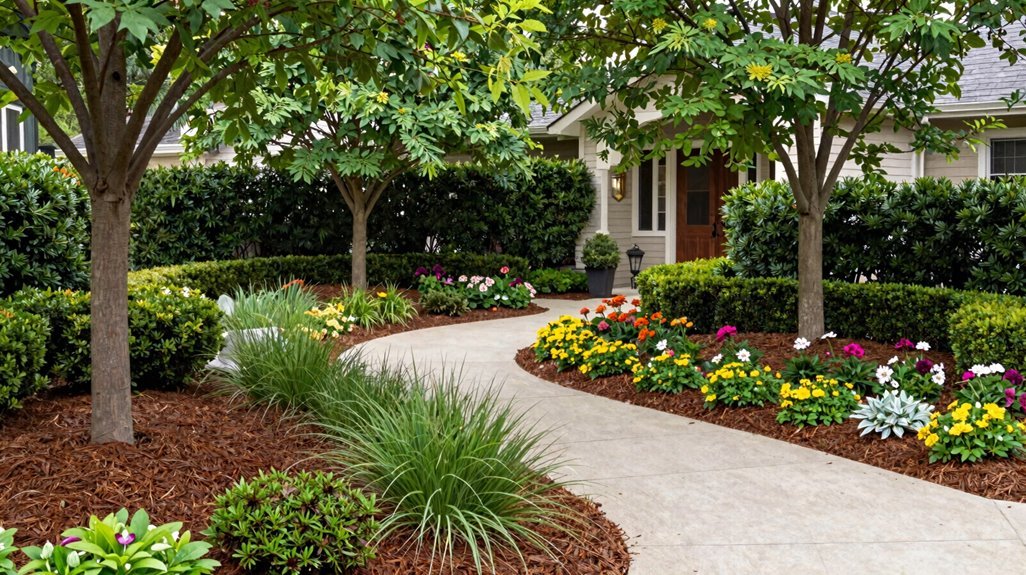
Why settle for a flat, one-dimensional front yard when you can build layered depth that pulls visitors straight to your door? Layering turns your landscape into a dimensional experience that creates entry depth through strategic height progression.
- Start with groundcovers as your base layer, using drought-tolerant natives like creeping thyme or sedum that establish within one growing season and spread 12-24 inches.
- Add mid-height perennials (18-36 inches) such as salvia or ornamental grasses, spacing them 24 inches apart to allow mature spread without blocking sightlines.
- Position tall shrubs or trees at the rear, selecting varieties that reach 6-10 feet at maturity. Confirm your front yard maintains clear 48-inch minimum pathways to the entry.
This measured approach builds visual procession from curb to door.
Match Flower Colors to Your Home’s Paint and Trim
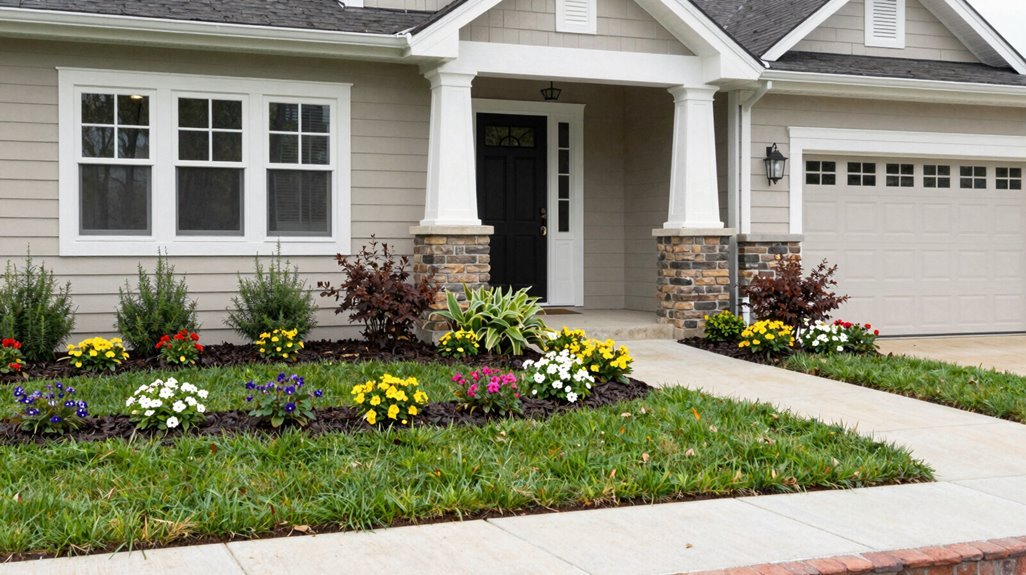
How do you guarantee your flower beds don’t clash with your home’s exterior? You master flower color coordination by anchoring your choices to your existing exterior color palette.
Your siding trim coordination demands discipline. Limit your palette to two or three colors across siding, trim, shutters, railings, and doors. Then select blooms that reinforce these hues rather than compete.
Use these techniques for cohesive curb appeal:
- Extract undertones from your paint swatches
- Match flower saturation levels to your home’s intensity
- Repeat key colors in planters flanking your door for symmetry
Implement seasonal color updates with annuals, petunias, marigolds, zinnias, that shift with the calendar while honoring your fixed scheme. You’re not locked into permanence; you rotate within rules.
Your neighbors notice intention. You belong among the considered, the cohesive, the deliberate.
Add Low-Voltage Lighting for Safe Evening Arrivals
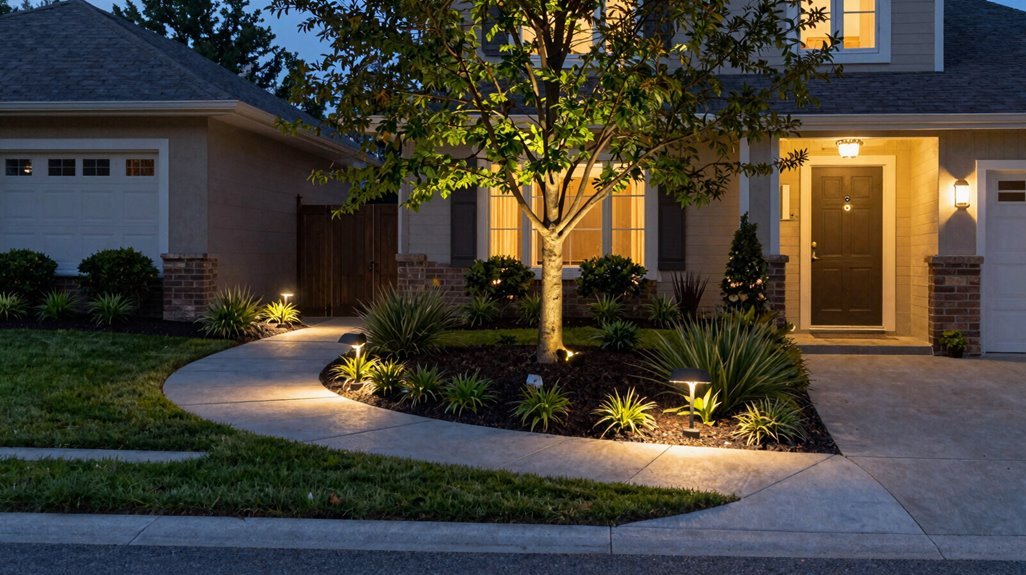
You’ll gain substantial safety and aesthetic advantages by installing low-voltage lighting systems, which consume 70% less energy than standard 120-volt fixtures while providing adequate illumination for evening navigation. Position path lights at 6- to 8-foot intervals along walkways, making sure each fixture casts overlapping pools of light that eliminate dark gaps and clearly define your route.
Layer ambient, task, and accent lighting at varying heights: ground-level wash lights, mid-height entry sconces, and upward-facing tree uplights. This creates dimensional illumination that highlights architectural features and maintains consistent visibility across your front yard.
Illumination Benefits
When dusk settles and you’re navigating a darkened walkway, your path becomes a calculated risk rather than a welcoming entrance. You improve this experience through strategic landscape lighting that establishes clear, illuminated routes for guests and family.
Your lighting installation delivers measurable advantages:
- Safety and security – You eliminate trip hazards and deter intruders by eliminating shadowed zones along walkways
- Energy-efficient operation – You reduce costs using solar fixtures or low-voltage systems with motion sensors and programmable timers
- Enhanced curb appeal – You coordinate fixtures with hardscape materials, placing units at 6-8 foot intervals to define geometric patterns
You achieve layered illumination; ambient, task, and accent; that extends your home’s welcoming presence from sunset until midnight.
Placement Strategies
Where exactly should you position each fixture to maximize safety without creating visual clutter? You’ll want to install walkway lighting at six-foot intervals along your paths, creating consistent pools of illumination that guide every step without gaps. Position entryway lighting at door height, approximately 66 inches above grade, ensuring your threshold remains visible and welcoming after sunset.
Layer your low-voltage lighting across three categories: ambient fixtures for general visibility, task lights for functional areas like steps, and accent lights to highlight architectural elements. This strategic distribution prevents over-illumination while maintaining security.
Cluster additional solar fixtures near high-traffic zones, including driveways and turning points, to deter intruders through consistent coverage. Select fixture styles and finishes that complement your siding, trim, and hardware, creating a cohesive exterior that unifies your property’s appearance.
Your curb appeal lighting becomes both practical and polished, inviting you home each evening.
Anchor Your Entry With a Small Water Feature
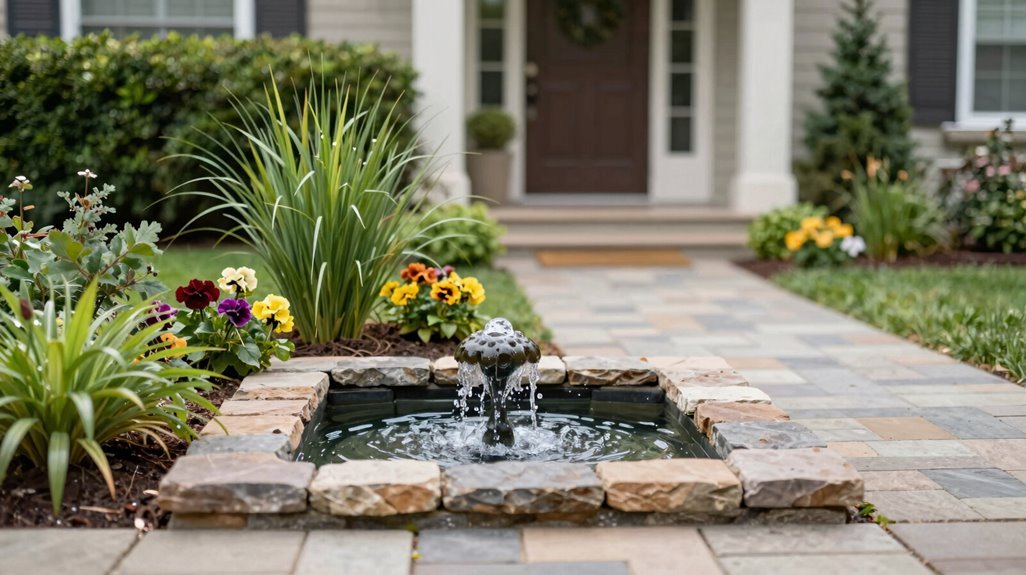
A compact water feature positioned within 6-10 feet of your front door establishes immediate visual hierarchy, directing visitor attention toward the entry while signaling deliberate design intent. You create a focal point that turns your entry landscape into a welcoming destination, not merely a passageway.
Your front yard water feature demands proportionate sizing, typically 24-36 inches in height for single-story homes, scaling to 48 inches for two-story facades. You’ll keep clean water surfaces weekly, preventing algae accumulation that undermines curb appeal.
Integrate your water feature with surrounding planters/urns to unify the street-to-door transition.
- Position bubbling urns or tiered fountains within the career gua (front center) to invite opportunity and positive energy flow.
- Pair your water element with adjacent containers in odd-numbered groupings of three or five.
- Select materials; cast stone, ceramic, or metal, that complement your home’s architectural vocabulary.
Rotate Seasonal Color for Year-Round Curb Appeal
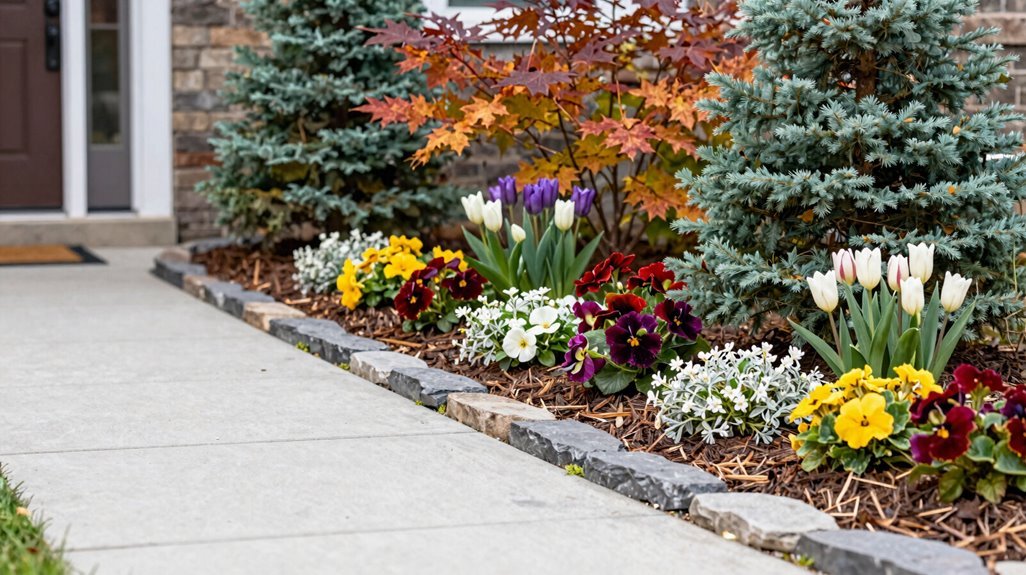
How do you maintain visual momentum at your entry when single-season plantings fade? You rotate seasonal color strategically, pairing annuals like petunias or marigolds with perennials such as hydrangeas or lavender for year-round interest. You establish a cohesive color palette of two to three colors across planters and window boxes, guaranteeing refined curb appeal. You update exterior finishes seasonally; repaint porch trims, swap containers, to preserve freshness. You leverage holiday displays, keeping front yards engaging. You commit to ongoing maintenance and mulching, sustaining vibrant color while suppressing weeds.
| Season | Action |
|---|---|
| Spring | Plant cool-weather annuals, refresh mulch |
| Summer | Install heat-tolerant blooms, water deeply |
| Fall | Add mums, ornamental kale, repaint trim |
| Winter | Display evergreen arrangements, protect perennials |