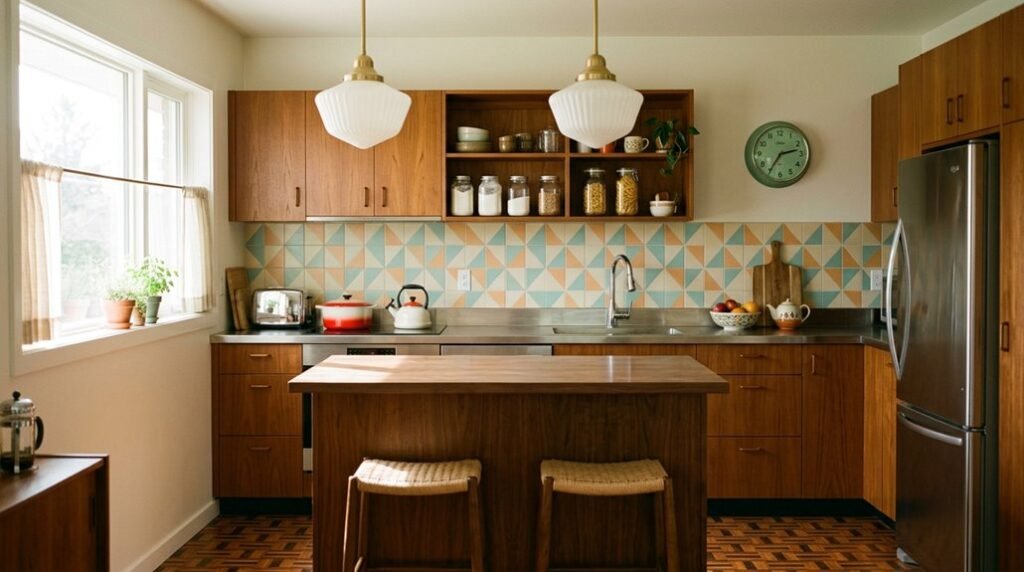
Mid-century modern kitchens rely on 96-inch vertical wood runs that eliminate visual breaks you won’t find in standard cabinetry layouts.
You’ll need to decide whether flat-panel walnut doors or open shelving suits your workflow before selecting hardware; that choice determines your entire spatial hierarchy.
The solution follows a modular system.
Start With Flat-Panel Cabinetry in Warm Walnut
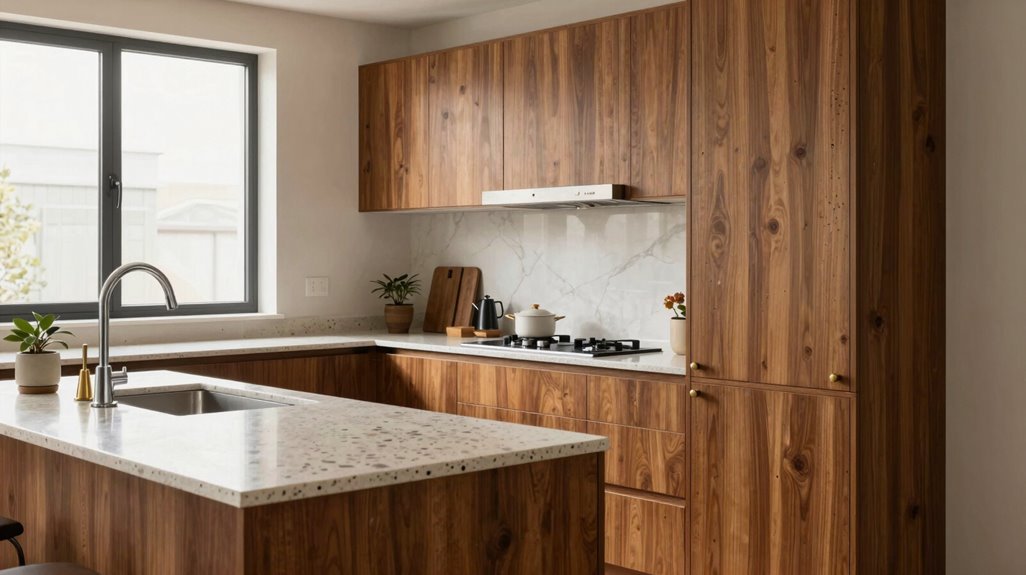
Nearly every successful mid-century modern kitchen begins with one foundational choice: flat-panel cabinetry in warm walnut. You install this walnut cabinetry to anchor your space with authentic mid-century character, selecting flat-panel doors that eliminate visual clutter through their streamlined, hardware-minimal surfaces.
You maximize storage by extending warm wood from floor to ceiling, creating 96-inch vertical runs that unify the room’s geometry. You integrate open shelving between flat-panel units, allowing functional display zones to read as cohesive design elements rather than afterthoughts. You complete the foundation with brass hardware, typically 3-inch pulls spaced 2.5 inches from door edges, and reserve bold accents for secondary applications.
Your walnut cabinetry establishes the warm wood baseline that supports, without competing against, the vibrant color statements you’ll layer throughout the space.
Add Mid-Century Color to Your Island or Range
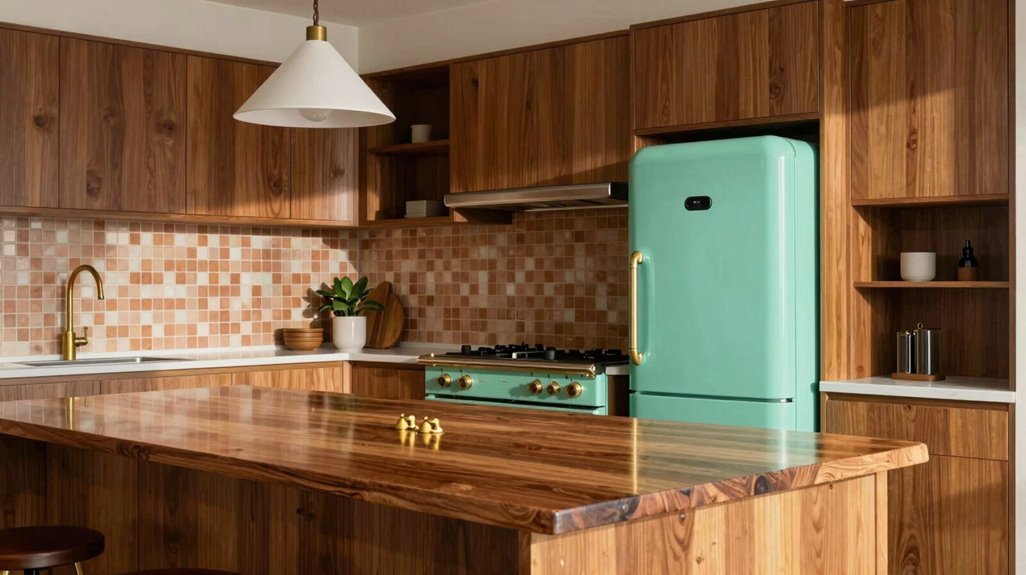
Where do you inject personality into your walnut foundation? You’ll give your space personality with mid-century color, turning your kitchen island into a strategic focal point.
- Apply bold accents in mustard yellow, olive green, or deep blue to your island cabinetry, then balance with neutral countertops and existing walnut surfaces.
- Echo your kitchen island hue through tile backsplashes, small appliances, or bar stools, distributing color across 2-3 secondary elements.
- Install retro hardware in brass or warm metallics, choosing pulls and knobs that work with your bold accents while reinforcing 1950s authenticity.
Match blue or green islands with geometric flooring or terrazzo accents to complete your coherent mid-century palette.
Hang Iconic Globe or Sputnik Pendants
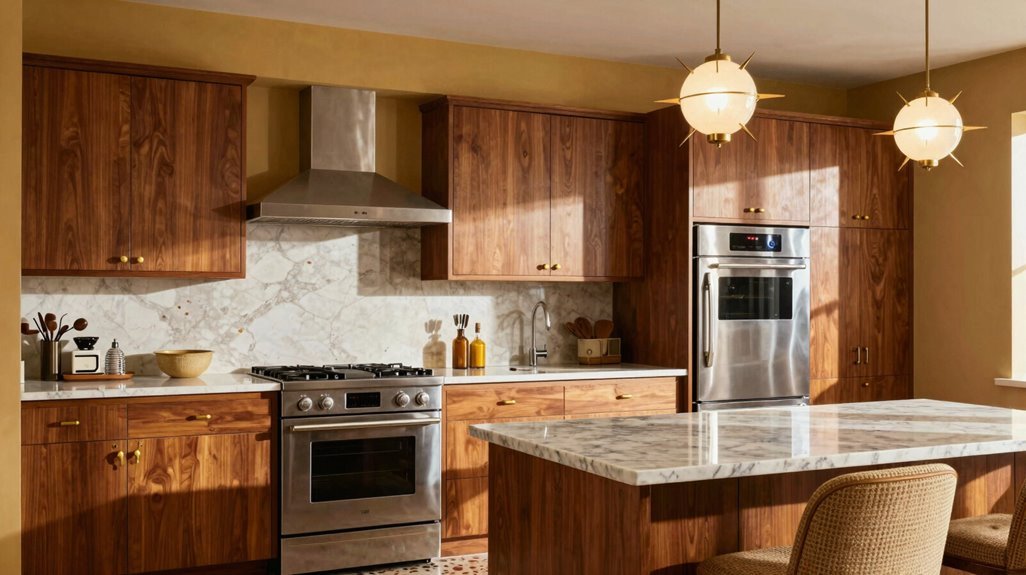
You’ll anchor your kitchen’s retro aesthetic by suspending globe pendants or Sputnik chandeliers as deliberate focal points, their orbital brass forms and diffused opal glass casting 2700K warmth across work zones. Position a 12-18 inch diameter globe or 24-36 inch Sputnik in clusters of two or three, spaced 30 inches apart, above islands measuring 36-48 inches wide to define social boundaries without obstructing sightlines.
Select fixtures with minimal stem hardware in brass or brushed nickel finishes, making sure they complement walnut or teak cabinetry while maintaining the era’s characteristic clean horizontal planes.
Retro Lighting Focal Points
Why settle for invisible fixtures when one bold pendant reshapes your entire kitchen into a period-correct statement? You’re choosing between two definitive silhouettes that ground your space in mid-century authenticity.
Select Your Focal Lighting:
- Globe pendants cast diffuse, warm light that flatters natural wood tones and flat-panel cabinetry without disrupting clean sightlines.
- Sputnik chandeliers deploy radiating arms in starburst formation, introducing metallic accents that sync with brass hardware and saturated color blocks.
- Brass or brushed metal finishes reflect off geometric backsplashes and terrazzo, amplifying illumination across open-plan layouts.
Hang your fixture at 30-36 inches above island surfaces, centered to unify cooking and dining zones. You’re not decorating; you’re engineering coherence.
The right pendant doesn’t illuminate; it declares membership in a design tradition that values precision, proportion, and purposeful materiality.
Globe Pendant Placement
Select glass globes, clear or frosted, with brass or warm-metal hardware. These accent warm wood tones and flat-panel cabinetry, creating cohesive contrast. You may vary pendant heights for visual interest, but maintain 28–34 inches from the lowest fixture to your countertop. This preserves sightlines and functional clearance.
Choose multiple smaller globes or one oversized cluster. Either approach reinforces the era’s bold, streamlined aesthetic while preventing visual clutter. Your mid-century modern kitchen achieves balanced, purposeful illumination through deliberate placement.
Sputnik Chandelier Impact
Globe pendants establish your foundation, but Sputnik chandeliers deliver the era’s most recognizable statement. You’ll anchor your mid-century modern kitchen with these radiating fixtures, their brass or chrome arms extending globe orbs that shimmer across terrazzo backsplashes and warm walnut cabinetry. Position your lighting over islands or dining zones to reinforce open-plan social flow.
To get the proportions right, measure your table or island, then select a Sputnik 12-24 inches narrower than the surface width. For islands longer than 72 inches, hang two smaller chandeliers 30 inches apart. Match finishes to your palette: polished chrome suits cool tones, while brass complements warm wood.
Your sculptural lighting creates the belonging you seek, contrasting clean slab cabinetry while signaling authentic era membership through intentional, measurable choices.
Pair Brass Hardware With Warm Wood Tones
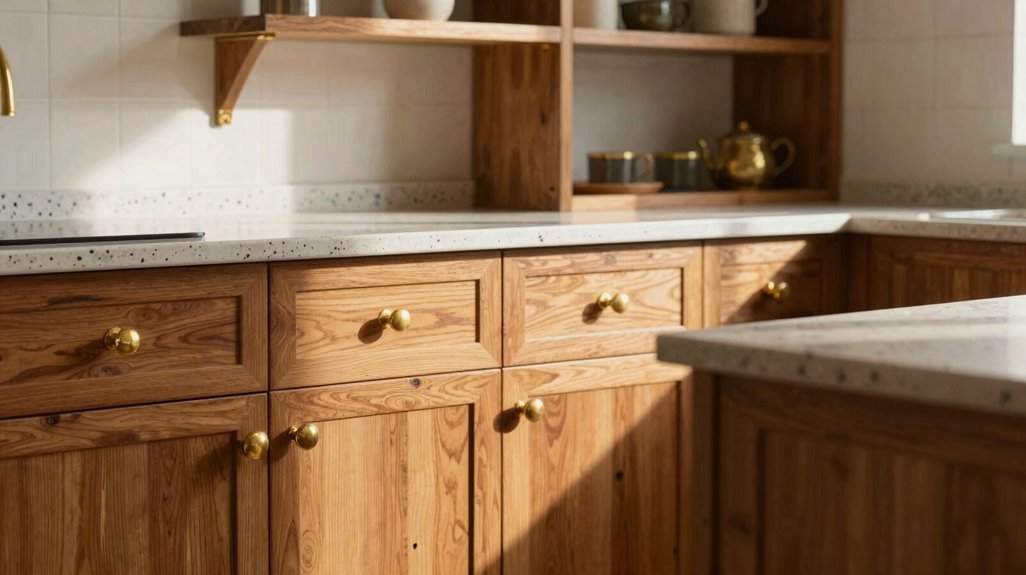
Choose brass pulls, handles, and faucets that complement your walnut or oak cabinetry without overwhelming the wood’s natural grain. You’ll want to limit yourself to 2–3 key brass pieces per cabinet section, letting warm wood tones dominate 70-80% of the visual field.
Coordinate these selections with warm bronze accents and neutral backgrounds to maintain systematic color harmony throughout your kitchen.
Brass Accent Selection
How do you introduce warmth into a kitchen without overwhelming its clean lines? You select brass hardware that complements, not competes, with your space.
Follow this three-step process to execute your brass accent selection:
- Choose brass finishes, satin, aged, or polished, based on your natural light levels; aged brass reduces glare in south-facing kitchens.
- Install brass hardware on 70% of cabinetry surfaces, reserving 30% for contrast materials to maintain visual hierarchy.
- Coordinate brass finishes across all fixtures, including faucets and pendant lights, within a 2-week selection window to keep batch consistency.
Your retro kitchen décor gains cohesion when brass unifies geometric tile patterns and olive accents. These mid-century accents create belonging through deliberate, repeatable choices. Measure twice, source once, and you’ll achieve period-appropriate precision.
Wood Tone Harmony
Balance emerges when you pair brass hardware with warm wood tones, creating a unified system that anchors your mid-century kitchen in visual coherence. You establish this foundation through floor-to-ceiling walnut cabinetry or prominent wood accents that generate natural warmth brass hardware complements without overpowering.
| Element | Implementation |
|---|---|
| Walnut cabinetry | Floor-to-ceiling installation for dominant warmth |
| Brass hardware | Minimal, strategic placement on drawer fronts |
| Wood tones | Slab doors, slats, or exposed beams |
| Accent pairing | Blue or teal elements for spatial energy |
You maintain architectural honesty by balancing texture between wood elements and brass pulls or hinges. Position brass fixtures to catch light against walnut surfaces, creating subtle gleam.
Combine warm wood finishes with cool accents to energize your space while preserving the era’s material integrity.
Pick Geometric Tile or Terrazzo Backsplashes
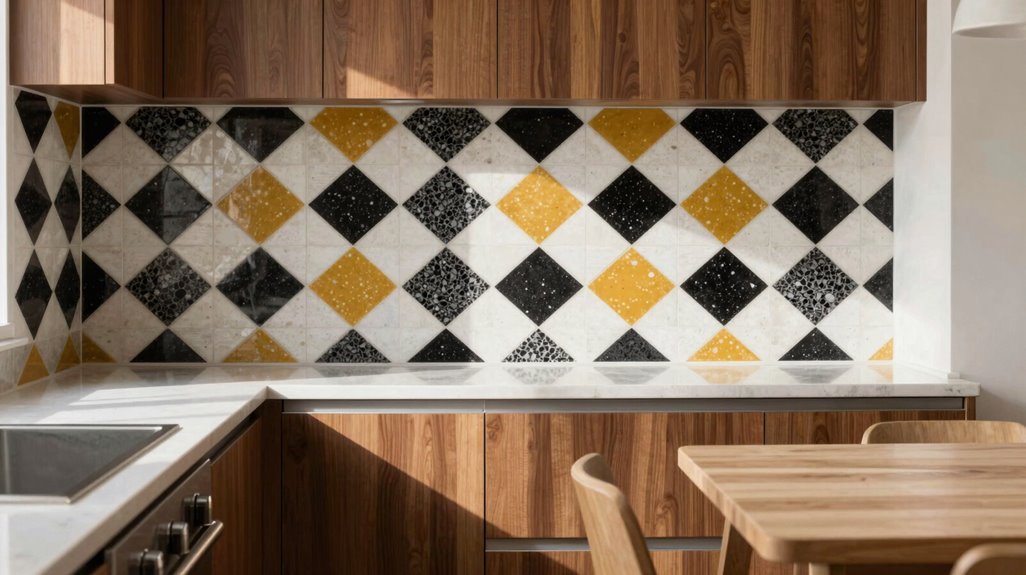
Whether you’re renovating a period home or retrofitting a contemporary space, your backsplash selection anchors the kitchen’s mid-century identity. You’ll find two primary paths: terrazzo or geometric tile. Each delivers distinct visual impact while honoring mid-century modern principles of clean organization and purposeful design.
- Terrazzo backsplashes embed marble, glass, or quartz chips in concrete or resin, creating speckled surfaces that complement walnut cabinetry and warm wood tones from your previous wood selection.
- Geometric tile backsplashes deploy repeating hexagons, diamonds, or herringbone patterns that mirror slab cabinetry lines and reinforce spatial order.
- Installation options range from permanent mortar-set tiles to temporary stick-on systems for 12-24 month commitments without landlord negotiations.
Source terrazzo-look materials or authentic mid-mod tiles through ModWalls or Clayhaus Ceramics. Black-and-white checkered patterns remain period-correct, while contemporary colorways expand your palette without compromising historical integrity.
Try Open Shelving for Authentic Storage
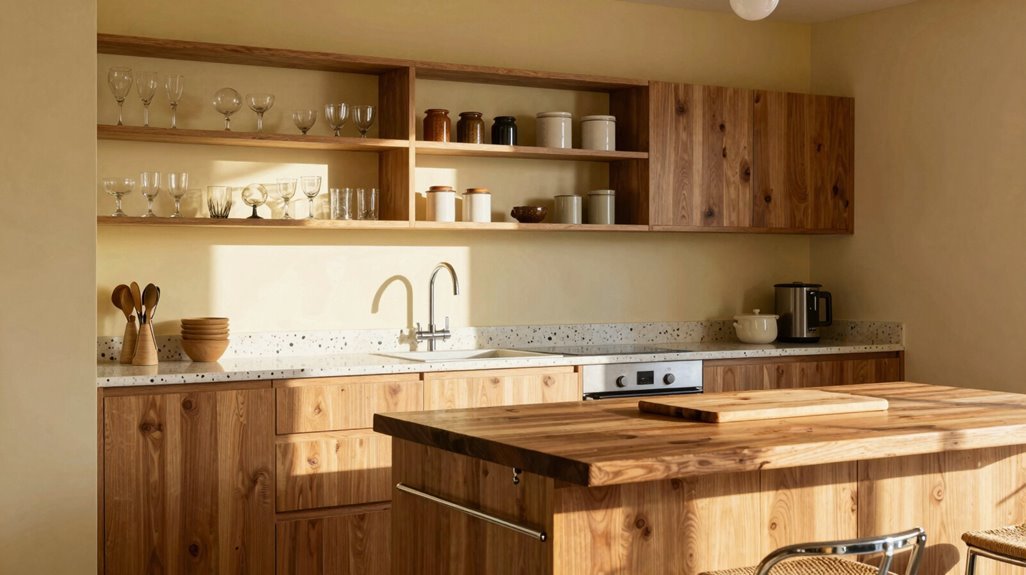
You’ll want to display your everyday dishware on open shelves, making sure each piece earns its keep through constant rotation and use. This approach lets you blend pure utility with visual rhythm, stacking ceramic bowls and glass canisters in graduated heights that align with your flat-panel cabinetry’s horizontal lines.
When you curate these shelves with restraint, limiting yourself to 8-12 coordinated objects per 36-inch span, you’ll maintain the era’s characteristic equilibrium between accessibility and order.
Display Functional Dishware
Open shelving turns your dishware into functional decor, turning everyday plates and bowls into deliberate design elements. You create authentic mid-century modern storage by pairing slab-front cabinetry with exposed shelves, keeping frequently used items within 24-inch reach while maintaining clean sightlines.
To curate your display:
- Select a cohesive color family for your dishware, balancing 60% neutral bases with 40% bold retro accents
- Mix three materials; wooden bowls, clear glassware, ceramic plates; to generate tactile contrast against walnut or blue cabinetry
- Feature 2-3 statement pieces per shelf, such as geometric-patterned dishes or colorful mugs, reinforcing period-appropriate palettes
You arrange items by scale, placing larger pieces at shelf ends, medium items centrally. This method yields organized, accessible storage that honors mid-century principles. Your kitchen becomes both practical and visually unified.
Blend Form Function
Authentic mid-century kitchens marry visual appeal with practical utility, and open shelving embodies this union. You’ll create cohesive storage by displaying dishware within easy reach, supporting the era’s open-plan emphasis while keeping essentials accessible.
Pair your open shelving with flat-panel walnut wood cabinetry to maintain clean lines and warm material contrasts. You’ll curate modular groupings of essentials, balancing vertical and horizontal rhythm to echo minimalist aesthetics.
Add bold color accents, such as mustard, olive, or deep blue, on adjacent cabinetry or tile to create focal points without surface clutter.
Install pendant lighting above shelves, choosing globe or sputnik-inspired fixtures to enhance visibility while reinforcing retro character.
This combination delivers functional organization, authentic materials, and period-correct illumination that turns your kitchen into a purposeful mid-century space.
Select a Round Table for Gatherings
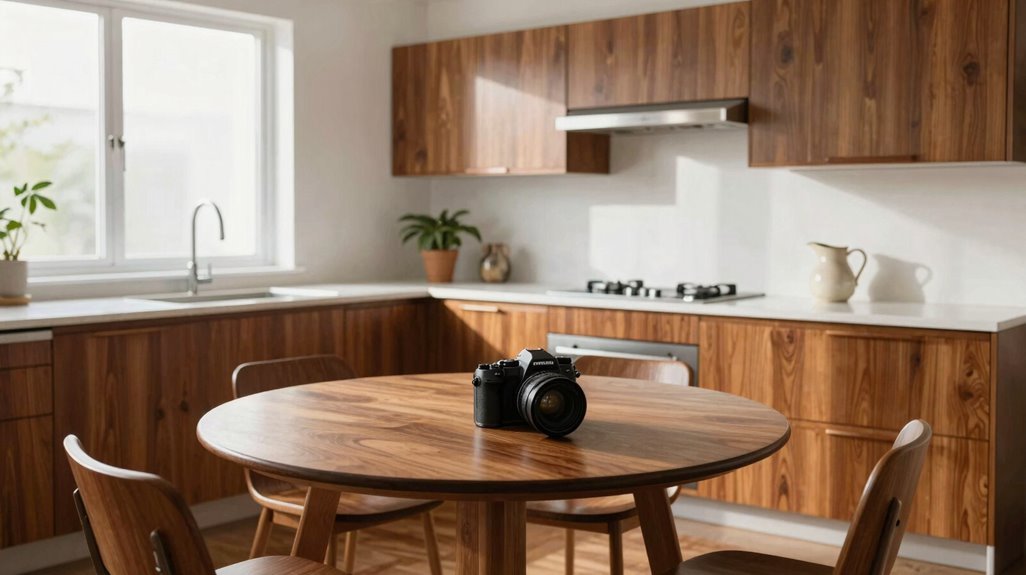
Why anchor your kitchen with a rectangular slab when a round table invites tighter circles and easier conversation? You’ll find that a central wooden round table, with tapered legs and clean, minimal lines, enhances intimate gatherings while echoing authentic mid-century modern cues.
Consider these three structural advantages:
- Flexible seating configurations accommodate four to six dining chairs, supporting casual dining and effortless social flow in open-plan kitchen layouts.
- Round extendable options provide compact 36-inch daily use, expanding to 48 inches for guests while preserving open, social feel.
- Warm wood finishes with brass hardware accents reinforce natural materials and cohesive mid-century styling.
Pair your selection with retro tulip or velvet dining chairs to reinforce the era’s sculptural contrast. You’ll create a defined gathering zone without visual weight.
Soften Hard Surfaces With Textiles and Rugs
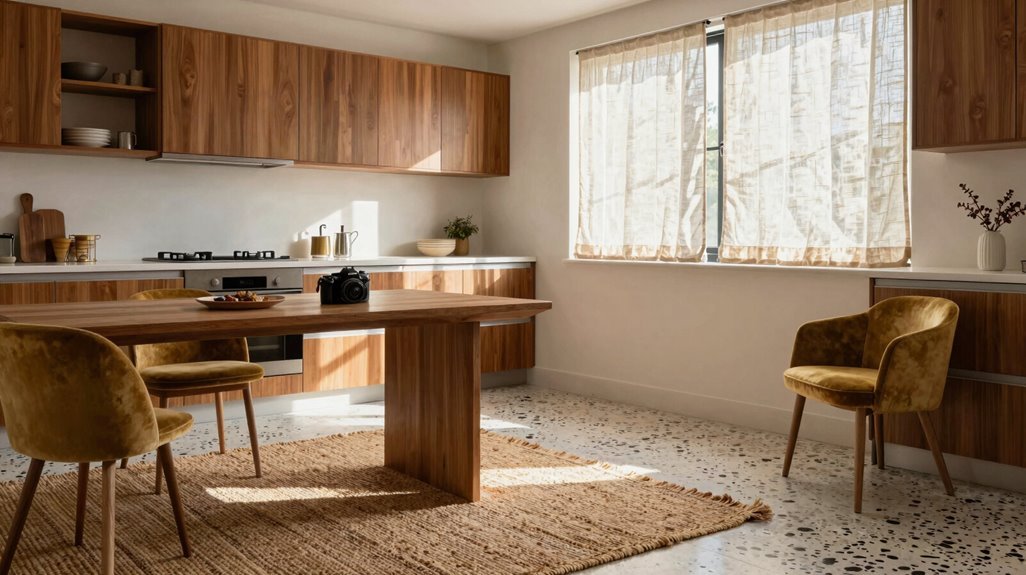
Though mid-century modern kitchens celebrate sleek surfaces and geometric precision, you’ll need strategic textile layering to prevent the space from feeling cold or unwelcoming. You’ll add sheepskin throws, bouclé upholstery, and soft wool rugs to introduce texture without disrupting clean lines. Place one large, plush rug beneath your dining area or seating cluster, creating a defined zone that contrasts against walnut cabinetry.
Layer tactile textiles, velvet cushions, linen drapes, in mustard, olive, or blue to build warmth and belonging. Mix knitted throws with woven poufs against flat-panel cabinets. Balance these fabrics with minimal hardware and sleek lighting, so textiles soften edges without overwhelming minimalist principles. This measured approach turns stark surfaces into an inviting, cohesive kitchen where you’ll want to gather.
Keep Windows Bare for Classic Light
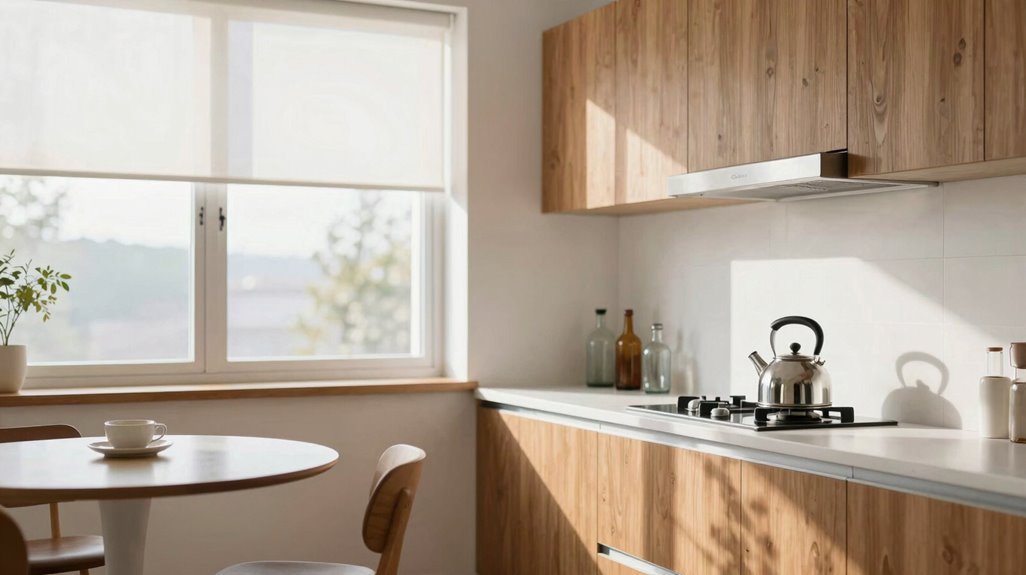
Once you’ve balanced hard surfaces with strategic textiles, turn your attention to the vertical planes where light enters. You’ll maximize natural light and create airy openness by keeping bare windows throughout your mid-century modern kitchen. Uncovered glass connects indoor spaces to outdoor views, reduces visual clutter, and reinforces clean lines essential to this aesthetic.
Embrace bare windows to flood your mid-century modern kitchen with natural light, seamless views, and uncluttered elegance.
Here’s why this approach works:
- Uninterrupted sightlines let you showcase walnut or teak wood cabinetry without fabric obstruction
- Enhanced material cohesion occurs when sunlight warms natural wood finishes and geometric flooring simultaneously
- Architectural focus remains on slim-profile cabinets, exposed beams, and pendant fixtures as intended focal points
When natural light floods your space, you emphasize warm wood tones and bold accents: mustard, olive green, deep blue, without competing treatments. Your mid-century modern kitchen achieves functional elegance through deliberate restraint.
Edit Vintage Accessories to Three Key Pieces
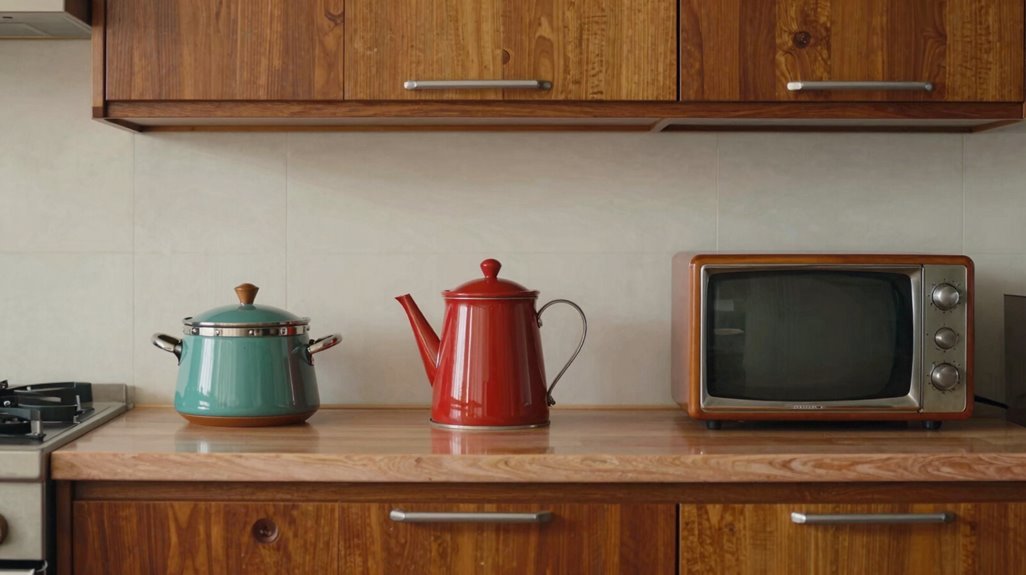
How do you prevent vintage accessories from overwhelming your mid-century modern kitchen? You edit ruthlessly.
Select three decorative accessories maximum. Choose one sculptural round dining table or pedestal table, one Tulip-style chair or slim-legged seating, and one bold geometric light fixture as the center of attention.
Add one color-pop piece: mustard yellow or teal ceramic vase, while keeping cabinetry in warm walnut or neutral tones. Pair leather or bouclé with wood, brass hardware, and glass for tactile richness without clutter.
Make certain your trio forms cohesive design rhythm with open shelving and continuous countertops, reinforcing the open-plan kitchen aesthetic you’re cultivating.
Never exceed three standout items. Let curved, angular, and organic shapes balance your flat-panel cabinetry. This disciplined approach creates belonging through intentional, period-authentic restraint.