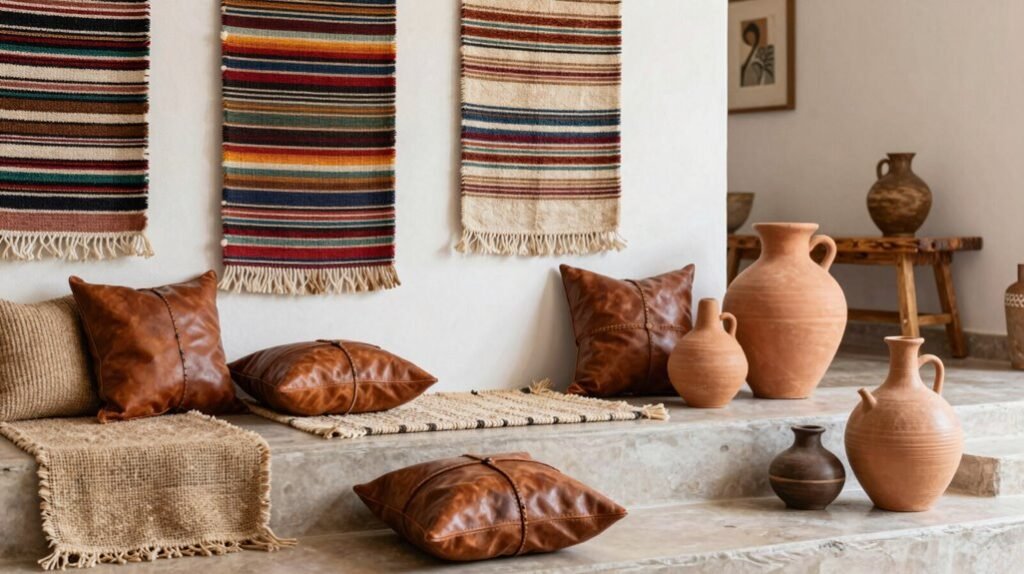
Like the sun-baked walls of a Oaxacan courtyard, your space craves structure before color. You need a system that anchors 60–70% of surfaces in terracotta and ochre, then deploys bold accents with surgical precision.
The five steps ahead break down exact saturation percentages, 10–15 ft² layering zones, and sourcing protocols for heirloom-grade pieces. You’ll finish with documented provenance, sustainable procurement, and a cohesive visual rhythm that outlasts trends. The first step demands immediate attention: your walls are waiting.
Start With Mexican Color Psychology: Warm Earth Tones and Bold Accents
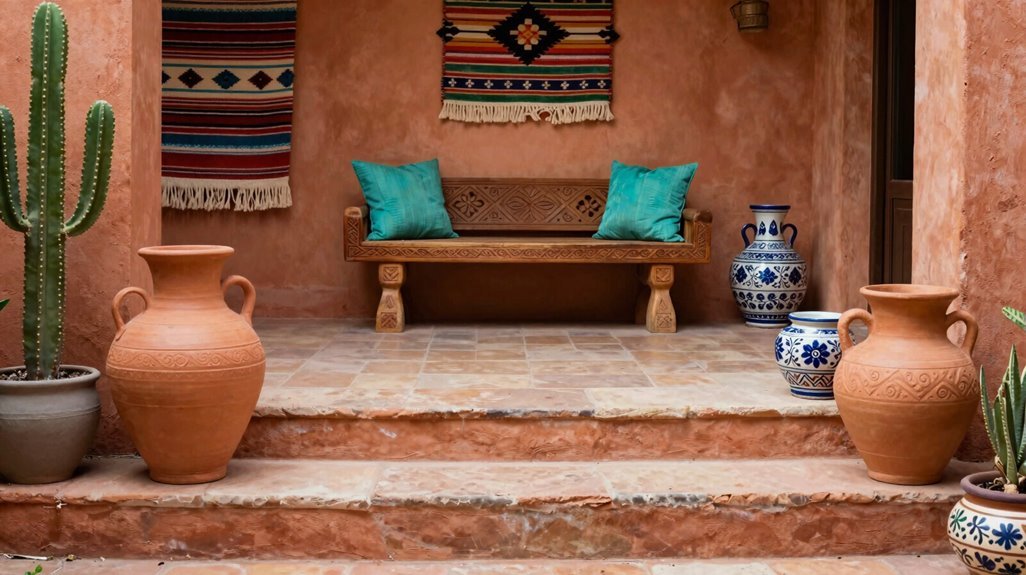
Color sets the foundation for authentic Mexican interiors, and you’ll want to master its strategic application before selecting any furniture or accessories.
You’ll anchor your space with Terracotta, ochre, or clay tones on 60-70% of surfaces: walls, floors, or built-in elements. These warm earth tones create instant rustic hospitality.
Next, inject bold accents through 10-15% color saturation: turquoise, deep cobalt, or sunlit yellow. Deploy these via ceramic pottery, painted trim, or single feature walls. Never exceed two saturated hues per room.
| Color Application | Percentage | Examples |
|---|---|---|
| Base tones | 60-70% | Terracotta walls, clay plaster |
| Bold accents | 10-15% | Talavera-inspired blues, Otomi yellows |
| Neutrals | 15-25% | Cream ceilings, natural wood |
You’ll energize spaces while preserving warmth. Measure your wall square footage, select your Terracotta base, then position one bold accent opposite your entry point for maximum visual impact.
Layer In Handwoven Textiles, Leather, and Natural Materials
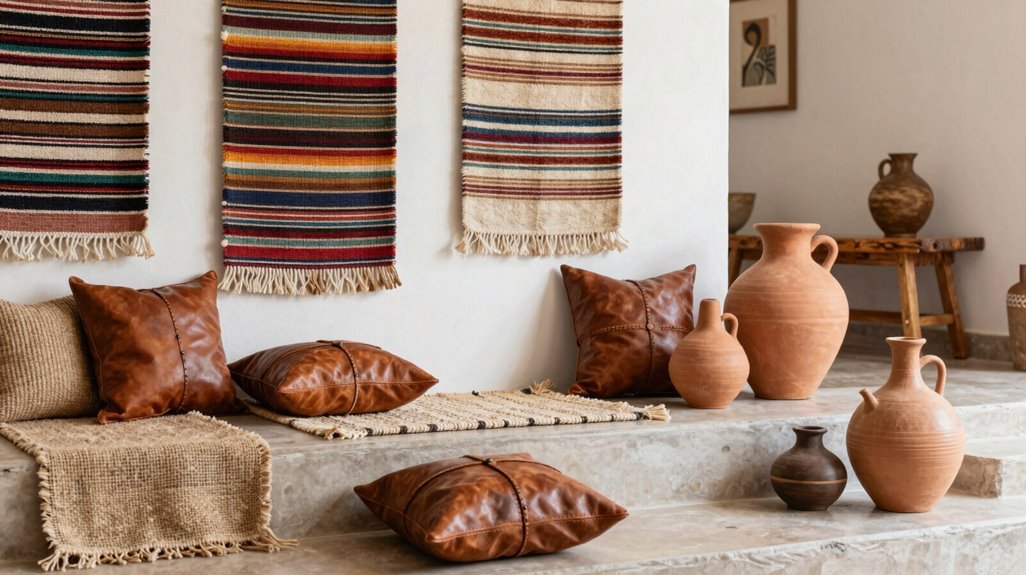
Once you’ve established your color foundation, you’ll build dimension through material layering. You’ll incorporate handwoven textiles through three strategic applications:
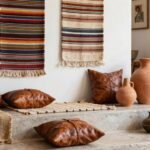
- Anchor seating areas with Otomi-inspired cushions (18-20 inches square) and serape-inspired throws (50×60 inches minimum) to introduce authentic textures and bold patterns.
- Pair natural materials including wood, clay, and stone with cognac leather chairs to create tactile contrast within 10-15 square foot zones.
- Layer indigenous patterns in small decor items, pillows, wall hangings, and woven rugs (3×5 feet or larger), to add cultural depth without visual clutter.
You’ll balance vibrant handwoven textiles against neutral bases, allowing artisanal details to command attention while maintaining cohesive, timeless aesthetics. This systematic approach changes spaces through measurable material relationships, not decorative accidents.
Source Authentic Talavera, Carvings, and Regional Crafts
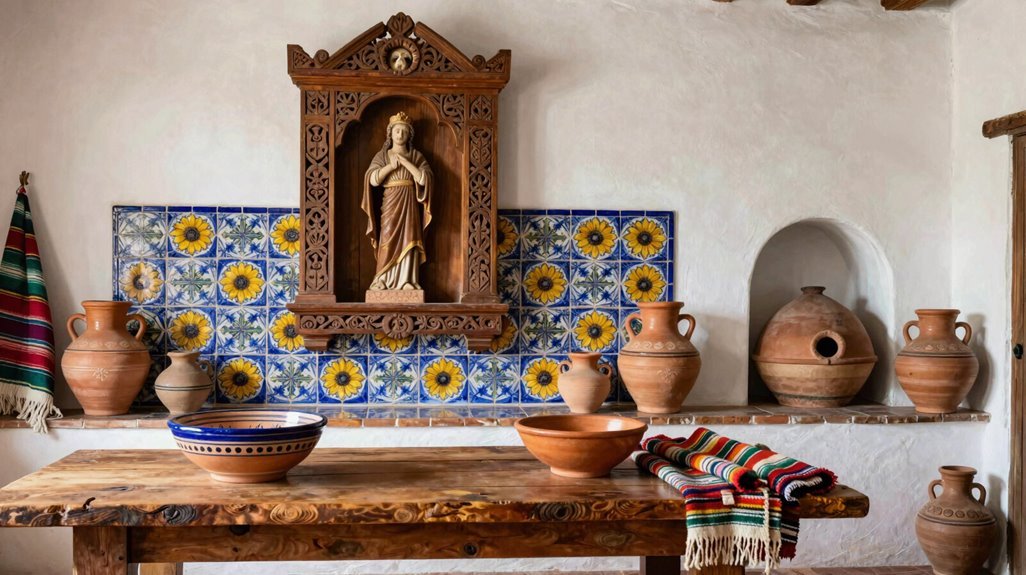
Where do you find pieces that anchor your space with genuine cultural weight? You seek out Talavera pottery from Puebla’s certified workshops, where artisans apply cobalt blue, turquoise, and yellow glazes using 16th-century methods passed through generations. You examine each piece for the distinctive raised patterns and proper tin-glazing that distinguish authentic work from imitations.
You locate hand-carved tropical motifs and folkloric figures through cooperatives practicing traditional chiseling techniques with native hardwoods. You prioritize regional crafts utilizing locally sourced clay, terracotta, and natural dyes that bear specific geographic signatures: Oaxacan black pottery, Michoacán copperware, Guerrero lacquerware. You verify artisan partnerships follow fair-trade standards, confirming proper compensation and technique preservation.
You build collections systematically: tableware sets (6-8 pieces), decorative tiles (4-inch squares in quantities of 12-20), and statement vessels (12-18 inch height). You’re investing in provenance, traceability, and cultural continuity through material choices.
Mix Otomi Patterns and Stripes Without Visual Chaos
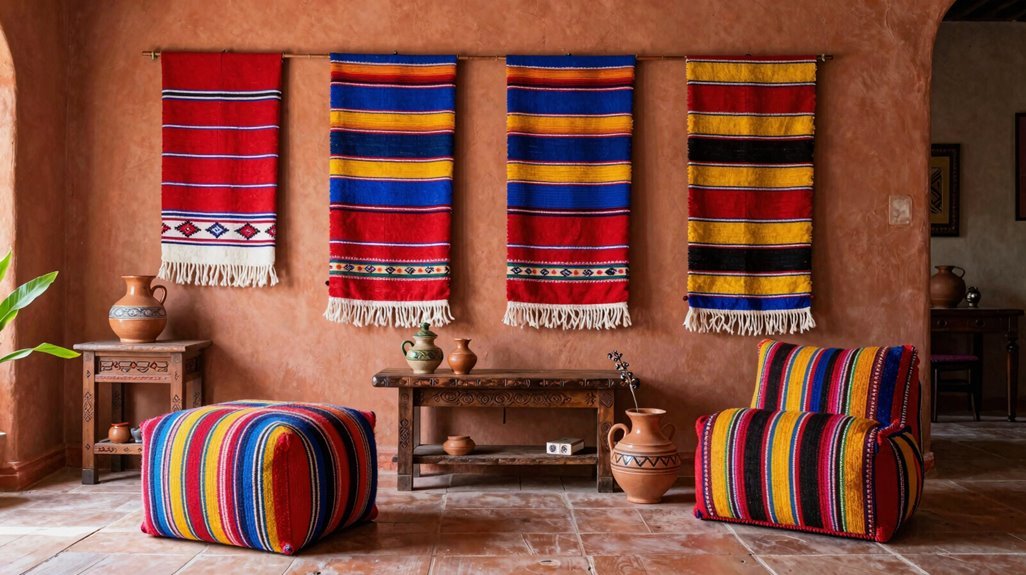
How do you unite two visually demanding patterns without creating discord? You balance Otomi patterns with Stripes through deliberate scale and color control.
- Anchor with neutrals. Paint walls in warm white or sand tones, then add natural wood furniture, so Otomi patterns and Stripes command attention without clashing.
- Control scale variation. Pair large Otomi panels featuring geometric animals with narrow Striped runners under 6 inches wide, or reverse this with small Otomi pillows against bold, 12-inch Striped curtains.
- Unify through repetition. Echo one Otomi motif, perhaps a blue deer or red flower, across three items minimum, while selecting Stripes in terracotta, ochre, or charcoal that pull directly from your Otomi palette.
This measured approach creates cohesive rhythm, helping your space feel collected, not chaotic.
Build a Heirloom Collection: Quality Mexican Pieces That Last
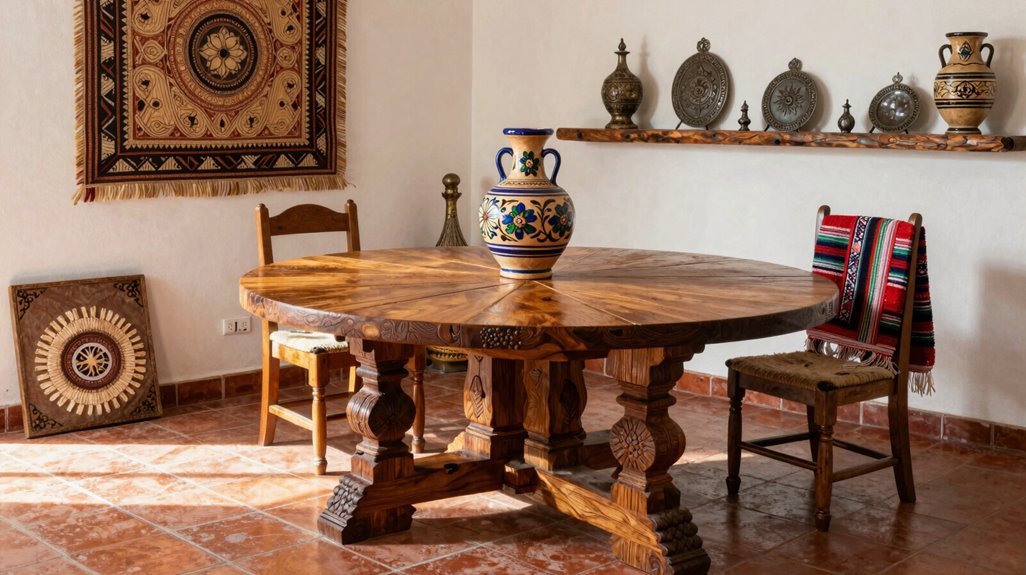
Why settle for disposable décor when you can build a collection that outlasts trends and generations? Start your heirloom collection by selecting pieces that merge traditional Mexican craftsmanship with contemporary design from premium manufacturers like Four Hands and Noir.
Prioritize functional artistry across four categories: lighting, seating, décor, and storage. Each item must serve practical utility while delivering aesthetic value.
Source indigenous materials with documented provenance. Specify Talavera pottery with 16-color glazing, Otomi textiles measuring 50″ × 70″, and handwoven elements using 100% natural fibers.
Verify fair-trade certification and environmental compliance. Request documentation of sustainable harvesting and artisan compensation structures.
Balance rustic warmth against refined modern lines. Test each piece against three interior contexts: colonial, contemporary, and transitional.
Your heirloom collection becomes a transferable asset, connecting you to craft heritage while guaranteeing decades of functional service.