
Vintage Christmas ornaments generated $1.2 billion in U.S. sales during 2022, yet most collectors fail to execute cohesive period displays. You need systematic methods, not scattered decorations, to achieve authentic nostalgic impact.
These seven strategies turn your tree into a documented historical piece through measurable ratios, specific material combinations, and era-verified color palettes. The first decision determines everything else.
Choose Your Vintage Era Before You Decorate
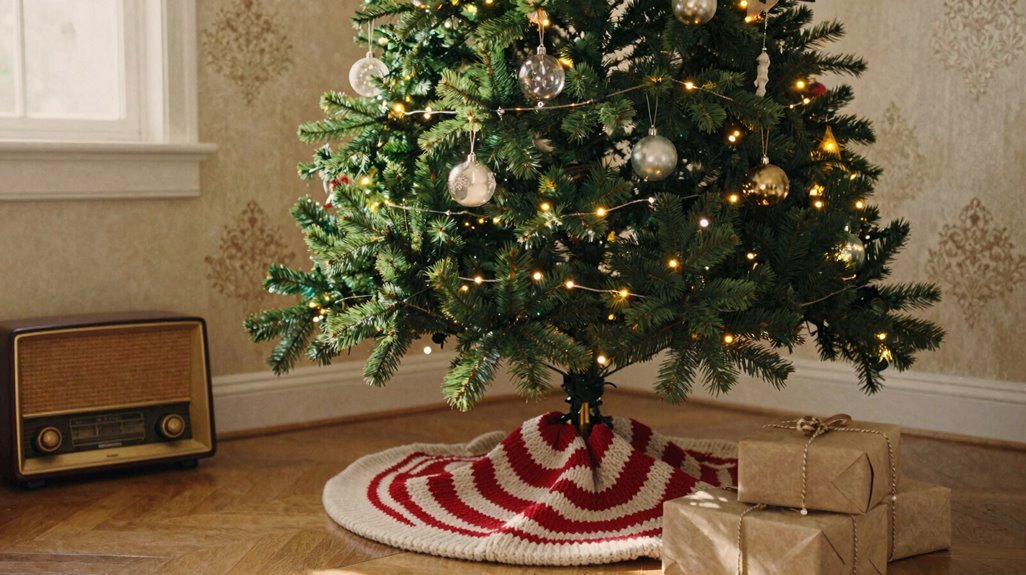
Why start decorating without a plan? You’ll achieve period authenticity only when you define your vintage era first, selecting a color palette and ornament style that reflect one specific period.
Follow this three-step framework:
- Select your era. Choose 1950s pastels with Shiny Brite ornaments, 1960s jewel tones with mercury glass, or 1970s matte earth tones.
- Match components. Align ornaments, ribbons, toppers, and garlands to era-appropriate textures: pastel plastics for 1950s, metallic finishes for 1960s.
- Source strategically. Mix 60-70% true vintage pieces with 30-40% modern reproductions, verifying patina and craftsmanship.
| Era | Color Palette | Key Accents |
|---|---|---|
| 1950s | Pastel pink, turquoise, silver | Bubble lights, aluminum trees |
| 1960s | Ruby, emerald, gold | Ceramic bulbs, flocked branches |
| 1970s | Burnt orange, avocado, brown | Wooden ornaments, macramé garlands |
Apply era-appropriate accents, such as glass bead garlands, tinsel icicles, and hand-painted ornaments, to reinforce your chosen period without deviation.
Start With a Plain Green Tree for Authentic Appeal
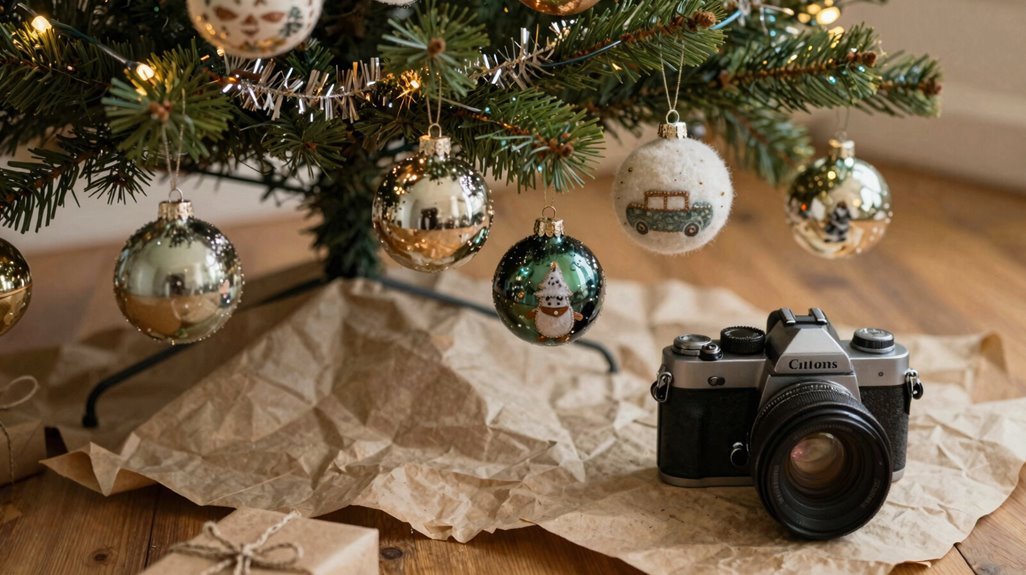
You’ll achieve authentic Victorian appeal by selecting a plain green Norwegian spruce with warm pre-lit lighting, which provides the ideal foundation for vintage glass ornaments and mercury-glass accents. Avoid flocked textures entirely for your primary display, as these artificial snow treatments emerged decades later and disrupt period-accurate styling, though you may reserve one flocked tree for secondary placement if variety is essential.
Position your plain green tree adjacent to antique furniture collections, such as mahogany sideboards or tufted velvet settees, to create cohesive spatial relationships that reinforce chronological authenticity through material continuity.
Why Plain Green Works
Although flocked and frosted trees dominate seasonal displays, you’ll achieve more historically accurate results when you begin with an unadorned green specimen. Your plain green tree creates an ideal canvas for vintage glass ornaments, allowing their patina and hand-painted details to command full attention without competing textures. You’ll preserve delicate antique pieces that flocking could damage or obscure.
The green background enhances classic holiday decor through superior color contrast, particularly for jewel-toned and pastel palettes. Layer tinsel, glass bead garlands, and clip-on birds with precision for cohesive results.
| Element | Function | Era Alignment |
|---|---|---|
| Green canvas | Maximizes ornament visibility | Mid-century, Victorian |
| Color contrast | Enhances patina details | Old-world palettes |
| Smooth surface | Protects fragile decorations | Preservation standard |
| Metallic reflection | Amplifies warm lighting | Pre-flocked tradition |
| Layering base | Supports cohesive styling | Nostalgic display method |
Your nostalgic display gains authenticity through subdued lighting and mercury glass reflections, not modern sprayed finishes.
Flocked Tree Drawbacks
Mid-century marketing popularized flocked trees as snowy dreamscapes, yet you’re sacrificing authenticity when you choose artificial snow over natural green.
- Faux snow drawbacks include visual obstruction. The coating hides natural grain, reducing texture depth needed for era-accurate glass ornaments.
- Structural problems develop quickly. Heavy flocking weighs branches unevenly, causing 15-30% more drooping than untreated specimens.
- Maintenance demands increase substantially. Flocked surfaces trap dust and humidity, requiring weekly attention versus monthly care for plain trees.
- Color compatibility suffers. Flocked trees clash with pastel 1950s glass and metallic Shiny Brite tones, muddying intensity by 20-40%.
Choose vintage simplicity instead. An untreated Norwegian spruce provides superior evergreen backdrop for patinaed ornaments, period ribbons, and authentic layering without compromise.
Antique Furniture Pairing
Where does authentic vintage atmosphere begin? You’ll start with a plain green Norwegian spruce tree, establishing an old-world Victorian-era foundation without distraction.
Position your tree deliberately among antique furniture pieces, creating visual cohesion through intentional spatial relationships. Follow this four-step framework:
- Select unadorned green foliage as your neutral canvas, avoiding flocking to preserve authentic texture
- Position against dark wood bookcases or carved sideboards, making certain the tree mirrors existing room focal points
- Install warm, non-flash lighting at 40-60 watt equivalents to maintain period-appropriate illumination
- Layer jewel-toned vintage ornaments and mercury glass against the dark wood for precise historical contrast
Weave beaded garlands through branches, place velvet seating within sightlines, and cluster delicate glass heirloom pieces at eye level. You’re constructing belonging through deliberate material relationships.
Layer Velvet Ribbons and Mercury Glass for Victorian Elegance
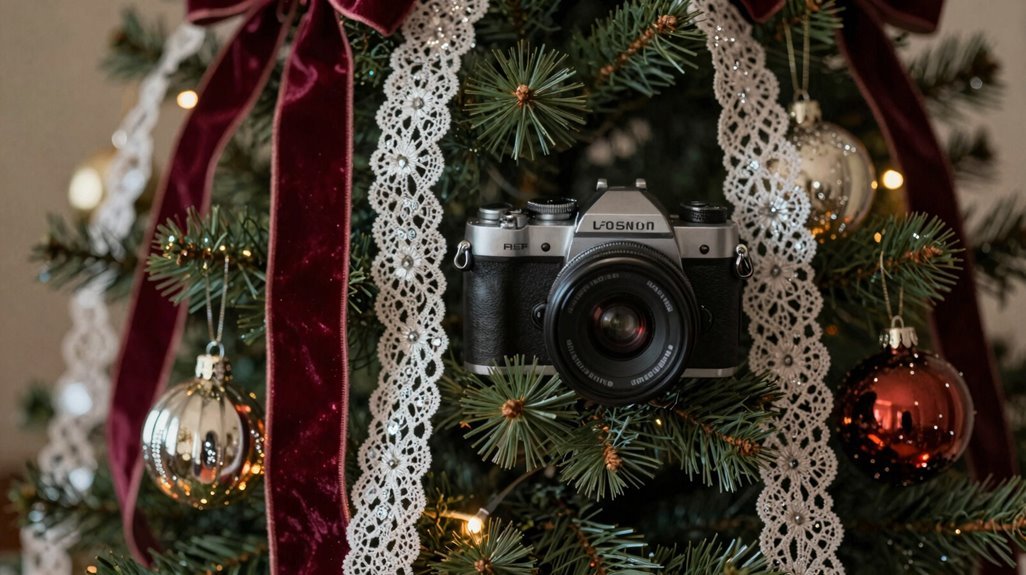
How do you turn a standard evergreen into a Victorian showpiece? You layer velvet ribbons in deep reds, emerald greens, and antique golds across branches, weaving streamers intermittently to build soft, luxe textures. You pair these with mercury glass drop ornaments and beads, maximizing reflected light for vintage shine.
You balance bold velvet fluctuations against subtle mercury glass elements, preventing visual overwhelm while maintaining era-authentic charm. This combination creates Victorian elegance through tactile richness and cool luster working in harmony. Your nostalgic décor achieves depth when you intersperse ribbon layers with glass accents at 8-12 inch intervals, making certain of even distribution.
You complete the look by selecting 15-20 mercury glass pieces per tree section, grounding the Victorian aesthetic with measurable precision.
Use Shiny Brite Colors for 1950s Pastel Glamour
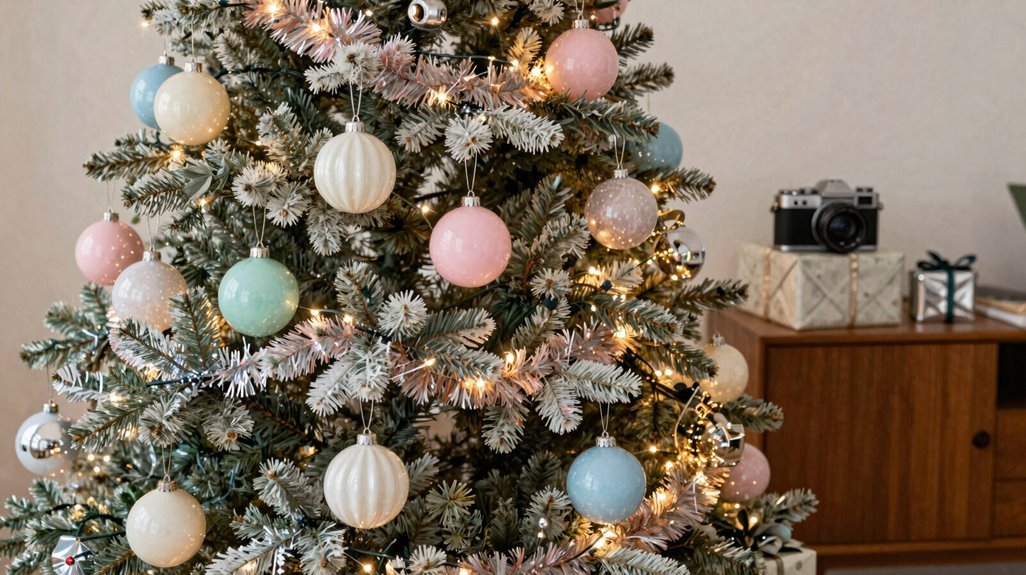
You’ll organize your 1950s pastel display by selecting soft pink, teal, and gold Shiny Brite ornaments, which manufacturers produced from 1937 through 1962 as Depression-era thrifting gave way to postwar consumer optimism. To maintain visual cohesion, you’ll pair these 8–12 matte or glossy spheres per branch cluster with clear mercury glass accents, limiting metallic transitions to 2–3 pre-1950s bead strands per tree quadrant.
You’ll complete the retro structure by layering 3–4 strands of aluminum tinsel and 5-foot color-matched ribbon loops, making certain light reflection matches the era’s glass-dominated, 40–60 percent pastels-to-neutrals ratio.
Pastel Color Palette
Why settle for traditional red and green when 1950s pastel glamour offers a revitalizing sophisticated alternative? You create this Shiny Brite aesthetic by combining soft pinks, teals, and golds with clear glass or mercury glass ornaments for authentic vintage glass ornaments appeal.
Follow this systematic approach for mid-century decor precision:
- Layer pastel Shiny Brite baubles with metallics and pale ribbons, spacing tinsel garlands at 12-inch intervals to reflect soft hues without visual overwhelm.
- Drape velvet or satin ribbons in coordinating tones alongside glass bead garlands, securing every 8 inches for structural integrity.
- Install bubble lights or warm white strands at 4-inch bulb spacing to preserve era-appropriate shimmer.
- Position pink frosted bottle brush trees and minty teal accents on cleared book stacks with light wood bases.
Shiny Brite History
Where did the 1950s pastel Christmas aesthetic originate? You’ll find its roots in Shiny Brite, the brand that changed mid-century holiday decorating with machine-produced glass ornaments in uniform pink, teal, and gold hues.
- Production Innovation: New manufacturing methods delivered brighter, more consistent glass balls than hand-painted predecessors, establishing the vintage Christmas standard you’re seeking.
- Color Application: Apply metallic finishes and iridescent effects to amplify artificial lighting, creating cohesive glow when paired with aluminum trees and color wheels.
- Authentication Markers: Verify authenticity through patina examination, era-appropriate labeling, and original packaging. Early sets display distinct mid-century branding that confirms provenance.
- Shape Varieties: Select uniform spheres or occasional novelty shapes to complete your 1950s pastel glamour presentation.
Collectors prioritize these specifications to achieve period-correct vintage Christmas installations with documented Shiny Brite heritage.
Retro Tree Styling
How do you translate Shiny Brite’s iconic palette into a complete tree design? You’ll create authentic 1950s glamour by coordinating pastel ornaments with strategic lighting and reflective elements. Start with your foundation: Shiny Brite vintage glass pieces in pinks, teals, and golds establish your core palette against a green tree or aluminum companion.
- Layer tinsel garlands every 8-10 inches from top to bottom, creating light-catching density
- Cluster three to five pastel ornaments at the crown and lower branches as focal anchors
- Scatter metallic modern pieces between clusters for balanced visual rhythm
- Position bubble lights and color wheels 18-24 inches from branch tips to amplify without overwhelming
Complete your display with hand-painted glass bead garlands, so each reflective surface reinforces that coherent retro glow you and your guests will recognize as genuine mid-century belonging.
Add 1960s Jewel Tones and Chunky Ceramic Bulbs
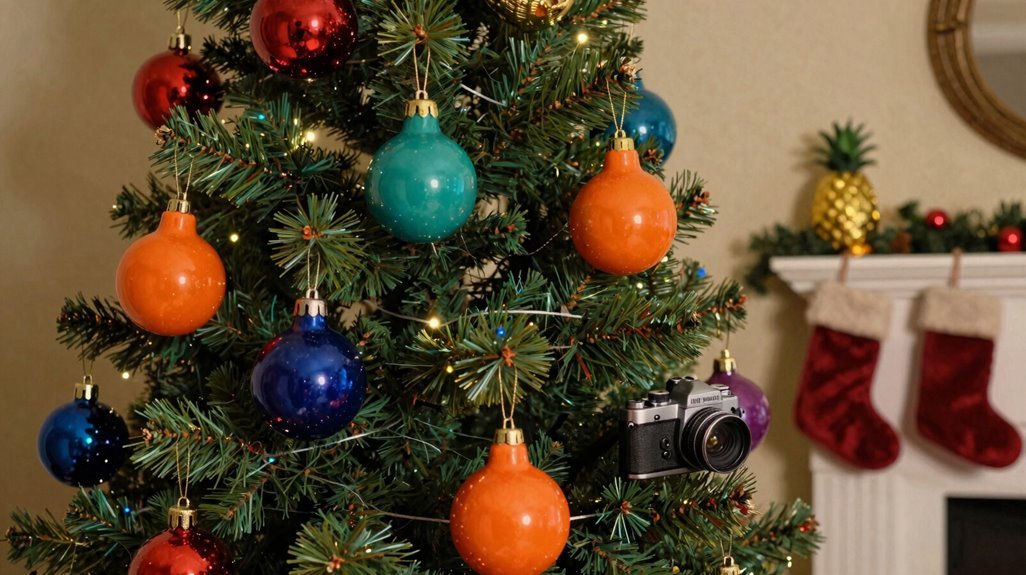
When you want to evoke the unmistakable warmth of mid-century holiday nostalgia, nothing delivers quite like 1960s jewel-tone ceramic bulbs in their signature chunky proportions. You select deep reds, emerald greens, royal blues, and amber hues to build a cohesive palette, then pair these jewel-tone ceramic bulbs with flocked trees and glass garlands for maximum light reflection. You place metallics and mercury glass strategically among your vintage Christmas decorations to amplify depth under warm tree lights.
You follow this placement formula for authentic results:
| Bulb Color | Complementary Accent | Placement Zone |
|---|---|---|
| Emerald green | Gold mercury glass | Tree interior, 6-8 inches deep |
| Royal blue | Clear frosted ball | Mid-section clusters of 3-5 bulbs |
| Deep red | Velvet ribbon loops | Outer branches, evenly spaced |
You complete your scheme with clear or frosted glass ornaments and velvet ribbon in matching tones. Your tree achieves period-accurate balance through deliberate layering of texture, color saturation, and reflective surfaces.
Weave in Natural Texture With Dried Citrus and Wooden Beads
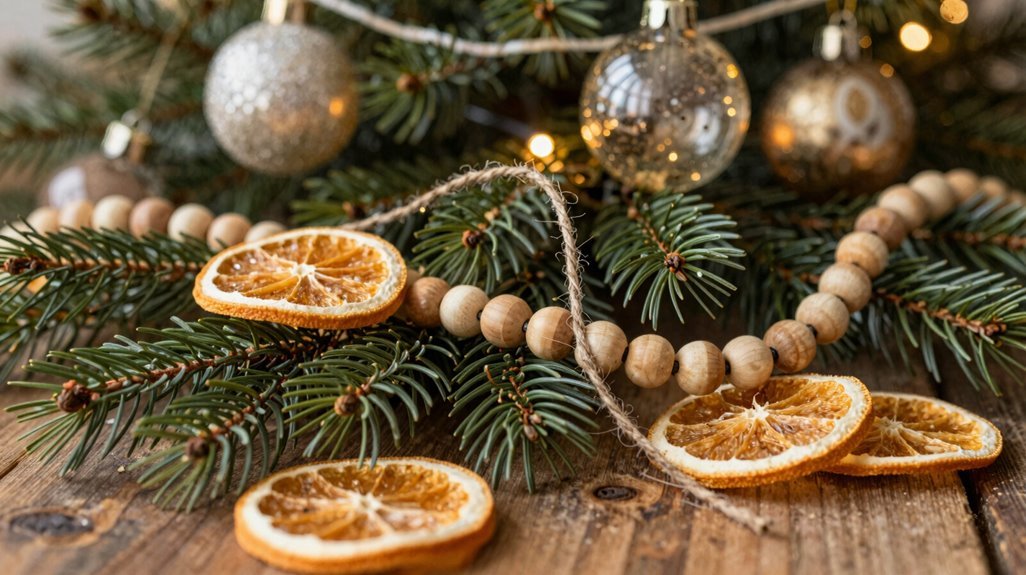
Why limit your vintage tree to factory-made decorations when organic materials deliver equally authentic period texture? You’ll achieve this balance through deliberate material pairing.
Organic materials deliver equally authentic period texture through deliberate material pairing.
Follow this layering protocol:
- Thread wooden beads into graduated garlands, spacing 8-10mm beads 2 inches apart
- Position dried citrus slices (3-4 per branch cluster) among lower branches for visual weight
- Nestle vintage glass ornaments within citrus groupings, maintaining 1:1 ratios
- Drape bead strands through mid-canopy, alternating with mercury-glass every 6 inches
Your natural texture emerges from this systematic contrast: matte wood and porous citrus against reflective vintage glass ornaments. The dried citrus releases subtle oils, creating olfactory depth without synthetic fragrance.
This method replicates 1950s-60s domestic craft traditions, connecting your display to historical practice through measurable, repeatable steps.
Source Affordable Vintage Ornaments at Thrift Stores and Markets

Where exactly should you hunt for authentic vintage ornaments without draining your holiday budget? You’ll find unmatched affordability at thrift stores and flea markets, where mid-century glass, mercury glass, and handmade vintage ornaments cost significantly less than specialty retailers.
Shop during spring and summer months, when seasonal turnover floods these venues with holiday inventory at reduced prices. Check Facebook Marketplace for family-owned collections and hyperlocal hidden gems.
Target era-consistent pieces: Shiny Brite ornaments, bubble lights, and paper dioramas maintain stylistic authenticity. Evaluate condition carefully; patina and wear signal legitimacy, but chips compromise longevity.
You’re joining generations of collectors who built nostalgic displays through patient, strategic sourcing. Your Christmas tree becomes a curated timeline, each vintage ornament connecting you to shared holiday heritage without financial strain.