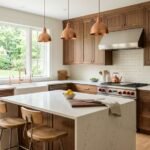
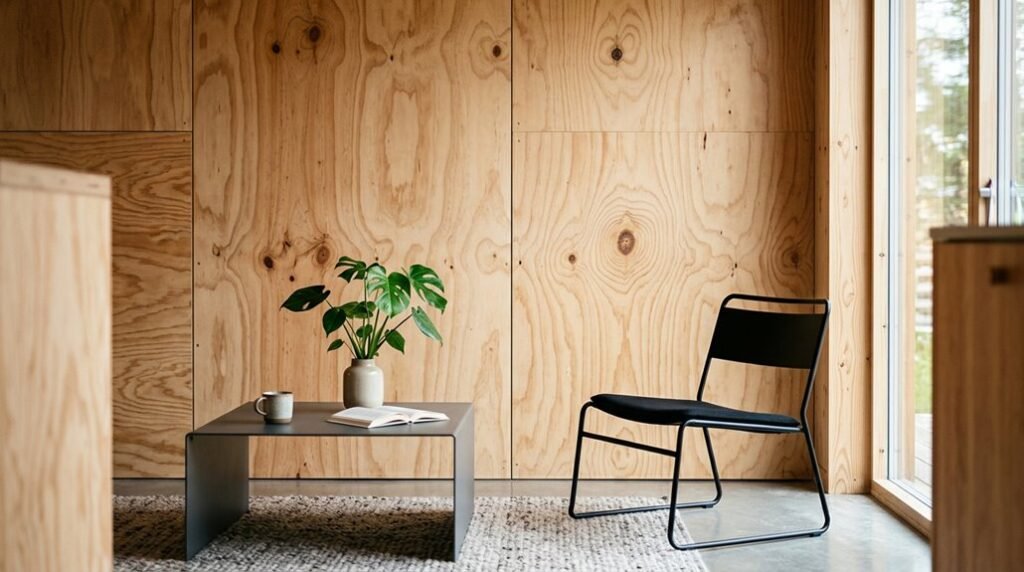
You need wall systems that adapt to structural demands, finish preferences, and budget constraints without compromise. Plywood delivers 1,500 PSI tensile strength across grain directions, accepts direct application of stains or sealants, and installs in 4×8 sheets you can handle solo.
The following sections break down material specifications, grade classifications, and installation protocols you will use to specify, procure, and finish plywood walls in residential, commercial, and exterior applications.
What Is a Plywood Wall (and Where Do People Use Them)?
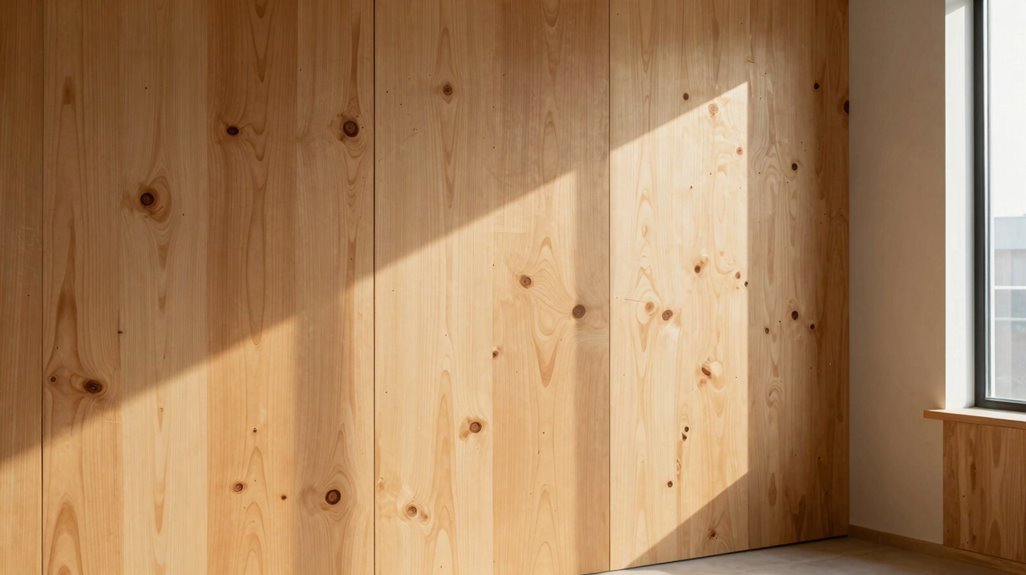
What exactly is a plywood wall, and where should you use one? A plywood wall is a vertical surface built from plywood sheets, serving either structural or decorative purposes in your interior design projects. You’ll find these versatile systems in garages, workshops, van builds, and residential spaces where moisture resistance and screw-holding strength matter.
Your wall applications fall into two categories: structural sheathing (3mm–18mm thickness) that adds rigidity and nail-holding capacity to framing, or finished decorative panels that create visible surfaces. Select 3-ply, 5-ply, or 7-ply configurations based on your load requirements and environment.
Whether you’re building a workshop or upgrading living spaces, plywood walls deliver practical solutions. Terms like “ply on wall” and “wall plywood” describe identical concepts: plywood panels engineered for reliable, adaptable vertical surfaces.
Why Plywood Walls Beat Drywall and Solid Wood
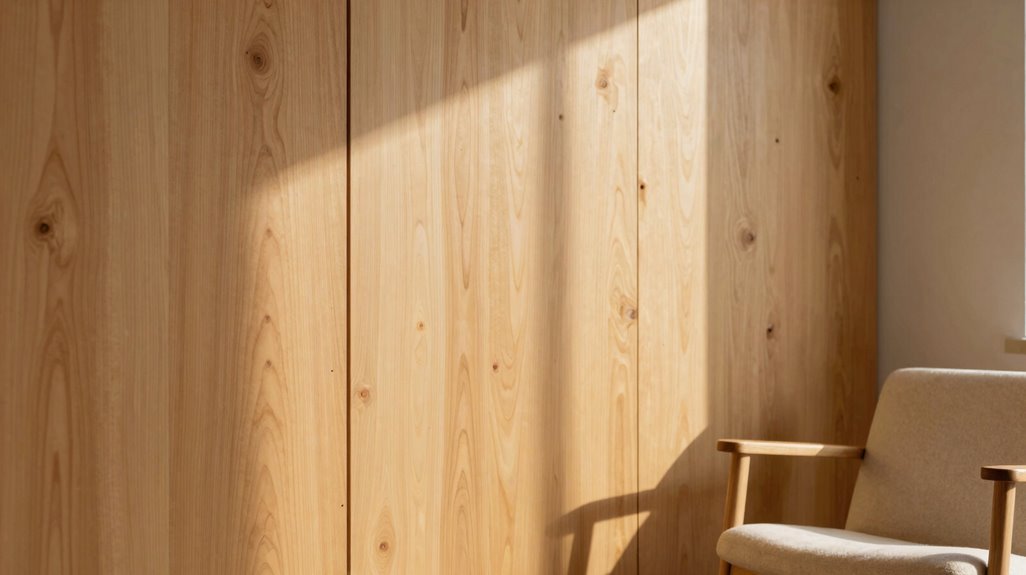
You’ll find plywood delivers twice the rigidity of same-thickness drywall, giving you superior screw-holding strength at 10–15% lower cost than premium drywall options.
You can stain, paint, or varnish its surface without sacrificing structural integrity, while solid hardwood demands 20–30% more per square foot for comparable coverage.
You gain measurable performance advantages across strength, cost, and finish versatility when you specify plywood over conventional wall materials.
Strength Over Drywall
How much weight can your walls actually handle before they fail? You need plywood rigidity, which delivers twice the stiffness of same-thickness drywall, so your mounted shelves, cabinets, and fixtures stay secure.
Your screw-holding strength depends on material density. Plywood’s cross-grained layers grip fasteners tighter than crumbly gypsum, preventing stripped holes and sagging fixtures. You’ll notice warp resistance immediately. Unlike solid wood, plywood’s alternating veneers counteract expansion and contraction, keeping flat surfaces through seasonal humidity swings.
Moisture performance matters in kitchens, bathrooms, and basements. Standard drywall absorbs water, breeds mold, and disintegrates. Marine-grade and exterior plywood options resist degradation, preserving structural integrity where dampness threatens.
Your load capacity increases substantially with 5–7 ply construction. Mount 75-pound televisions, heavy mirrors, or industrial shelving directly; no stud-finding required. You build walls that work harder, longer, and smarter.
Cost and Versatility
Where should your wall budget work hardest? Plywood walls deliver 20–30% lower cost per square foot than solid hardwood, and 10–15% savings over premium drywall, while cutting installation time by roughly 30% versus plaster systems.
Consider these measurable advantages:
- Cost efficiency: You spend less on materials and labor, reallocating funds to fixtures or furnishings.
- Installation time: You complete projects faster, minimizing disruption and contractor hours.
- Moisture resistance: You select marine-grade or exterior-grade options for bathrooms, basements, or humid climates without material failure.
- Versatility: You apply stain, paint, or varnish directly, adapting aesthetics without complex substrate preparation.
Plywood walls offer twice the rigidity of equivalent drywall, superior screw retention, and simplified monthly maintenance. You achieve structural integrity, design flexibility, and reduced lifecycle costs through one material specification.
Plywood Walls in Scandinavian, Industrial, and Minimalist Spaces
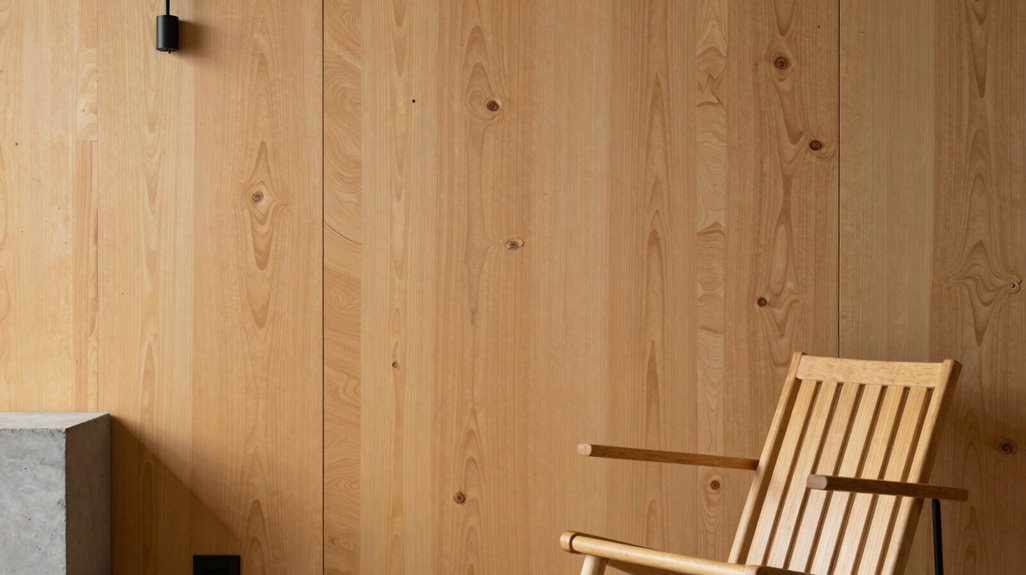
You’ll apply birch plywood in Scandinavian spaces to amplify natural light through its pale tone, while pairing it with wool, linen, and untreated wood for tonal cohesion. In industrial settings, you’ll juxtapose plywood’s organic grain against blackened steel frames, poured concrete floors, and exposed ductwork to generate calibrated tension between refinement and rawness. For minimalist applications, you’ll specify panels with 3–4 finish options: natural oil, whitewash, or zero-VOC matte paint. Install them with 1/8-inch shadow gaps to create geometric precision without visual noise.
Scandinavian Warmth & Light
What makes birch plywood the dominant material in Scandinavian, industrial, and minimalist interiors? You recognize its unmatched ability to deliver Scandinavian warmth through strategic material selection.
- Light color: You select birch plywood for its pale, reflective surface that maximizes daylight penetration.
- Natural grain: You expose the wood’s subtle patterns to add visual depth without clutter.
- Wall panels: You install 50% lighter panels than solid wood, reducing structural load and installation time.
- Zero-VOC finishes: You apply light oak stains or clear sealants to maintain air quality standards.
You achieve clean lines and open spatial flow when you align these elements. The material’s compatibility with metal, concrete, and fabric allows you to build cohesive environments. You solve the problem of cold minimalism by integrating birch plywood’s inherent warmth, creating spaces where you and others feel welcomed.
Industrial Raw Edge
How do you achieve the rugged precision industrial spaces demand without sacrificing structural integrity? You select birch plywood for your raw-edge installations, leveraging its 3–7 ply construction to deliver vertical stability with minimal warping across 8-foot spans.
Your exposed-edge panels create authentic industrial texture through visible edge reveals, each ply layer contributing dimensional depth flat drywall cannot replicate. You finish with 0-VOC clear coats or walnut stains, achieving customization in 24-hour dry cycles suitable for occupied studios.
You establish shadow gaps between panels, spacing them 1/8 to 3/16 inches apart, generating rhythmic shadow lines that emphasize construction honesty. Your edge-wise cuts maintain vertical alignment within 1/16-inch tolerances, ensuring professional results without specialized milling.
This approach positions you among designers who value material truth over surface disguise.
Minimalist Clean Forms
Where does minimalist design find its structural backbone? You discover it in plywood walls, the material that delivers clean lines without visual clutter. You’ll appreciate how birch plywood brightens Scandinavian spaces, its neutral tone pairing naturally with subdued palettes. In industrial settings, you combine natural grain with metal and concrete, achieving balanced restraint.
You install 3–7 ply construction for rigid, warp-resistant surfaces that maintain straight planes. You select clear varnish, light oak stains, or zero-VOC paints to echo Scandinavian calm. You leverage panels 50% lighter than solid wood, reducing installation time and wall disruption. You preserve open, uncluttered spaces through quicker assembly in modern minimalist projects.
You achieve precise minimalist detailing through uninterrupted surfaces. You belong among designers who prioritize function, efficiency, and refined simplicity.
Which Plywood Grade Fits Interior vs. Exterior Walls?
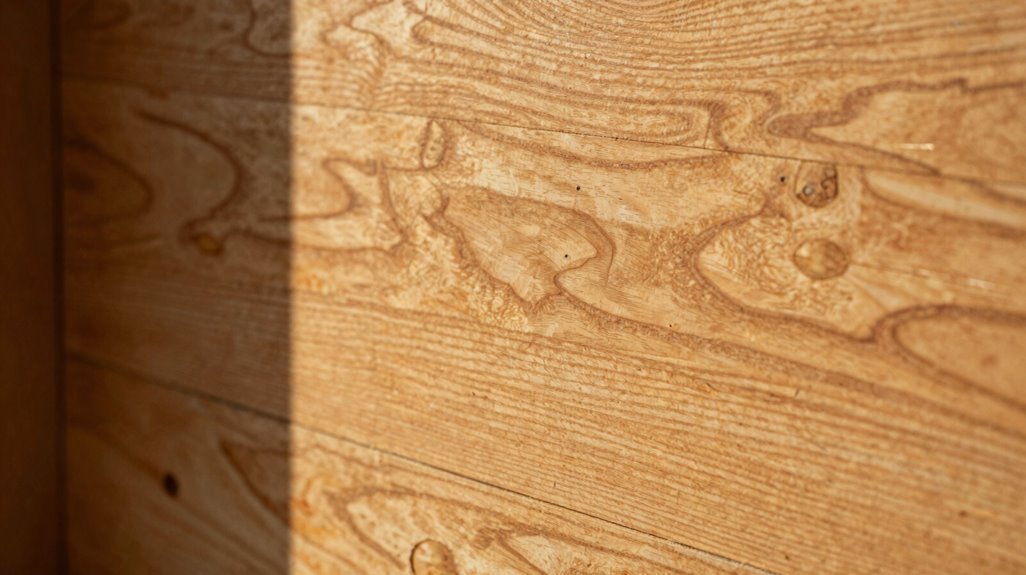
Why does plywood grade selection matter so much for your walls? You’re choosing between performance and aesthetics, and the wrong grade costs you durability or visual appeal.
Interior-grade plywood suits your decorative panels and visible surfaces. Birch and Baltic birch deliver superior edge quality and void-free cores, perfect for exposed installations.
Exterior-grade plywood demands moisture resistance. You’ll select CDX or marine plywood when damp conditions threaten structural integrity.
Sheathing applications require 1/2″ to 5/8″ CDX behind finishes, balancing cost and support.
Marine plywood provides maximum water resistance for bathrooms or humid climates.
Your decision hinges on location and exposure. Interior spaces prioritize appearance; exterior zones demand weatherproofing. Match grade to function, and you’ll avoid costly replacements.
Stain, Paint, or Varnish: 3 Finishes for Plywood Walls
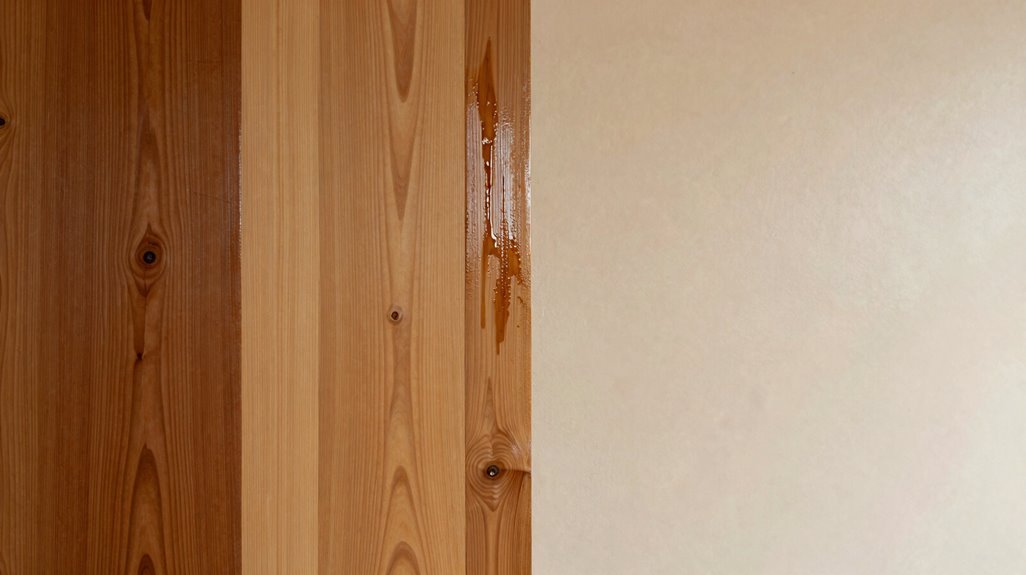
When you’re finishing plywood walls, your choice between stain, paint, or varnish determines both protection and visual impact. These three finishes change raw plywood into surfaces that match your space’s demands.
Consider these factors when selecting your finish:
- Stain deepens grain visibility, offering tones from light oak to dark walnut for natural warmth.
- Paint delivers bold color; zero-VOC options keep children’s spaces safe while adhering strongly to wood surfaces.
- Varnish creates clear, protective layers that highlight grain patterns and resist moisture damage.
- Seam treatment affects final appearance; shadow gaps or caulked joints interact differently with each finish type.
Plywood walls accept these finishes without requiring plaster or wallpaper, simplifying your installation. Match your finish to your panel alignment strategy for cohesive results.
Full Wall or Accent? Where to Place Plywood Panels
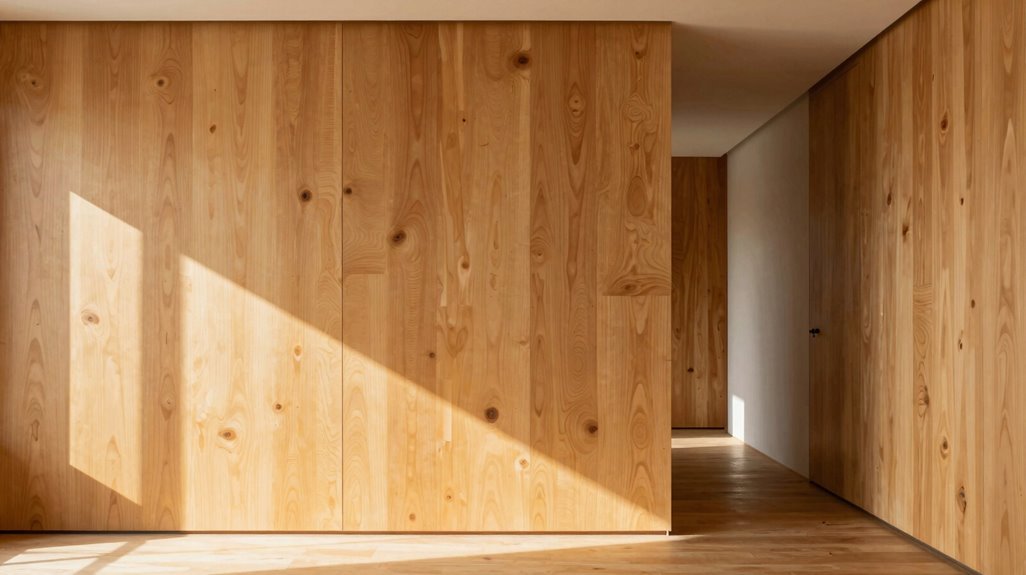
Once you’ve selected your finish, you face another decision: covering entire walls or isolating plywood to accent zones. Your choice shapes both protection and aesthetic impact.
Full-wall plywood delivers maximum moisture resistance and screw-holding strength across every surface. Accent panels, covering roughly 20% of wall space, emphasize grain and texture without demanding whole-room commitment.
Consider three standard accent placements:
- Full accent walls (20% of total wall space)
- Half-walls (4–5 feet vertical height)
- Small feature panels (2×3 feet)
Installation planning demands precise attention. Acclimatize panels before mounting, and position seam placement away from high-traffic sight lines. Use shadow gaps or flexible caulk for seamless transitions.
Balance accent panels with metal S-shelves, soft textiles, and 3–4 small green plants. This pairing creates visual equilibrium, anchoring your space.
How Plywood Walls Cut Installation Time by 30
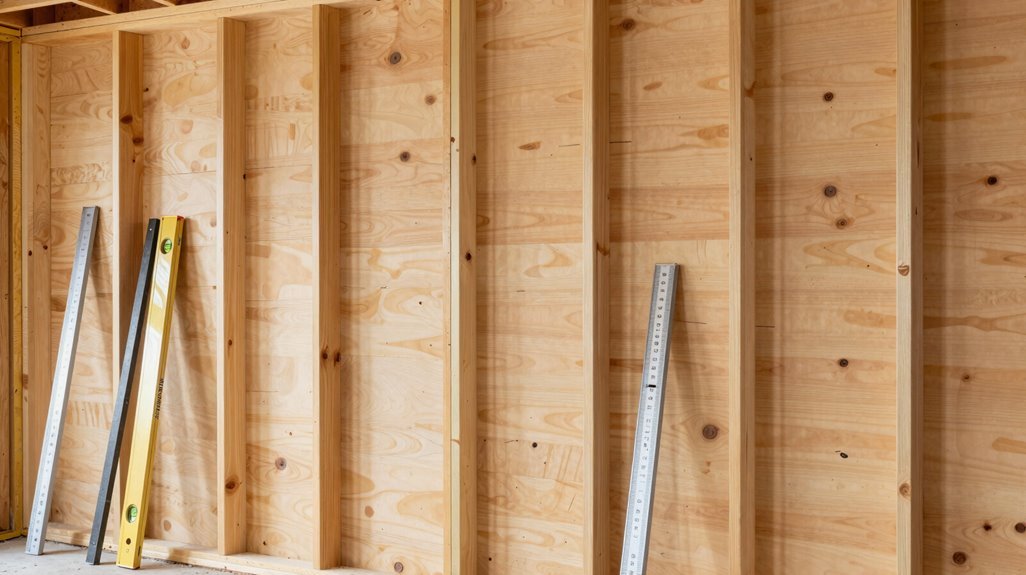
How much faster could your crew finish if you swapped plaster for plywood? You’d cut installation time by 30%, and here’s exactly how you get there:
- Lightweight panels reduce handling strain. You’re lifting 50% less weight than solid wood, so your crew moves faster with less fatigue.
- Rapid coverage comes from 2440mm × 1220mm plywood panels, meaning fewer joints, fewer cuts, and more wall per sheet.
- Simple seam treatments like shadow gaps eliminate complex on-site detailing, letting you align directly to studs without fuss.
- Pre-finished surfaces skip the multi-coat drywall routine, delivering visible results immediately with minimal post-install touch-ups.
You fasten plywood panels to ready-framed walls, align the edges, and you’re done. No sanding, no mudding, no waiting. Your timeline shrinks, your crew stays sharp, and you move to the next job faster.
The Real Cost of Plywood Walls vs. Traditional Materials
Where does your budget actually go when you choose wall finishes? You need to compare plywood against traditional materials using four measurable factors: cost, durability, installation time, and moisture resistance.
1. Material Cost Comparison
Plywood runs 10–15% cheaper than high-end drywall. You eliminate additional finishing materials because plywood accepts stain, paint, or varnish directly.
2. Labor and Timeline
You cut installation time by 30% versus plaster. Faster completion reduces labor expenses and shortens project schedules.
3. Performance Metrics
| Feature | Plywood | Drywall | Plaster |
|---|---|---|---|
| Moisture resistance | High | Low | Medium |
| Dent resistance | High | Low | Medium |
| Screw-holding capacity | Superior | Adequate | Poor |
4. Long-Term Maintenance
You spend less on maintenance because plywood resists warping and impact damage. Durability advantages compound over 10–15 year ownership periods.
Choose plywood when you prioritize cost efficiency without sacrificing structural integrity.
Can Plywood Walls Handle Moisture, Kids, and Daily Wear?
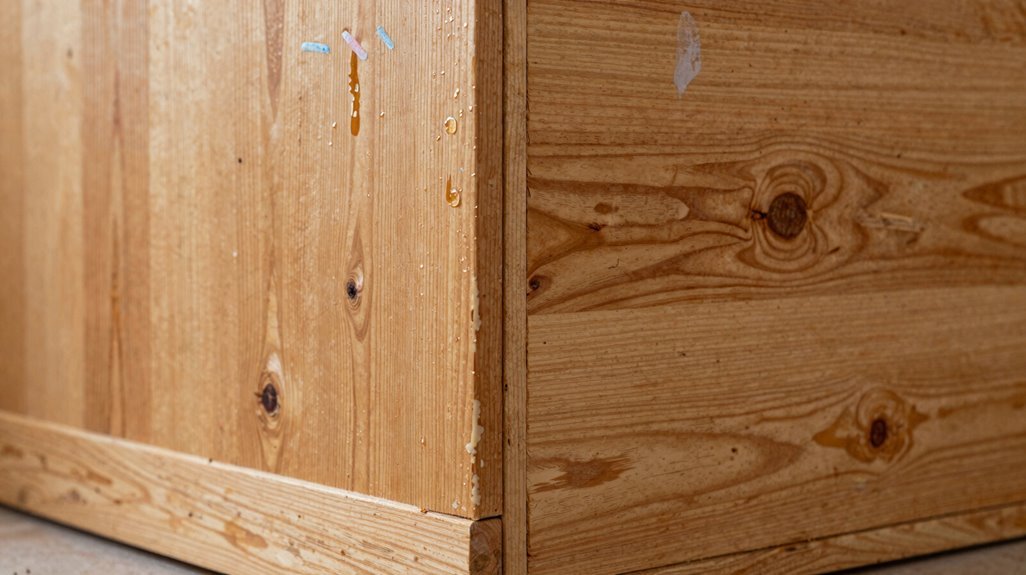
Why should you trust plywood in the spaces that matter most? You need walls that withstand moisture, chaos, and time without failing.
Consider these advantages:
- Marine-grade plywood resists water damage in bathrooms, kitchens, and basements where humidity attacks standard materials.
- Moisture resistance improves dramatically with BWR/BWP grades, reducing mold risk and warping compared to drywall in damp zones.
- Durability exceeds traditional walls through superior screw-holding strength and structural integrity under stress.
- Impact resistance protects against toys, furniture, and daily accidents that puncture weaker surfaces.
When you seal plywood with moisture-resistant coatings in moisture-prone spaces, you create kid-friendly environments that last. You’re choosing walls that work as hard as you do, keeping your home protected and your family secure.
Is Plywood Eco-Friendly? What FSC and Carbon Data Show
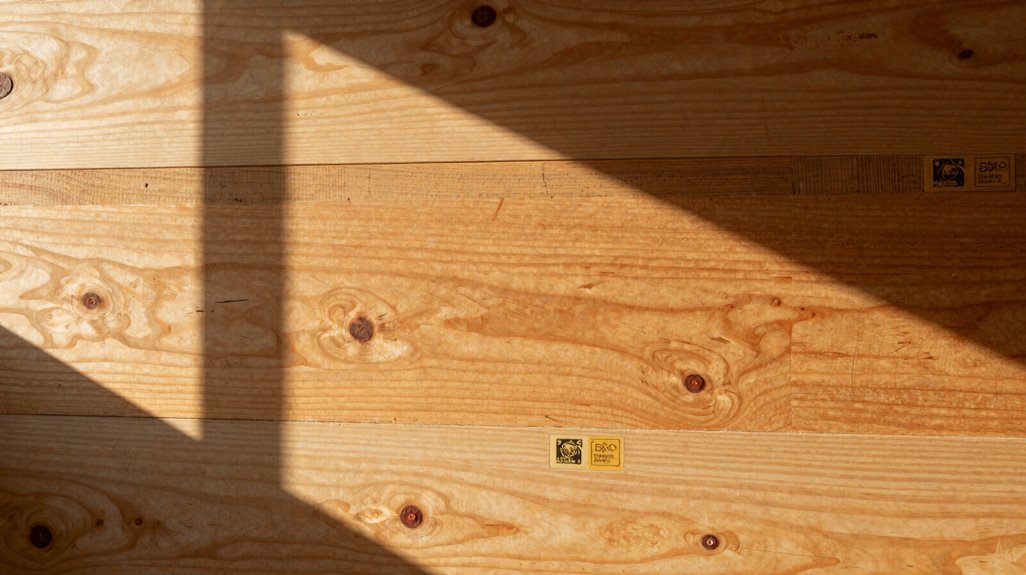
When you’re selecting wall materials, sustainability credentials matter as much as performance specs.
- Certification Standards
- Over 70% of U.S. plywood carries FSC-certified labels, verifying responsible forest management.
- You gain supply chain transparency through third-party verification.
- Carbon Performance
- Plywood delivers a 30% lower carbon footprint than MDF, reducing your project’s environmental load.
- Sustainable sourcing practices dominate Scandinavian and minimalist interior markets.
- End-of-Life Value
- Plywood remains 100% recyclable, enabling material recovery and reuse.
- Marine-grade options minimize waste through moisture resistance, extending replacement cycles.
- Design Integration
- Eco-friendly design demands materials that balance function with environmental accountability.
- You achieve this balance through verified sourcing, measurable emissions reductions, and circular material flows.
Select FSC-certified plywood to meet specification requirements while supporting responsible production systems.
Plants, Metal Shelves, and Textiles for Plywood Walls
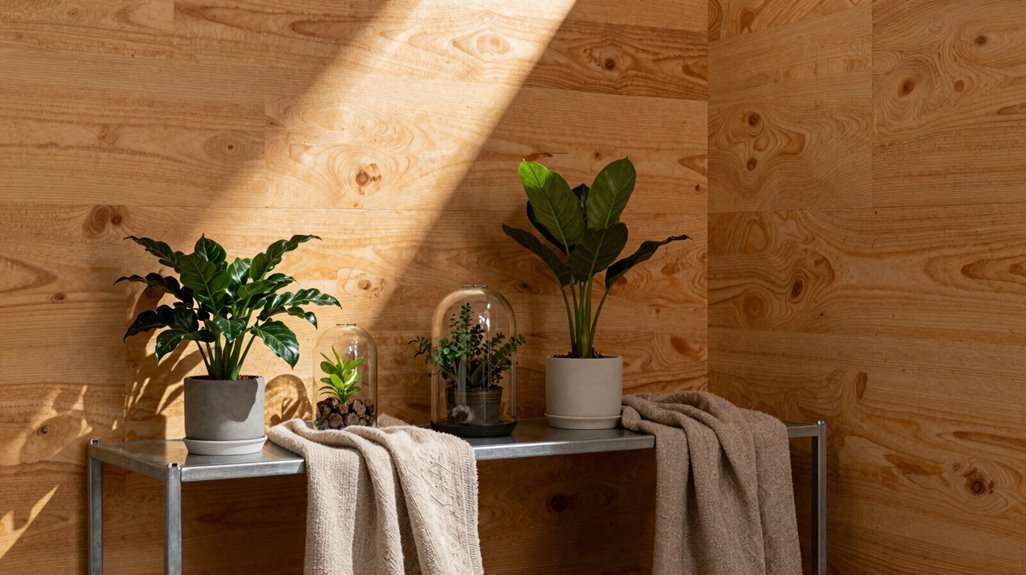
Although plywood walls provide a warm, neutral foundation, you’ll need strategic accessories to maximize their functional and aesthetic potential. You’re building an interior design that works harder than standard finishes, and these three elements change plywood from basic to intentional.
- Plants: Position 3–4 small green specimens on shelves or in mounted planters to soften grain and inject natural color contrast against the wood.
- Metal shelves: Install 12–18 inch wide units to create modern industrial vignettes, balancing plywood’s warmth with cool metallic precision.
- Textiles: Layer soft textiles, throws, or fabric wall hangings to absorb sound and introduce tactile contrast to the rigid grain.
- Finish selection: Apply natural, stained, or zero-VOC paints to maintain plant-friendly air quality while achieving your target aesthetic.
You’re creating spaces that feel simultaneously cozier and more open, with warm visual depth enhancing every layered element.
Are Plywood Walls Weak or One-Style Only? Debunking the Myths
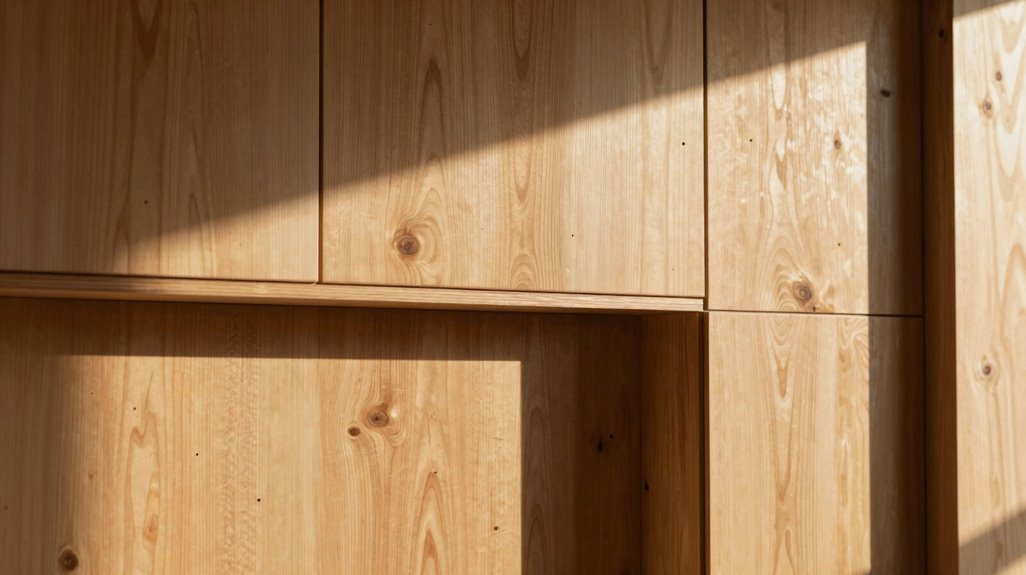
You likely have heard plywood walls crack under pressure or lock you into raw, industrial aesthetics, but cross-grained construction delivers twice the rigidity of equivalent drywall, resisting splits while accommodating hardwood, softwood, birch, and marine-grade variants. Your design options span Scandinavian minimalism to bold contemporary statements through stains, paints, varnishes, and modular configurations: full walls, half-walls, or 2×3 ft panels, backed by 70% FSC-certified sourcing and 30% lower carbon emissions than MDF.
Before you dismiss plywood as fragile or one-dimensional, examine how its layered veneer engineering, moisture-resistant exterior grades, and superior screw-holding capacity solve structural and environmental demands simultaneously.
Structural Strength Reality
Before you dismiss plywood walls as flimsy or strictly industrial, you’ll want to examine the structural data that contradicts these assumptions. Plywood delivers measurable performance advantages that drywall cannot match, creating walls that perform under real-world conditions.
- Cross-grained veneer layers provide 2x rigidity over equal-thickness drywall, resisting bending forces from impacts and loads.
- Multiple plies (3, 5, or 7 layers) create warping resistance, maintaining flat, stable surfaces across decades.
- Moisture resistance in marine and exterior grades outperforms standard drywall in damp environments like bathrooms and basements.
- Screw-holding strength supports heavy fixtures without pull-through, eliminating frequent repairs common with brittle alternatives.
These specifications translate directly to reduced maintenance, expanded mounting options, and structural integrity you can depend on.
Design Versatility Range
A single material rarely spans the full spectrum from raw industrial lofts to refined Scandinavian bedrooms, yet plywood manages this range without compromise. You open up design versatility through interior applications that adapt to your exact specifications.
Plywood walls accommodate four primary configurations: full accent walls, half-walls at 4–5 feet, small panels at 20% coverage, and custom geometric layouts. You select finishes, natural oak, deep walnut stains, or zero-VOC paints, to match minimalist, industrial, rustic, or kid-safe environments.
Wall paneling integrates with metals, concrete, and fabrics, enabling cross-material styling without structural compromise. The grain texture adds measurable visual depth, increasing perceived openness compared to flat drywall surfaces.
You tailor finishes and placements to function and mood, disproving myths that limit plywood to single-style applications.