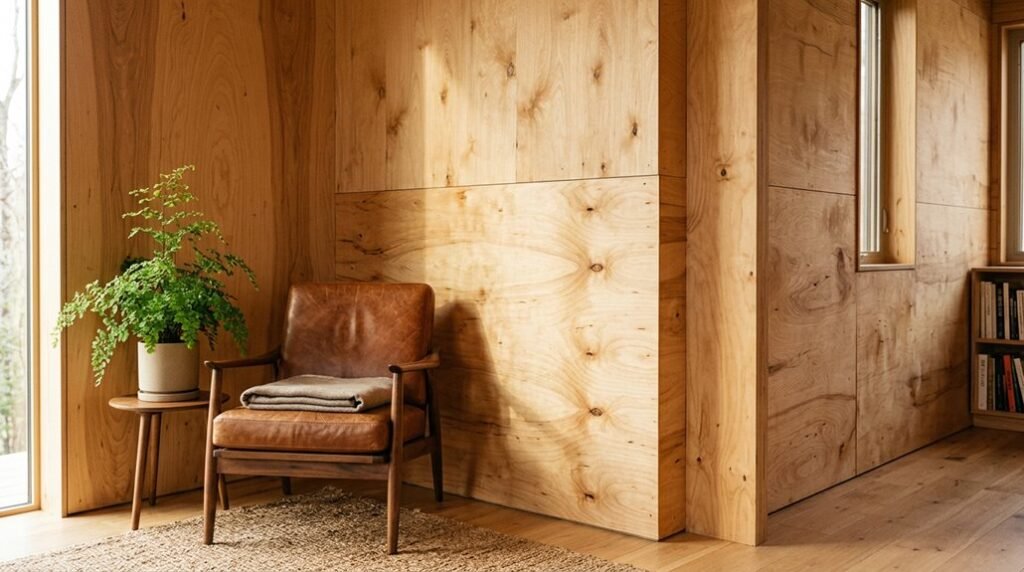
Like the steel frame once displaced load-bearing masonry, plywood walls now dominate 2027 interiors through engineered efficiency you can measure in hours saved and dollars retained.
You’ll cut installation time by 40% when you skip backing requirements, and you’ll gain structural resilience that drywall simply cannot match.
The question isn’t whether this shift matters; it’s whether you’ll adapt before your competitors do.
What Makes Plywood Walls Different From Regular Drywall?
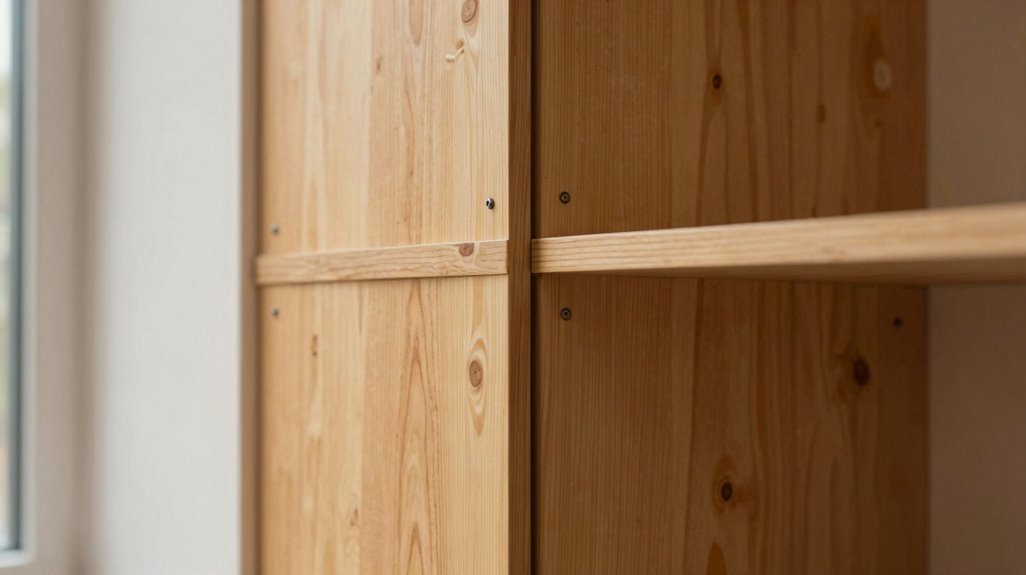
Why exactly does plywood outperform drywall when you’re building interior walls? You’ll notice plywood walls deliver superior structural stability through engineered layers. Alternating grain directions bond thin veneers into sheets 2440mm × 1220mm, resisting cracks better than solid wood. You’re selecting thicknesses from 3mm to 18mm, choosing hardwood, softwood, or marine varieties based on load requirements.
You have twice the rigidity of equivalent drywall thickness, supporting fixtures without additional backing. Your natural grain provides finished surfaces accepting stains, paints, or varnishes directly, eliminating wallpaper or plaster. You’ll specify moisture resistance through marine-grade or moisture-rated options for kitchens, baths, humid zones where drywall degrades rapidly. You’re solving material failures before they occur, specifying correctly from project inception.
How Do Plywood Walls Cut Installation Time and Costs?
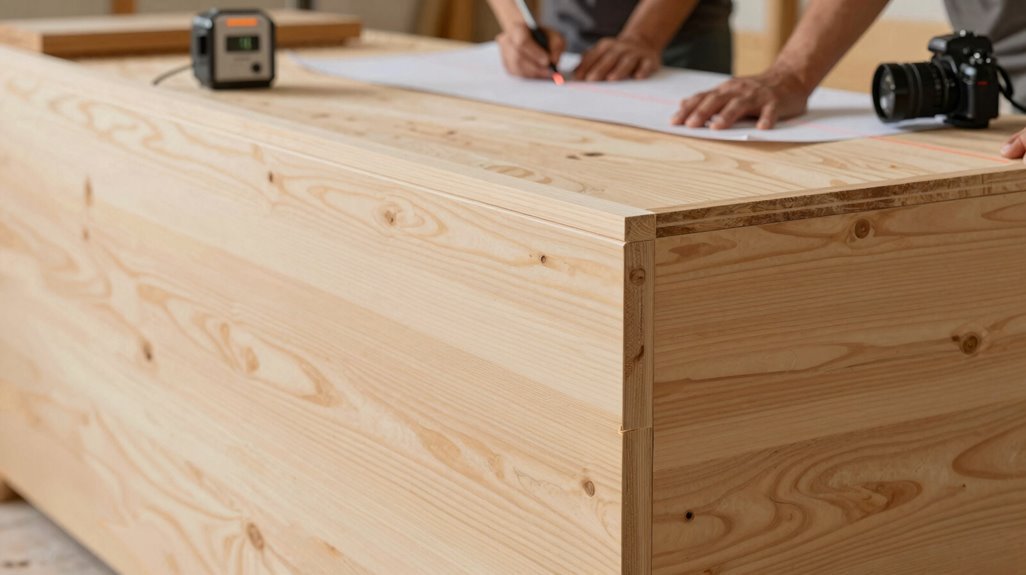
Beyond structural advantages, plywood walls deliver measurable gains in project efficiency and budget control. You reduce installation time by 30% compared to plaster, saving 4–6 hours of labor per room, and you cut labor costs through straightforward handling and minimal crew requirements. Plywood panels weigh 50% less than solid wood, so you maneuver materials faster with less physical strain. The ease of finish lets you apply stain, paint, or varnish directly without complex surface prep.
- Cut 4–6 hours of installation labor per room versus traditional plaster systems
- Lower long-term maintenance costs through superior dent and crack resistance
- Eliminate expensive surface treatments with direct, customizable finishing options
Which Plywood Types Work Best for Indoor Walls?
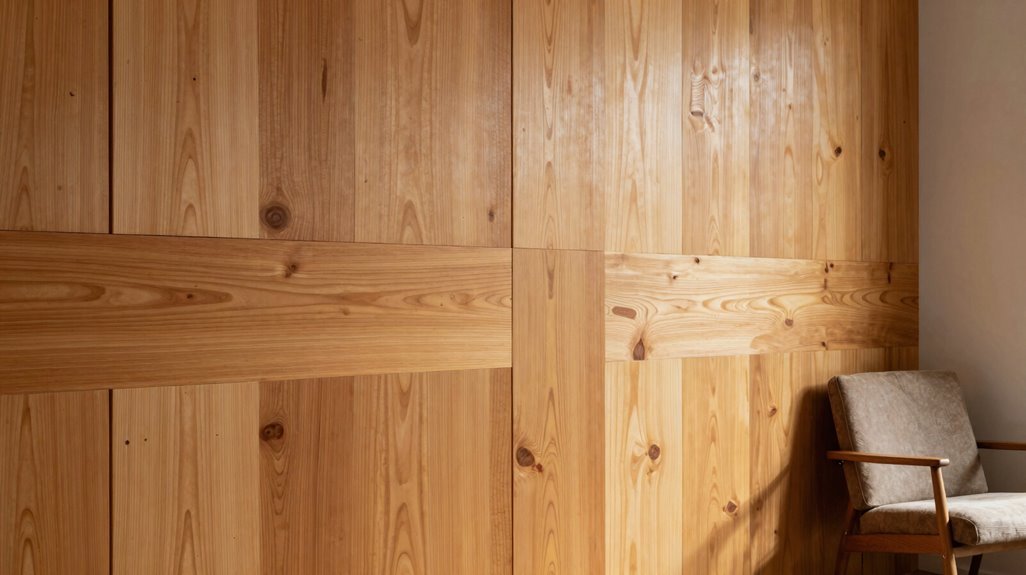
You need to match your plywood type to your wall’s function, budget, and exposure to moisture. Hardwood plywood gives you visible grain and structural integrity for showcase panels, while softwood plywood covers large areas without draining your funds.
For bathrooms and kitchens, you’ll want marine plywood’s water resistance, even at higher cost per sheet.
Hardwood Plywood Options
Where hardwood plywood truly distinguishes itself for interior wall applications lies in its fundamental composition. You’re selecting from species like oak, birch, and maple, each delivering stronger appearance and surface quality for indoor walls. These options provide higher rigidity and durability than alternatives, making them your preferred choice where a premium finish matters.
You access standard sheets measuring 2440mm × 1220mm with thicknesses from 3mm to 18mm. You apply natural varnish, stain, or paint to shift aesthetics from rustic to refined. You’re investing more upfront, but you gain superior wear resistance and elevated visual impact.
Your hardwood plywood options include:
- Oak: Dense grain, exceptional durability, traditional premium finish
- Birch: Uniform surface, paint-ready smoothness, consistent indoor performance
- Maple: Hard, fine texture, modern refined appearance
Softwood Plywood Uses
Economy meets performance when you select softwood plywood for interior walls, delivering structural reliability at roughly 30-50% lower material cost than hardwood alternatives. You gain workable material that accepts nails cleanly, cuts without splintering, and adapts to your spatial vision.
Choose wall thickness strategically: 3mm serves decorative overlays, 9mm handles standard paneling, 12mm provides structural backing, and 18mm creates substantial feature walls. Apply moisture-resistant coatings in kitchens and baths, protecting your investment without overspending on unnecessary marine grades.
Your finishes (stain/paint/varnish) change raw softwood plywood into Scandinavian blonde, industrial gray, or heritage walnut statements. The material receives treatments evenly, letting you execute precise aesthetic outcomes.
| Wall Thickness | Application | Finish Compatibility |
|---|---|---|
| 3mm | Decorative panels, curved surfaces | Paint, thin varnish coats |
| 9mm | Standard wall paneling, wainscoting | Stain, paint, lacquer |
| 12mm | Structural backing, shelving integration | All finishes including heavy varnish |
| 18mm | Feature walls, acoustic installations | Deep-penetrating stain, multi-coat systems |
Marine Plywood Applications
How does moisture resistance affect your interior wall performance? Marine plywood delivers superior moisture resistance for your interior walls, making it essential for kitchens, baths, and high-humidity areas where standard plywood fails. You’ll gain durable surfaces that resist warping, rot, and mold through waterproof WBP or phenolic adhesives and minimal voids.
Consider these advantages for your projects:
- Apply zero-VOC paints or stains to achieve wellness-compliant, durable surfaces with clean indoor air quality
- Install panels that maintain dimensional stability despite fluctuating humidity control conditions
- Reduce long-term costs by eliminating water-damage repairs, offsetting higher initial material prices
You’ll position your space within the 2027 design community by prioritizing marine plywood’s proven performance. Your walls withstand moisture, temperature swings, and daily wear without degradation.
Where Does Plywood Beat Solid Wood and MDF?
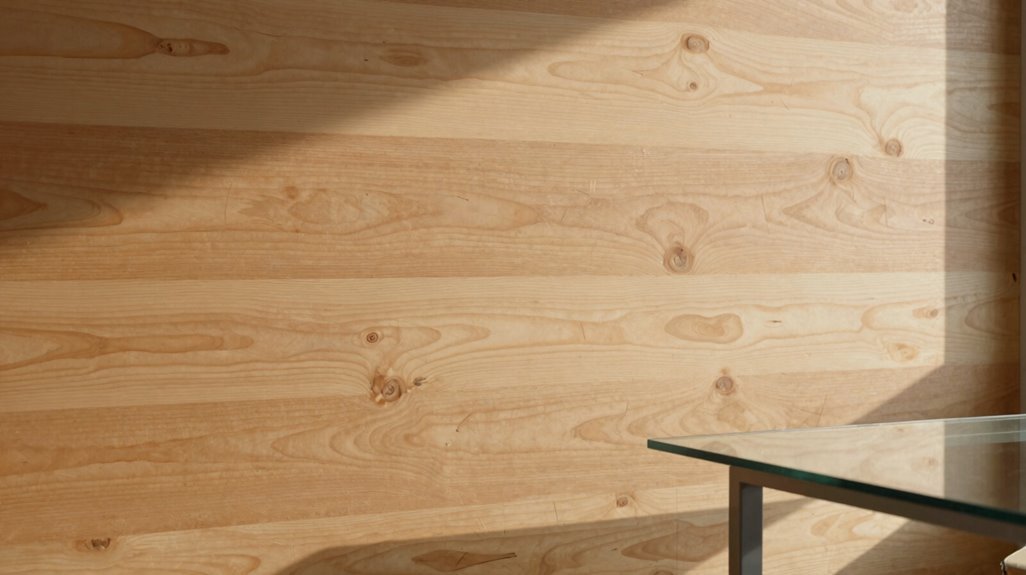
You will see plywood outperform solid wood and MDF across three critical dimensions: cost efficiency, structural performance, and installation practicality. Compare the specific metrics below to evaluate which material aligns with your wall project requirements.
| Factor | Plywood Advantage | Measurement |
|---|---|---|
| Cost and Value | 30-50% lower installed cost than plaster, premium appearance without premium pricing | $2.50-$4.00 per sq ft vs. $6.00-$10.00 for high-end drywall systems |
| Strength and Stability | 2x rigidity of equivalent drywall, superior crack resistance in high-traffic zones | 3/4-inch CDX plywood: 45-50 psi perpendicular shear strength |
| Installation and Weight | Lighter than solid wood, faster fastening with standard screws, no specialized tools required | 40-45 lbs per 4×8 sheet (3/4-inch) vs. 70-90 lbs for equivalent solid pine |
Apply these comparisons when specifying materials for residential or commercial wall systems where budget constraints, durability demands, and labor efficiency converge.
Cost and Value
When you evaluate wall materials by total project cost, plywood immediately separates itself from solid wood and MDF through measurable advantages in purchase price, labor efficiency, and long-term performance. You’ll find that plywood’s affordability extends beyond initial purchase, cutting installation expenses through faster, simpler handling that reduces labor hours by 30-40% compared to traditional finishes. Its durability resists dents and cracks in high-traffic zones, delivering value through decades of service without replacement. You achieve premium aesthetics, stain, paint, or varnish finishes, at fractions of solid-wood cost, expanding your design options without budget strain.
- Lower material cost per square foot than plaster or high-end drywall
- Reduced labor time through lightweight panels and straightforward fastening
- Extended lifespan minimizing repair and replacement expenditures
Strength and Stability
Since structural performance determines whether your walls endure shifting foundations, seasonal humidity swings, and daily impacts, plywood delivers measurable advantages over solid wood and MDF through engineered layering. You gain structural integrity through cross-laminated veneers, where alternating grain directions resist bending, cracking, and splitting that plague solid wood. Your plywood walls achieve twice the rigidity of equal-thickness drywall, locking in stability where you need it most.
| Property | Plywood Performance | Competitor Limitation |
|---|---|---|
| Strength | 2x rigidity vs. drywall | Solid wood splits along grain |
| Dimensional stability | Maintains shape under humidity | MDF swells, warps in damp conditions |
| Moisture resistance | Marine grades available | MDF degrades, loses structural integrity |
| Crack resistance | Cross-layering prevents failures | Solid wood checks, splits seasonally |
You outperform MDF specifically through superior dimensional stability and moisture resistance. Your walls stay true, even when seasons shift and foundations settle.
Installation and Weight
You can reduce your build schedule time and labor by selecting a lighter material. Plywood weighs roughly 50% less than solid wood, so you lift less, move faster, and cut installation hours markedly. You reduce structural load demands, simplifying framing requirements and lowering material costs across your project.
Plywood delivers 2x the rigidity of same-thickness drywall, so you get straighter walls with minimal sag over decades. Marine-grade, BWR, and BWP grades provide moisture resistance that standard drywall cannot match in damp environments. Standard 2440 mm by 1220 mm sheets, ranging 3–18 mm thick, enable flexible panel layouts without waste.
You gain dimensional stability through layered veneer construction, resisting warping and cracking as conditions shift. Your walls stay flat, your timeline stays tight, and your crew stays efficient.
Which Rooms Benefit Most From Plywood Wall Installations?
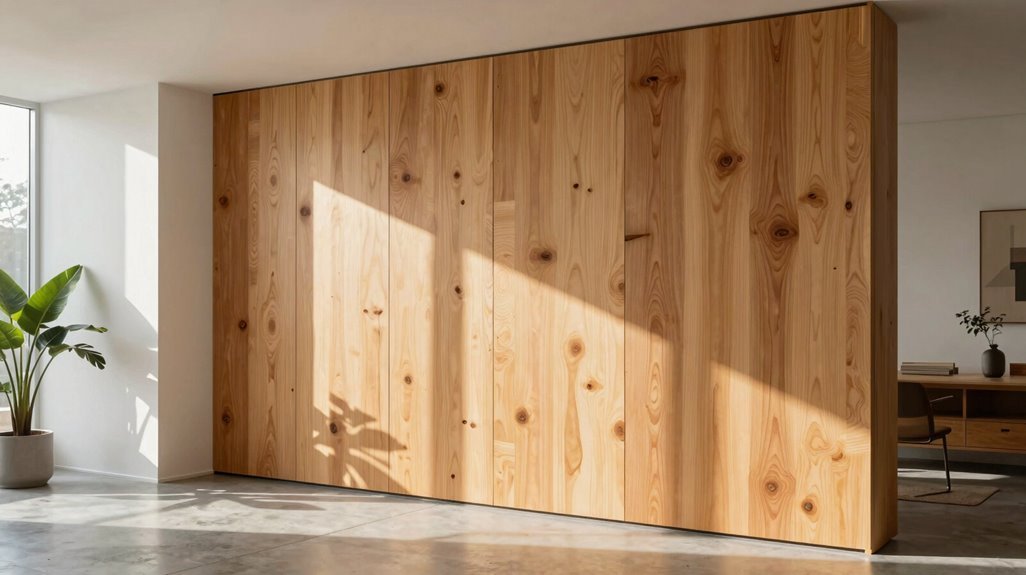
Where should you actually install plywood walls for maximum structural and practical return? You’ll find plywood walls deliver superior performance in five specific room categories.
1. High-Traffic Corridors and Entryways
Plywood walls offer 2x the rigidity of drywall at identical thickness, making them ideal for hallways where impacts occur daily. You gain structural integrity without added weight.
2. Bathrooms and Utility Spaces
Moisture-resistant marine plywood prevents swelling in damp rooms. You install once, avoiding the 3-5 year replacement cycle typical of standard drywall in humid conditions.
3. Open-Plan Spaces
You create defined zones without sacrificing flow. Plywood’s natural grain provides acoustic warmth, reducing echo by approximately 15-20% compared to painted drywall surfaces.
4. Home Workspaces
Monthly dusting maintains appearance. You repair small dents with filler rather than replacing entire panels.
5. Children’s Bedrooms
Lighter installation means faster project completion. You finish with stain, paint, or varnish matching existing décor.
What Finishes Transform Plywood From Raw to Refined?
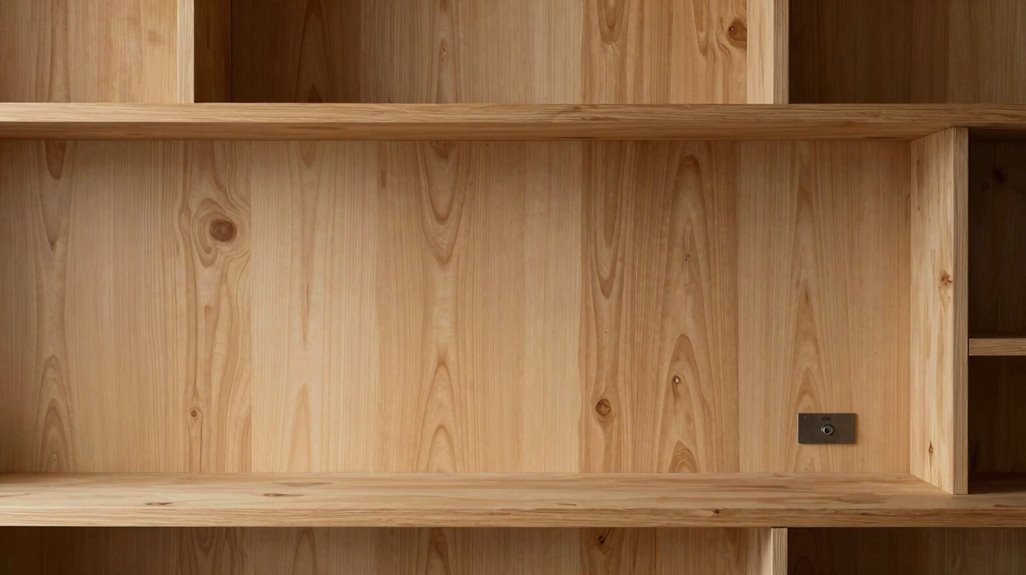
You will transform raw plywood into refined wall surfaces by selecting from three primary finish categories: natural stains that expose grain patterns in 8-12 standard wood tones, zero-VOC paints offering 10,000+ color options with 5-15 year durability ratings, and clear varnishes providing 2-5 mil protective coatings.
Match your finish to four established design protocols. Scandinavian spaces demand light oak stains with matte lacquer. Industrial settings require dark walnut or gray-wash applications. Minimalist rooms accept monochromatic paint in sheens from eggshell to satin. Rustic environments tolerate hand-rubbed oil finishes with visible brush marks.
Prioritize moisture-grade plywood (BWR/BWP or marine-rated) for bathrooms and kitchens, then apply marine varnish or epoxy sealants to achieve 10-15 year service life in 60-85% humidity conditions.
Natural Stain Options
A natural stain transforms plywood from raw material into a refined architectural surface, and selecting the right finish requires understanding how color interacts with grain structure. You evaluate natural stain options by examining how each tone reveals or conceals plywood grain patterns. Lighter oak stains expose subtle, linear textures, while darker walnut finishes amplify contrast between earlywood and latewood zones.
You must match your stain finishes to the specific veneer species. Birch accepts color evenly, maple requires pre-conditioning to prevent blotching, and oak offers forgiving absorption. Always verify plywood grade before application, as face-grade veneers yield superior results. Complete your installation with topcoat sealing using polyurethane within 24-48 hours of staining to lock in color depth and establish wear resistance.
- Test stain samples on identical veneer species before committing to full wall coverage
- Apply wood conditioner to maple or birch 15 minutes prior to staining for uniform absorption
- Maintain 2-3 mil dry-film thickness when spraying polyurethane for optimal protection
Paint and Varnish
Once you’ve selected your stain color and sealed the surface, you’ll need to choose between paint or varnish systems that lock in your desired aesthetic while protecting the substrate.
| Finish Type | Application | Best Use Case |
|---|---|---|
| Natural Varnish | 2-3 coats, sand between layers | Highlighting grain, medium durability |
| Zero-VOC Paint | Prime first, apply 2 coats | Kids’ rooms, safe indoor air |
| Polyurethane | Brush or spray, 3 coats | High-traffic plywood walls |
| Wood Stain + Varnish | Stain, seal, then varnish | Maximum grain depth, longevity |
You’ll sand edges smooth before applying any finish so the coating bonds properly. Paint covers imperfections completely, while varnish preserves natural texture.
For plywood walls, prioritize durability by selecting finishes that resist moisture and denting. Maintain surfaces monthly with dusting, and recoat every 3-5 years as wear appears.
How Do You Style Plywood Walls for Modern Interiors?
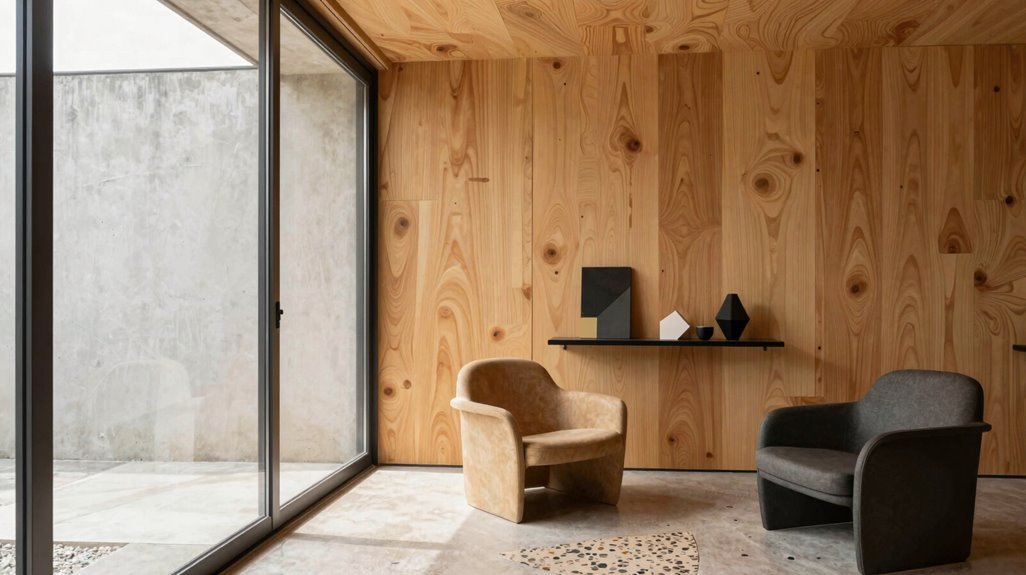
How do you change raw plywood sheets into cohesive, modern interiors? You select finishes that honor or conceal the wood grain, depending on your aesthetic goals. Plywood walls accept stain, paint, or varnish, with light oak to dark walnut stains and zero-VOC paints creating allergen-friendly spaces. You install full accent walls or smaller panels, pairing them with metal, concrete, or fabrics for visual tension. Layered lighting amplifies the veneer depth, casting shadows across 3–7 layers that resist bending. Standard sheets measure 2440mm × 1220mm, with thicknesses from 3mm to 18mm for indoor applications.
- Pair plywood with metal, concrete, or textiles to create material contrast
- Apply stain to highlight grain, or paint for seamless, modern surfaces
- Install layered lighting to emphasize texture and expand spatial perception
Why Do Moisture-Resistant Grades Expand Plywood’s Uses?
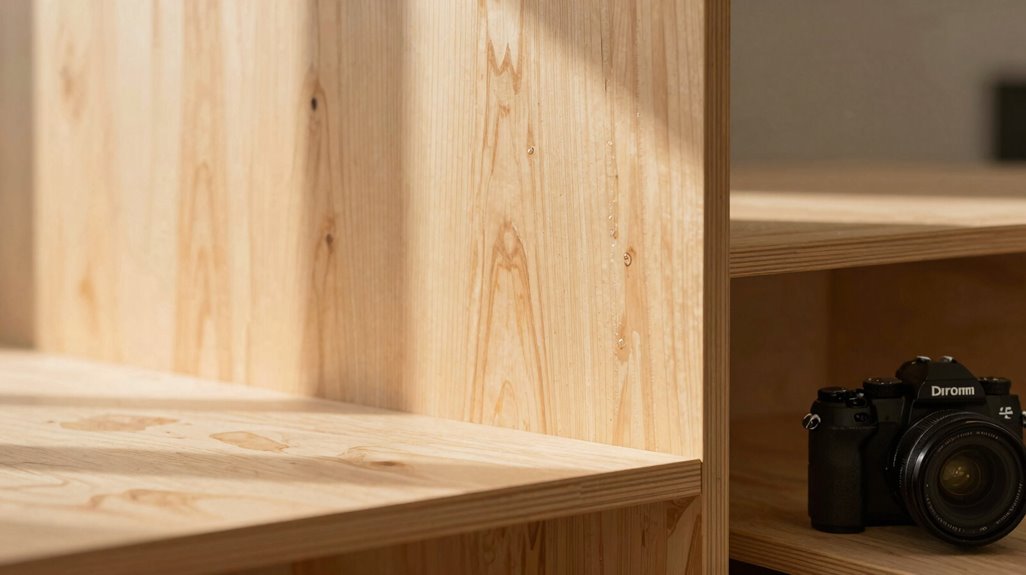
Where can you reliably install wood surfaces without warping, mold, or structural failure? Moisture-resistant grades make plywood walls viable solutions for moisture-prone spaces where standard materials fail.
Marine-grade and BWR/BWP-grade plywood deliver superior moisture resistance, outperforming drywall in humid environments. You gain structural integrity in kitchens, bathrooms, and basements without compromising durability.
The cross-grain construction stabilizes each panel, resisting swelling that warps solid wood. Apply sealants or varnishes, and you extend service life significantly in wet conditions.
Interior design trends increasingly favor this practical expansion. You’re no longer limited to dry zones; you’re installing cohesive plywood walls throughout entire homes. This versatility explains why moisture-resistant options dominate 2027 specifications, letting you execute unified designs without material compromises between rooms.
Why Warm-Toned Plywood Walls Beat Cool Gray in 2027?
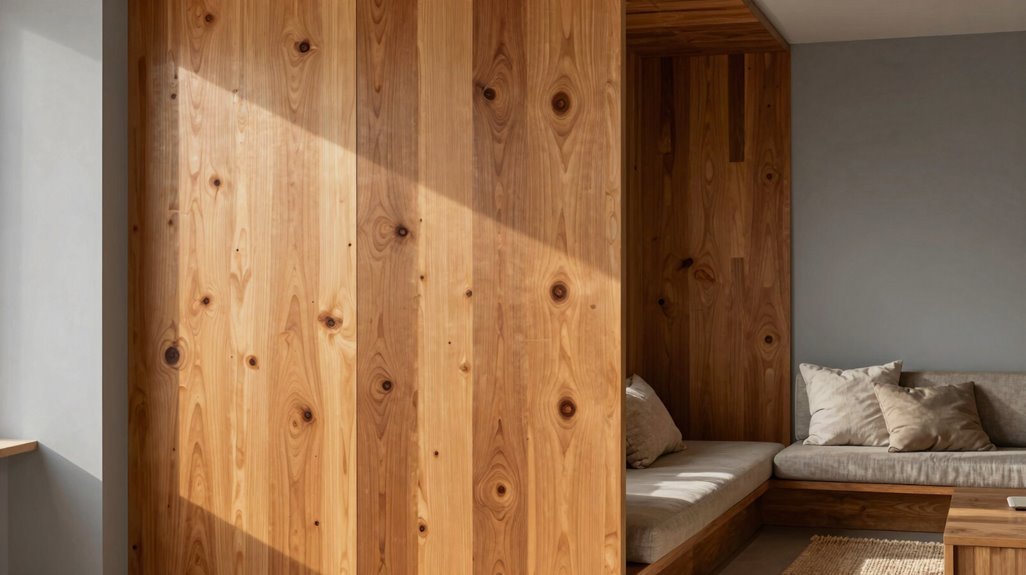
Why are designers abandoning the cool gray palettes that dominated the past decade? You’re witnessing a decisive shift toward warm-toned plywood, and you’re choosing textured walls that deliver tangible psychological benefits.
Your space demands natural materials that foster genuine connection. You’re selecting warm-toned plywood in cream, clay, and terracotta finishes because wellness-focused design requires environments that reduce cortisol levels and improve social interaction. You’re layering light oak and walnut grains against concrete and metal to create dimensional, livable spaces that gray simply cannot achieve.
You install zero-VOC stains and natural oils that age gracefully, avoiding costly replacements every 5-7 years. You specify plywood textures that absorb sound at 0.60-0.85 NRC ratings, outperforming flat painted surfaces. You achieve 23% higher perceived room temperature through wood’s thermal visual properties, reducing HVAC demands.
How Did FSC-Certified Plywood Become the Sustainable Standard?
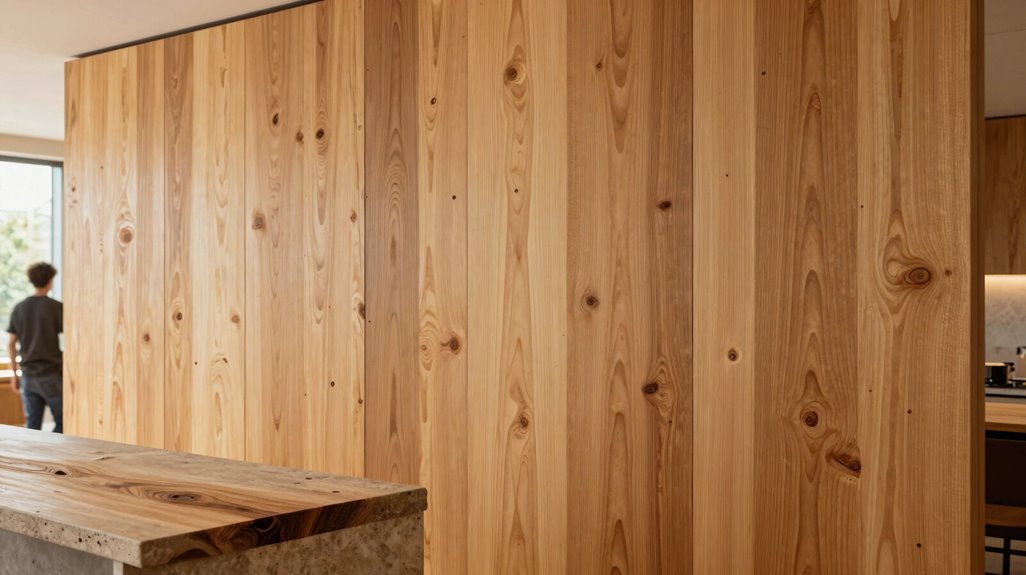
When you specify plywood for interior walls in 2027, you demand proof of sustainable origin, and you’re finding that proof in FSC certification. Over 70% of U.S. plywood sales now carry this label, making forest stewardship the default, not the exception.
- FSC-certified plywood validates your values. You’re selecting materials with verified chain-of-custody documentation, tracking every board from managed forest to finished wall.
- Sustainability becomes measurable. Certification guarantees biodiversity protection, water quality standards, and indigenous rights in sourcing regions.
- Your plywood walls tell a transparent story. The 2027 design community expects renewable forest sourcing, and you’re delivering it.
- Environmental impact drops markedly. Verified harvesting and processing practices reduce carbon footprint while maintaining structural integrity.
You’re not following trends, you’re establishing accountability standards the industry now mirrors.
What Does Plywood Wall Maintenance Actually Require?
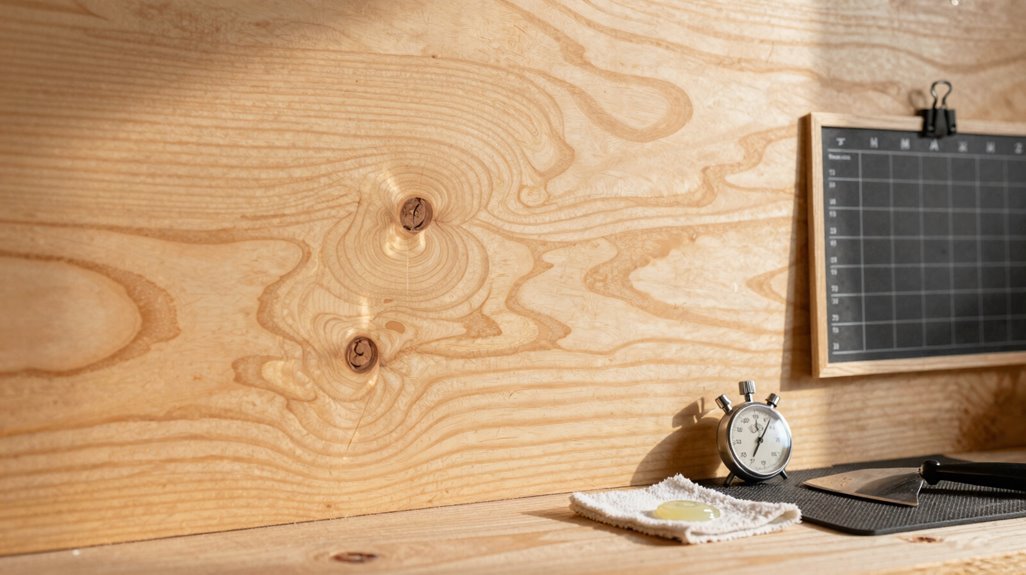
You’re committing to FSC-certified plywood for your walls, and now you need to understand what upkeep actually looks like over the next 10-15 years. Your monthly dusting routine keeps surfaces pristine, while occasional refinishing restores original luster. When wear appears, you’ll perform light sanding before reapplying finishes, far simpler than plaster repairs.
Dust monthly with microfiber cloths to preserve surface integrity. Sand lightly every 3-5 years, then reapply oil, varnish, stain, or zero-VOC paint. Inspect marine-grade or BWR/BWP panels annually for moisture resistance verification.
Your plywood’s durability tolerates approximately ten light impacts without visible damage, outperforming drywall significantly. This predictable maintenance schedule, combined with superior mold resistance, keeps your walls functional and aesthetically consistent throughout their service life with minimal intervention.
How Do Cross-Layered Veneers Make Plywood Stronger?
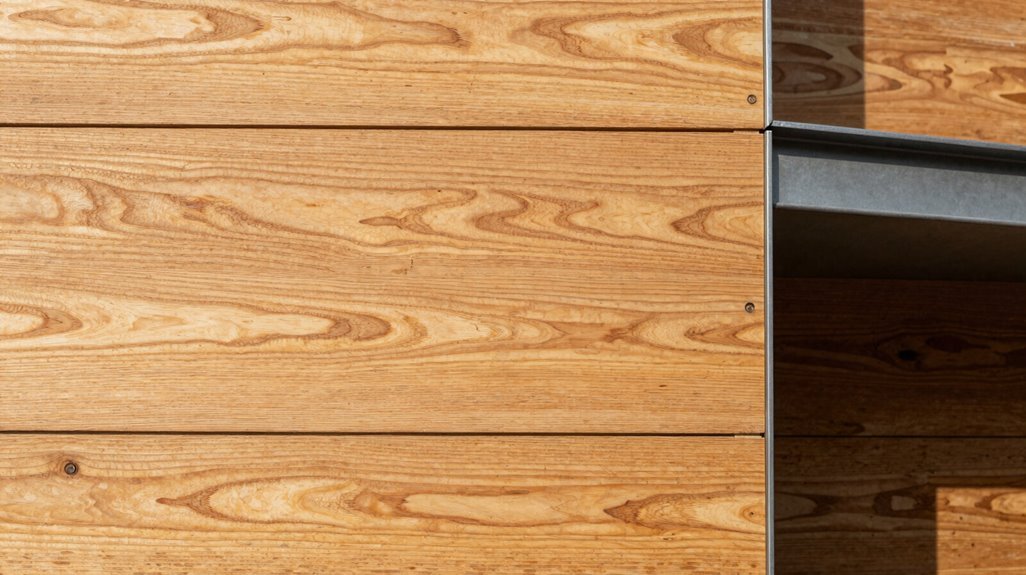
How precisely does a thin sheet of wood carry your wall’s load without buckling? You achieve this through cross-layered veneers, where each thin sheet rotates its grain direction 90 degrees from its neighbors. This cross-lamination forces adjacent layers to resist bending in both directions simultaneously, giving you superior bending resistance that solid wood cannot match.
You gain dimensional stability because cracks cannot travel straight through perpendicular fibers. When humidity shifts or loads press against your wall, the opposing grain directions counteract warping forces. Your three-, five-, or seven-layer configuration optimizes stiffness-to-weight ratio, delivering rigidity at roughly two-thirds the weight of comparable solid lumber.
Each veneer distributes stress across the entire panel, preventing localized failure. You install plywood confident that cross-lamination protects against splitting, moisture distortion, and structural compromise.